
 E-Paper



How to save our cities from an annual deluge
Our short-sightedness has been our folly. For a long-term impact at the city level, we must take several specific steps to protect urban India from floods. Pay attention to the science of materials, of climate, and of life

 Prefer HTon Google


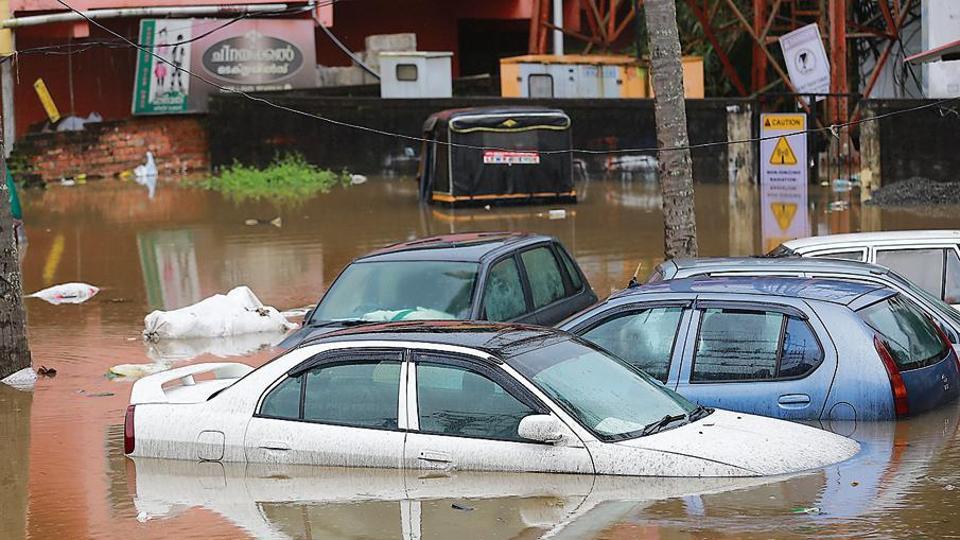
Urban floods have now become an annual monsoon feature in India. Thoroughfares become veritable rivers, transit hubs get inundated, communications get disrupted, neighbourhoods become inaccessible, and, in some cases, remain underwater for weeks after. Erratic, excessive and untimely rainfall can be attributed to long-term climate change. Its effects are made worse for women, the elderly, children, people of marginalised castes and ethnicities thanks to our short-term follies.
First, we carry out greenfield development without any attention to prior agrarian imprint on the land. Lands that were hitherto categorised as commons - variously referred to as poramboke, gochar, gomala, gaonthan, bancharai, sikham etc—are flattened, stripped of their ecologies and rendered into real estate. Sustained attacks on surveying and record-keeping procedures helped in rebranding ecological commons first as wastelands and then as prime real estate. We now have drone-surveying capabilities available at a reasonable price, but we do not have access to the cadastral surveys done half a century ago and aerial photographs done in the 1970s. We do not have any trace of the boundary markers put in place a few decades ago. Yet in this uncharted territory, we see a growth of gated communities, apartments and commercial properties with names such as Shoreview, Lakeview and Hilltop, among others.
Second, we have come to believe that construction and manufacturing technologies, and increasingly, information technology coupled with big money can solve all problems. Thus, instead of rethinking our planning conventions, we are moving aggressively towards technologies that can predict floods and technologies that can drain water quickly. Neither of these has yet yielded any useful results. Urban floods are highly localised events whose contours shift year after year with the way in which the real estate changes.
Third, unequal access to housing has led to highly unstable urban-built structures which collapse at the first sign of the monsoon. People with insecure tenurial rights do not dare make investments in property. Thus, many settlements remain fragile and poorly built for decades. Fearful of fire accidents and rain, they use materials that can give them a modicum of warmth and safety - such as asbestos and non-reusable plastics. These break down quickly in the face of nature’s fury.
Fourth, our approach to disasters has been focused on relief and rehabilitation with very little investment in the intelligent planning of towns. The credibility of a government depends on how quickly and efficiently it rescues people and provides them relief. It does not depend on preempting disasters. We depend on pressing helicopters and flood predicting technologies, pumpsets and pipelines to drain water - processes that further marginalise poorer people. These processes are no longer confined to large cities. Increasingly, even smaller cities are witnessing floods.
To save our cities, specific steps need to be taken.
Wetland commissions: We need to focus on recreating and reclaiming our commons. The broader trend in Indian cities has been towards converting waterfronts into private property with the short-sighted belief that this will automatically ensure better upkeep. In reality, property, whether it is owned by the government or by private parties, involves hard, rigid, non-porous boundaries. Water bodies, in contrast, are fluid entities whose boundaries keep shifting – sometimes advancing and at others receding. We need to respect this by creating wetlands, grasslands and marshes and reserving lands for creating micro zones of interface between property and non-property or commons. This can be done by creating city or region-specific wetlands commissions with the necessary executive, revenue and magisterial powers as well as engineering and science capacities.
Sponge city mission: We need to take a strongly place-based approach. Urban floods can be cascading events with dam breaks and uncontrollable outflows from lakes and dams. Excessive water from extreme events such as cloudbursts and cyclones affect many places at the same time. However, all too often, flood events indicate the failure of local infrastructures and growth of non-absorbent built environments. Solutioning in such contexts is best done on a neighbourhood basis where local community knowledge can be a vital resource. This can be done through the creation of a sponge city mission with the mandate to work in local places.
Metropolitan Planning Committee: Urban floods involve multiple jurisdictions. Many solutions remain unimplementable because two jurisdictions do not communicate with each other adequately. The only way in which we can handle this is to create an organisation which has the convening power. In many states, by default, the chief minister’s office has become the only institution with the convening authority. We need to ensure that these institutional capacities are held by the metropolitan or regional development authorities. For example, the Metropolitan Planning Committee as envisaged in the 74th Constitutional Amendment could be a useful platform for this work.
Scientific approach: We need to pay attention to science – the science of materials, the science of climate and the science of life. Climate change is a species-level challenge for humans. We need to address it seriously, by using all our faculties.
Anant Maringanti is director, Hyderabad Urban Lab Foundation
The views expressed are personal


