
 E-Paper



Hutong Cat | China — a negotiator in Russia's war on Ukraine
The Chinese ambassador to Ukraine's statements on China and Ukraine being “strategic partners” must be seen along with Xi's “pro-Russia neutrality” to understand China's big picture approach to the Russia-Ukraine war

 Prefer HTon Google


It took 24 hours for the Chinese foreign ministry to acknowledge what its ambassador to Ukraine, Fan Xianrong, told Lviv regional military administration chief, Maksym Kozytskyi about Beijing-Kyiv ties on March 15.
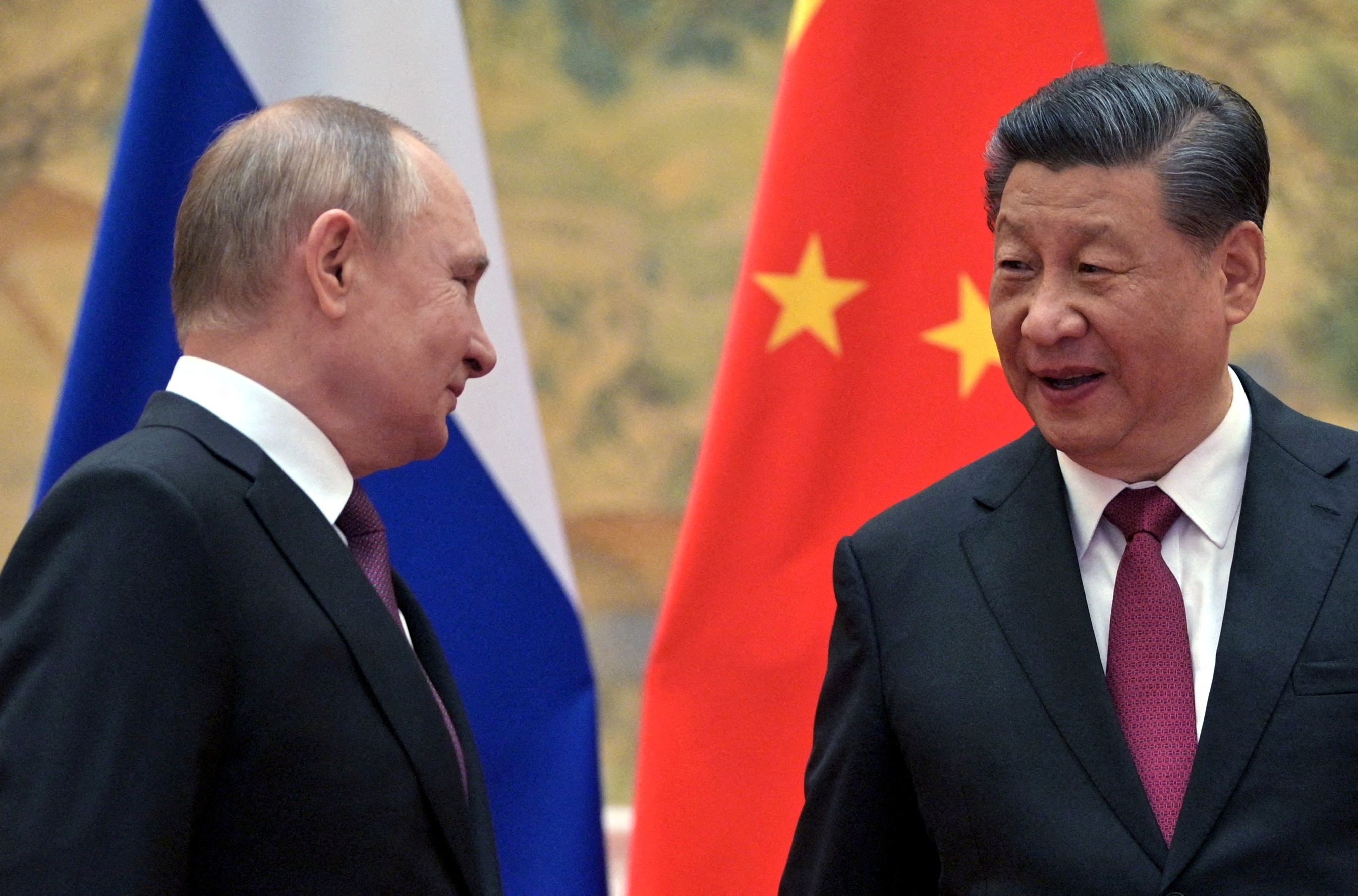
“China and Ukraine are strategic partners… China is a friendly country for the Ukrainian people… I can responsibly say that China will forever be a good force for Ukraine, both economically and politically… We will respect the path chosen by Ukrainians because this is the sovereign right of every nation… China will never attack Ukraine, we will help, in particular in the economic direction,” Fan told Kozytskyi in what, frankly, read like a burst of emotion, shared, if not entirely in spontaneity, at least in some patronising sense of solidarity.
Questioned about Fan’s comments, Chinese foreign ministry spokesperson, Zhao Lijian said: “China surely supports these remarks by our ambassador in Ukraine. China supports all efforts that are conducive to easing the situation and for a political settlement.”
So, what’s China doing, or planning to do to stop the war that Russia has launched against Ukraine?
So far, Beijing’s publicised efforts have included phone and video calls by President Xi Jinping and meetings held by China’s two top diplomats Yang Jiechi and Wang Yi with counterparts besides dispatching humanitarian aid to Ukraine.
Friday’s 110-minute video call between Xi and President Joe Biden was one such effort.
“The world is neither peaceful nor tranquil,” Xi said, according to an official readout.
“The Ukraine crisis is something we don’t want to see.”
Right.
But as expected, Xi did not explicitly denounce Russia.
Mediation?
Given Beijing’s so-called “pro-Russia neutrality”, there’s a divergence of views on Beijing’s potential as a mediator in resolving the conflict in the east European country.
Some like Alex Younger, former head of the British secret service, have talked about China’s criticality in stopping the war.
Younger told BBC Radio 4’s Today programme: “Of all the people in the world that can assert influence on Vladimir Putin, who is in his bunker and who is obsessed by achieving greatness through the restoration of the Russian Empire... of all the people that can talk sense to him, it’s (Chinese President) Xi.”
For Beijing, it’s easier said than done.
Beijing knows the war is not only being fought between Russia and Ukraine; Moscow is also fighting a united West comprising the US, its allies and the European Union in a war of diplomacy and global opinion.
Does Beijing want to step on to this diplomatic minefield given its support for Russia, even if it has not given its wholehearted backing for Moscow’s “special military action” in Ukraine?
China certainly stands to gain from a negotiated settlement as the war rages on, as its, pre-war, relatively cost-free partnership with Moscow is weighed down by geopolitical, economic and reputational risks for Beijing, Helena Legarda, lead analyst at the Berlin-based Mercator Institute for China Studies (MERICS), told HT.
But it’s unlikely to jump into the arena to negotiate.
“China, however, is very unlikely to mediate between Russia and Ukraine itself. Despite the clear gains if it were able to broker a ceasefire, also in terms of its global image, Beijing will not want to increase its exposure to the conflict and to shoulder the responsibility (and potential backlash) in case the negotiations go wrong,” Legarda said.
It’s not Beijing’s misgivings alone why it might not directly take part – the West will not trust Beijing.
“Besides, China’s official position so far has been one of tacit support for Russia’s interests, and is therefore unlikely to be seen as an impartial actor by Kyiv or other parties in Europe or the US,” Legarda said.
Given Beijing-Moscow’s strategic ties, China will not be seen as objective.
“In the 6-party talks on the Korea (Korean Peninsula), China was the lawyer for North Korea, not impartial,” Joseph S Nye, University Distinguished Service Professor and former Dean of the Kennedy School of Government at Harvard University said.
“China would like to avoid a choice and have things both ways, but if it has to choose it prefers to keep close to Russia as a counterbalance to American power. However, if Russia seeks a mediator, this would ease China’s dilemma,” Nye told HT over email.
There are arguments in favour of China being part of a multilateral team of negotiators.
It could help China, for example, in polishing its sullied global image in the backdrop of supporting (since the Ukraine war) a mostly reviled Russia, repressive policies in Hong Kong, Xinjiang, and Tibet and being diplomatically and militarily aggressive against Taiwan; and, as we know, running a dragging border conflict with its Himalayan neighbour, India.
There are reasons also for Beijing not to directly intervene or assume some kind of leadership position in mediation efforts.
For one, this is a politically sensitive year for China with the twice-in-a-decade Communist Party of China (CPC) Congress – reshuffle of the party elite – coming up later in 2022.
Xi is expected to be confirmed for a third term as CPC general secretary at the 20th CPC Congress this fall and secure a precedent-breaking third term as China’s president in March 2023.
Would Xi want to get into a potentially messy multilateral negotiation without the guarantee of success?
By China’s own version of events, it wasn't aware of Moscow’s plans to invade Kyiv despite the Xi-Putin camaraderie — notwithstanding a strong sense of disbelief about this convenient narrative of ignorance among China watchers.
Anyway, Xi wouldn’t want to portray a picture of failure to his captive domestic audience if negotiations implode.
It will be a loss of Xi’s carefully cultivated face as the most powerful Chinese leader since Mao Zedong, and an erosion of the CPC’s stature among the masses, fed on an all-encompassing hyper-nationalist narrative of a successful and glorious China, rising tall in the post-pandemic-ravaged world.
China does not have a long history of mediating in foreign conflicts either, MERICS’ Legarda pointed out.
China’s rising graph of involvement in mediation activities is parallel to the expansion of its Belt and Road Initiative (BRI) — as a way to try to restore and/or preserve stability mostly in BRI countries.
China, Legarda said, also tends to favour multilateral initiatives, like the Six-Party Talks, in which it can be one of the several powers around the table, allowing Beijing to present itself as a responsible global power but evade full responsibility if efforts are unsuccessful.
“This approach has advantages for Beijing, but it has so far failed to produce long-term positive outcomes. Focused on restoring stability, rather than long-term conflict resolution, China’s approach often lacks in impartiality, inclusivity and national ownership.”
Sutirtho Patranobis, HT’s experienced China hand, writes a weekly column from Beijing, exclusively for HT Premium readers. He was previously posted in Colombo, Sri Lanka, where he covered the final phase of the civil war and its aftermath, and was based in Delhi for several years before that
The views expressed are personal


