E-Paper



In defence of personal liberty, fairness in law
Recent rulings collectively signal the Supreme Court’s commitment to ensuring that law enforcement agencies adhere to due process

 Prefer HTon Google


In recent rulings, the Supreme Court (SC) of India has strongly emphasised the importance of personal liberty in the face of stringent laws such as the Prevention of Money Laundering Act (PMLA) and the Unlawful Activities (Prevention) Act, or UAPA, marking a significant shift in how these laws, designed to combat financial crimes and terrorism, are addressed. Illustrating the apex court’s commitment to balancing the scales between law enforcement and individual freedoms, these judgments, delivered within a week in May, underscored the necessity of due process and protection of fundamental rights amid serious concerns of fairness and exercise of arresting powers.
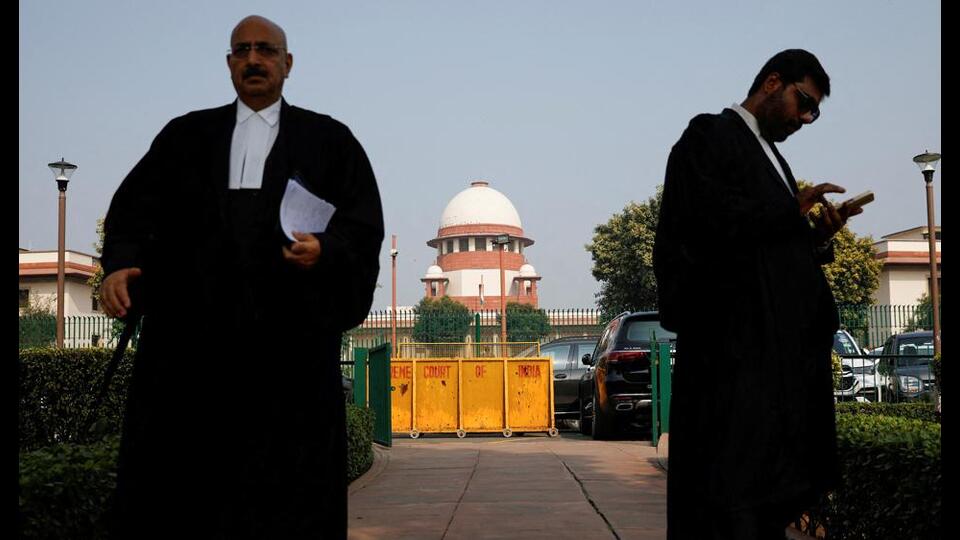
In a pivotal ruling on May 16, the top court curtailed the Enforcement Directorate’s (ED) authority to arrest individuals after a special court takes cognisance of a charge sheet filed under PMLA. Justices AS Oka and Ujjal Bhuyan declared that once the court is seized of the matter, ED cannot arrest the accused named in the complaint. The court directed that special courts should issue a summons, rather than a warrant, to accused individuals who were not arrested during the investigation. This prevents arbitrary detentions and ensures that those appearing in court are not forced into the stringent bail process under Section 45 of PMLA. Section 45 stipulates that the public prosecutor must be given an opportunity to oppose the bail application of the accused. Furthermore, it requires the trial court to be convinced that there are reasonable grounds to believe the accused is not guilty and is not likely to commit any offence while on bail. These conditions generally make it challenging for an accused in a money laundering case to secure bail. The court further held that if ED seeks custody of an accused who appears after being summoned, it must apply to the trial court concerned. By restricting ED’s post-cognisance arrest powers, the judgment aimed to address possible abuses wherein an accused person who complied with a court summons might be taken into custody and made to go through the cumbersome and rigorous PMLA bail process.
Similarly, a judicial order on May 17 by the SC stressed the necessity of predicate offences before ED walks in and makes arrests. It underscored that PMLA offences are “parasitic” and require the existence of predicate offences. Justices Surya Kant and KV Viswanathan asserted that without a predicate offence, PMLA charges cannot stand independently. The court emphasised the need for a strong legal basis in financial crime investigations by stating that even though one or more accused may not be named in the predicate offence, ED must thoroughly establish the underlying predicate offences before pursuing money laundering charges in a case.
This view reinforced the need for a robust legal foundation in financial crime investigations, taking forward the rationale of a November 2023 ruling by the SC in the Pavana Dibbur case. The 2023 decision held that criminal conspiracy, punishable under Section 120B of the Indian Penal Code, cannot be the only offence for the opening of a money laundering probe, and that the conspiracy must relate to a crime enlisted as a scheduled offence under PMLA. The recent decision aligns with the principle that PMLA depends on the commission of a scheduled offence, without which ED’s case lacks legal standing.
Another important SC decision on May 15, quashing the arrest of NewsClick’s founder, Prabir Purkayastha, highlighted the importance of procedural fairness and the right to be informed of the grounds of arrest under UAPA. Justices BR Gavai and Sandeep Mehta criticised the Delhi Police for procedural lapses, highlighting the constitutional mandate under Article 22(1) that requires the grounds of arrest to be communicated in writing.
The judgment rendered a scathing critique of the way Purkayastha was arrested in October 2023 on charges of receiving foreign funds through Chinese firms with the alleged intent to compromise India’s stability and integrity and was subsequently remanded to police custody under UAPA. It noted that his arrest and remand were carried out in a “clandestine manner”. “It was nothing but a blatant attempt to circumvent the due process of law; to confine the accused to police custody without informing him of the grounds on which he has been arrested; deprive the accused of the opportunity to avail the services of the legal practitioner of his choice so as to oppose the prayer for police custody remand, seek bail and also to mislead the court,” said the court, maintaining that there can be no exception to constitutional rights, especially when personal liberty is at stake.
Significantly, this judgment also declared that both PMLA and UAPA require that the grounds of arrest be communicated to the accused in writing, stating that this requirement is rooted in Article 22(1) of the Constitution, which protects people’s right to know why they are being detained. The declaration was made in response to the Delhi Police’s argument that UAPA cases are not covered by the SC’s October 3, 2023, ruling in the Pankaj Bansal case, which required ED to provide the accused with documented grounds for arrest. The court emphasised that the requirement of communicating arrest grounds is a critical constitutional safeguard and must be uniformly applied to ensure transparency and fairness.
This judgment reaffirms the necessity for transparency and fairness in arrest procedures, particularly under stringent laws like UAPA and PMLA, which grant extensive powers to law enforcement agencies, often raising questions about the balance between national security, financial integrity, and individual rights.
These rulings collectively signal the SC’s commitment to protecting personal liberty and ensuring that law enforcement agencies adhere to due process and fairness. By limiting ED’s powers post-cognisance, underlining the need for predicate offences and mandating procedural fairness in arrests, the court has set a precedent for upholding constitutional rights even in the context of serious financial crimes and terror charges. These decisions reinforce the rule of law and ensure that agencies like ED operate within legal boundaries, respecting individual freedoms. This approach protects the people’s rights and simultaneously enhances the credibility and accountability of law enforcement agencies that serve critical functions in combating terrorism and financial crimes.
The views expressed are personal