
 E-Paper



In Maha puzzle, Pawar may hold the answers
If his last fortnight’s masterclass on how to get your flock in line is any indication, Sharad Pawar may have a few answers.

 Prefer HTon Google


The moral high ground can be a lonely place in modern-day politics. On Thursday, the Supreme Court said that if it weren’t for Uddhav Thackeray’s precipitate resignation as chief minister (CM) after the majority of his lawmakers defected to Eknath Shinde last June, it could have considered reinstating him. Thackeray justified his call as an ethical one. “Those who had been given everything by the party turned traitors and asked me to prove the majority. I did not want to participate in it (floor test).”
Thursday’s verdict jolted the suspended animation of the last 10 months in Maharashtra, giving rise to a number of questions: Is this the end of the Shiv Sena as we know it? Does it mark Shinde’s emergence as a new national player of consequence? What happens to the Opposition in Maharashtra’s politics next?
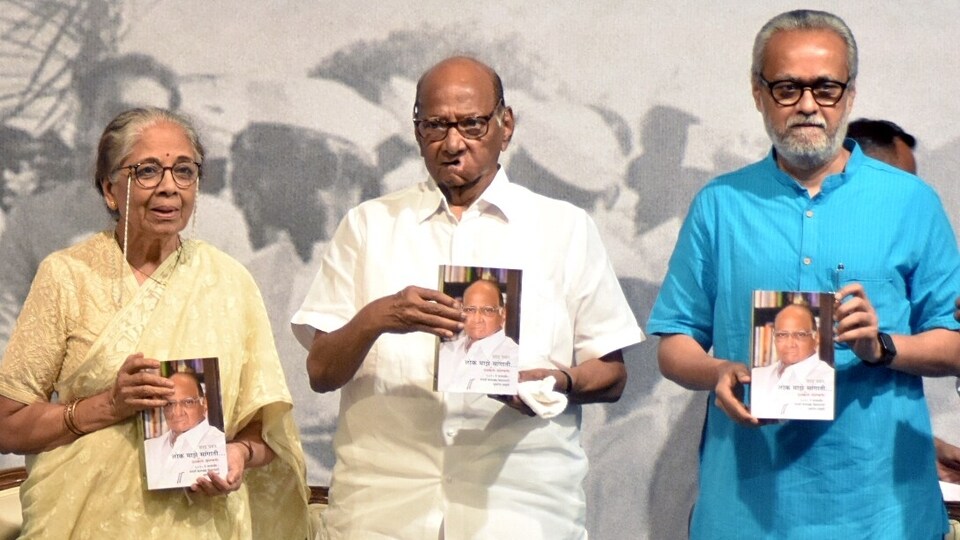
If his last fortnight’s masterclass on how to get your flock in line is any indication, Sharad Pawar may have a few answers. At one place in his recently-released autobiography, Lok Maze Sangati, he writes: “In politics, you need to have the skill to keep your opponent guessing about your moves. I have that (skill) and I have used it tactfully. In the 2014 assembly elections, I announced the NCP’s support to the BJP even before the results were fully out. It puzzled other parties and political analysts, but my stand is clear on such matters: even if you’re weaker you can be four steps ahead of your opponent if they can’t figure out your moves. By the time they realise what those are, you have already scored over them.”
For 60 years, Pawar has played a key role in Maharashtra politics, starting with a ministerial stint in Vasantrao Naik’s cabinet while he was still in his 20s. Through these years, he has remained politically adroit, joining various factions of the Congress as he deemed opportune. He has been a part of Congress (R), Congress (U), Congress (I) before heading a Progressive Democratic Front government at the age of 38, with Janata Party and Jan Sangh leaders such as Uttamrao Patil and Hashu Advani. The nimbleness notwithstanding, he has remained ideologically at variance with Hindutva. Like his mentor Yashwantrao Chavan, Pawar built his politics as a cooperative, communitarian project premised on the idea of social democracy. It was this spirit of cooperative development that changed the fortunes of western Maharashtra, large parts of which lie in the rain shadow region, yet prospered agriculturally and industrially. It’s in western Maharashtra – also the seat of the many social reform movements that kept the more Brahmanical outreach of the Rashtriya Swayamsevak Sangh at bay – where Pawar’s politics took root and flourished.
Since 2014, however, Maharashtra, one of the country’s more “Congress-minded” states, too has come under the sway of the Bharatiya Janata Party (BJP). Adding to that churn is the generational transition in its political leadership across parties. In the Sena, Thackeray, 63, is precariously perched on two ideological stools. What remains of his Sena is a pale shadow of Balasaheb’s party. Neither his nativism nor his brand of Hindutva – which is now the preserve of one party alone – has the same pull in modern-day Mumbai as they did in Balasaheb’s time. At a time of cold, cut-throat politics, his reliance on emotion and his lack of administrative experience, have possibly cost him his career.
In the NCP, Ajit Pawar, 64, frets that he will remain the eternal prince-in-waiting especially as the BJP continues to gain ground. Ajit Pawar, who has been called by some bureaucrats as the “best CM Maharashtra has never had,” has flirted repeatedly with the BJP, albeit unsuccessfully. After Thursday’s verdict, it’s evident he will have to continue within the NCP fold.
As for Devendra Fadnavis, while he couldn’t quite contain his grin after the top court’s decision, the 53-year-old leader has his own peculiar challenge. He came into national prominence as the state’s youngest CM after Sharad Pawar, with many insisting that he’s just as sharp, but has since struggled to expand his base among the state’s dominant Maratha community. He’s also up against a growing number of competitors within his own party, and now finds himself playing charioteer to Shinde’s dark horse. If Shinde, 59, continues to go from strength to strength, how will that impact Fadnavis’s own chances of coming back as CM? Could there be another palace coup?
All four men are driven by ambition and a sense of destiny, and as politics becomes increasingly transactional, it’s telling that a government of Fadnavis and Thackeray is interchangeable with a government of Thackeray and Ajit Pawar, or with that of Shinde and Fadnavis, and potentially, even a government of Ajit Pawar and Fadnavis.
Any ideological opposition in Maharashtra, then, can only come from the Congress party-- not necessarily from rudderless Congressmen though — and the stalwart Maratha. As the state’s politics opens up to all kinds of possibilities, Sharad Pawar, its one constant, is already busy with organisational meetings, holding rallies and confabulating with Nitish Kumar over a national Opposition alliance. He will next recast the Maha Vikas Aghadi with the NCP in command instead of a depleted Sena. Keep walking and bide your time is a lesson Thackeray could have done well to imbibe from his senior alliance partner.
The views expressed are personal


