
 E-Paper



In Sri Lanka, mandate for continuing change
Sri Lankans know that the line between opportunity and chaos is a thin one.

 Prefer HTon Google


If more emphasis was needed from the Sri Lankans to underline that they wanted change in the country, the results of the November 14 parliamentary elections provided it in ample measure. After electing the candidate of the National People’s Power (NPP) Anura Kumara Dissanayake as President on September 23, the people spoke again on November 14 by presenting a two-thirds majority and 159 seats to the NPP.
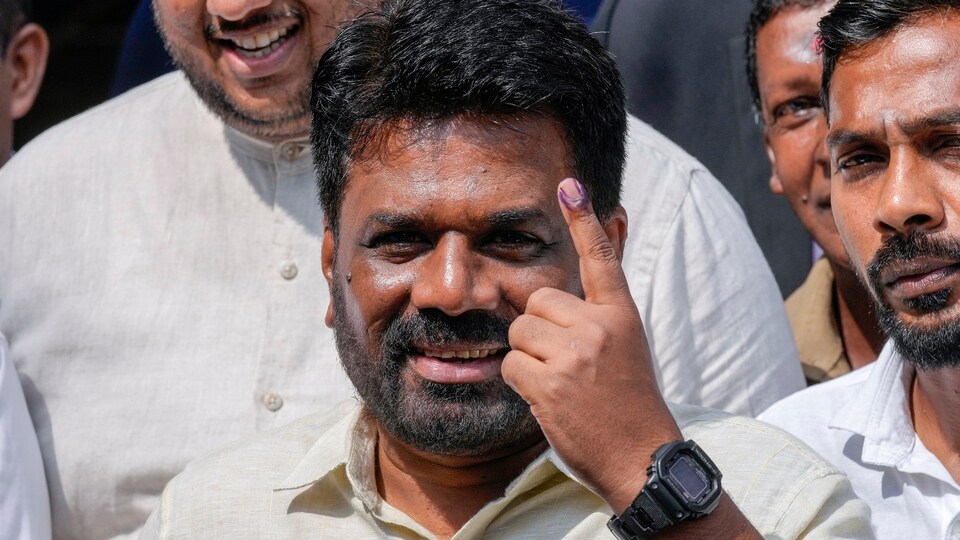
The massive mandate provided to the NPP is the largest to any political formation since Sri Lanka adopted the proportional representation system under its 1978 Constitution. The vote also torpedoed the decades-old divisions between the Tamils and Sinhalese as well as the Muslims and the Sinhalese, burying the many ghosts generated by a 26-year-old war unleashed by the Tamil Tigers.
For the first time in living memory, many Tamils and Muslims trusted their future to a majority Sinhala party – the NPP -- to represent their interests in both parliament and government. Such a prospect was not considered to be in the realm of the possible even when Dissanayake was elected President less than two months earlier.
In September’s presidential poll, Dissanayake’s support from the north and east was insignificant but the story changed in November – the NPP won 12 out of 28 seats in the electoral districts of Jaffna, Vanni, Trincomalee, Batticaloa and Ampara. It pushed the Tamil nationalist party, the Ilankai Tamil Arasu Katchi, down to eight seats.
Referring to the NPP’s poor performance in the presidential election, Dissanayake conceded at a rally in Jaffna on November 10: “This was because we did not convey our message effectively to the Tamil-speaking people. It was also because we did not work as hard in the north as we did in the (Sinhala-dominated) south.”
Sri Lanka defaulted on its $37 billion debt in April 2022. The Aragalya, the Sinhala word for struggle, that erupted in March 2022, forced President Gotabaya Rajapaksa to leave office, ending a bizarre militaristic tenure in office – one that even saw him impose a ban on the import of fertiliser and pesticide – in the apparent interest of promoting organic agriculture. He fled the country on July 14, and Ranil Wickremesinghe was elected President by Parliament a week after. Inflation touched 70% in September 2022 and there was a crippling shortage of food, fuel, medicines and other essentials.
The detritus of governance was picked up by Wickremesinghe, a former prime minister who has never won the country’s presidency through the ballot despite trying three times. A firm believer in the neoliberal economy, Wickremesinghe is credited by the Colombo elite for ending shortages and improving the economy. Ordinary people, however, continue to face the burden of austerity imposed by international creditors. Poverty increased to 26% of the population with crowds to obtain new passports on the streets of Colombo telling its own story of despair-driven immigration.
In September this year, the young and salaried people from the south gravitated to the NPP and Dissanayake, who have tried to distance themselves from a hardline Marxist approach that was the ideology of their parent, the Janatha Vimukthi Peramuna, the JVP, which twice tried to seize power in Sri Lanka through violent means in 1971 and during 1987-89.
And, in November, it was the turn of the young and salaried from the north to vote in large numbers for the NPP creating a bridge between ethno-religious minorities and the majority Sinhalese community. It was an accord in the polling booth with no real precedent. “The results of the parliamentary elections show that power has shifted out of the hands of the political elite. It also shows an absolute lack of trust and faith in the ruling political class and parties,” Jayadeva Uyangoda, emeritus professor of Political Science at the University of Colombo, told this writer. Sasanka Perera, columnist and academic, felt the election results showed that current politics in Sri Lanka was not based ethnicity and language. He hoped these signals from the people would be picked up by the ruling NPP.
International actors like the United States, India, China and the International Monetary Fund, given their economic heft, remain critical of what happens in Sri Lanka. They, too, would do well to heed the message from the election results: The people want immediate relief and a change in political culture.
The momentum of hope generated by the election of Dissanayake as the President in September has been continued by the people on November 14. By giving the NPP 159 seats (the JVP, had only three seats in the last Parliament), the pressure on the party and the President to govern has only increased as have expectations.
Sri Lankans know that the line between opportunity and chaos is a thin one. The storyline might change in the coming weeks and months, but for the moment they can savour the moment.
Amit Baruah, an independent journalist, was in Sri Lanka during the parliamentary elections. The views expressed are personal


