E-Paper



Is Goa on the brink of allowing cab aggregators?
Goa's transport department has issued draft guidelines for aggregators, prompting taxi operators to file objections and seek support from opposition parties.

 Prefer HTon Google


On May 20 the Goa transport department notified the draft Goa Transport Aggregator Guidelines, 2025, with a view “to regulate aggregators” under the Motor Vehicle Act and called on “persons likely to be affected” to submit any objections within a period of 30 days of the publications.
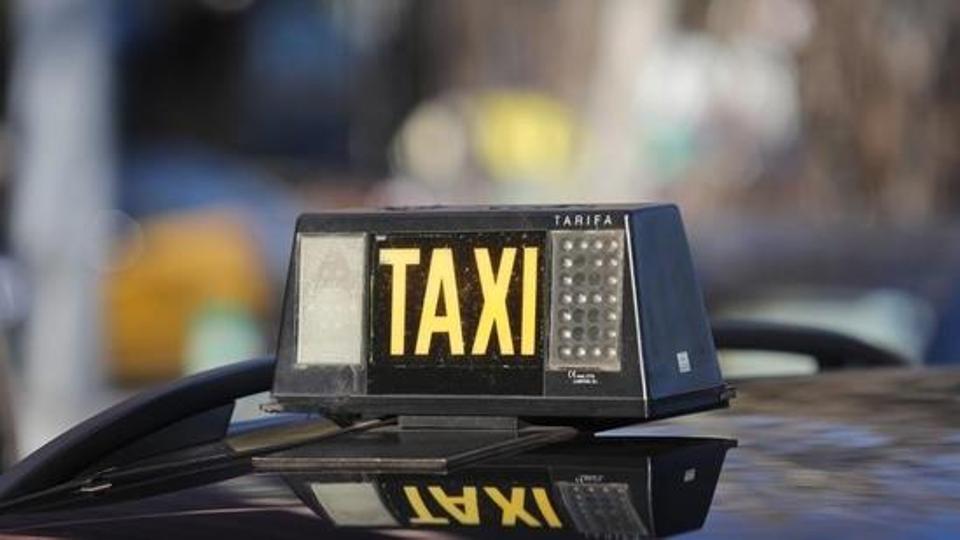
For Goa’s taxi cab operators, who have, for long, cartelised and vigorously defended their dominance of the tourist taxi trade in the state, this was a move they feared was coming, but one which they have decided to fight nonetheless.
Across the week, tourist taxi operators lined up outside the transport department office to file their objections to the draft guidelines. Besides this, delegations have been calling on local MLAs, ministers and opposition leaders to demand scrapping of the guidelines.
But the response has been lukewarm at best. Revenue minister Atanasio Monserrate bluntly told one delegation that he was “with them” but he would back the government’s policy and that they should “try [it] for sometime”.
“I am there with you all but I have certain reservations. But since the government wants to bring this app, why don’t you try for some time, if it doesn’t work, then I will stand with y’all to help you,” Monserrate told a delegation of taxi operators.
Michael Lobo, MLA from the Calangute constituency, considered the epicentre of Goa’s beach tourism industry, once a staunch supporter of the taxi lobby has noticeably softened his stance. During a meeting with the taxi operators Lobo was insistent that the operators would have to at least come to the negotiating table.
“According to me there has to be transparency. There is no compromise on transparency. Fares can’t be based on quotes or negotiations. The business should not be taken over by somebody else. Let there be a digital, let it be in their name,” Lobo said after the meeting. In him and other coastal belt MLAs, the taxi lobbies have had their staunchest supporters so far. That the acrimonious meeting ended with the taxi delegation refusing to pay heed to Lobo’s pleas is indicative that things might be different this time.
Opposition support
Where the taxi operators did find support was with the opposition parties. The Congress and the Aam Aadmi Party (AAP) have both decided to back the cab aggregators.
“This government has failed with regards to the tourism policy... What we see in Goa, the decline in tourism is because of the failure of the government and today they are pointing towards (blaming) our taxi owners,” Leader of Opposition Yuri Alemão said.
“When we met, we decided that this gazette notification has to be scrapped first. No doubt that technology is the need of the hour. But technology, not by putting their interest behind,” he added.
“It appears that the mood has changed among the ruling dispensation in a large part because of the national debate about how expensive Goa is. It is also possible that instructions have come from the high command to have the issue sorted out, which is what has prompted the government’s change of heart,” Kishore Naik Gaonkar, a political analyst, said.
Taxi operators had a monopoly
Over the years the Goa government has given local taxi operators a long rope.
When cab aggregators first made their way into the country and began operating in metro cities and a similar demand was made for Goa, the Goa government in 2017 had, despite demands from the hotel sector, rejected the proposal to have popular apps like Ola and Uber operate in the state, but instead promised would develop its own app, which the taxi operators could then register themselves under.
However, rather than do that, the Goa government brought on a private player -- Frota Miles, a company that was incorporated barely a month before the service was formally launched: Goa Miles, the state-endorsed, local taxi aggregator.
But the results have been mixed -- especially from a user experience point of view. Securing cabs in non-tourist frequented locales have been a hit and a miss, while the app’s clunky interface and need to preload money into the app have been frequent pain points.
There are around 30,000 tourist taxis registered across the state of which Goa Miles has only 1500 cabs under its umbrella.
“If the government was convinced that apps were the answer, they should explain why they could not make Goa Miles and the Goa Taxi app, both run by the government, work. Is it something unique about Goa that has resulted in these apps failing? Or is it that Goa’s low population density, high vehicle ownership mean demand for taxis is asymmetric and not really scalable,” Gaonkar said.
After taxi operators failed to sign up for the app, the tourism department launched another app ‘Goa Taxi. It suffered from the similar deficiencies that Goa Miles suffered.
That coupled with increasing complaints on social media has forced the government’s hand. Back in March this year. The transport department held a meeting with Goa’s taxi associations, a meeting that was described as “productive and meaningful.”
“What we are suggesting is that we should have a uniform rate and the earnings of the drivers should be protected irrespective of what kind of service or aggregator they are using. It is about the rate and the driver’s interest. Whatever the drivers feel is beneficial to them at the same time ensuring the convenience of the tourists and the locals is also very important,” Goa’s director of transport Polumatla Abhishek had said.
The draft guidelines reflect that.
According to the guidelines “[t]he Aggregator shall guarantee that the Owner receives at least the Fare as prescribed by the Government, for every journey completed by the Passenger; shall not make any deductions whatsoever from the fare receivable by the owner and shall ensure that all the payments to the owner are settled within seventy two hours from the completion of the journey.”
However, taxi operators in objections filed before the transport department noted how the guidelines guaranteed the full, notified fare to the ‘owners’ and that there was no provision for protection of driver payments and welfare.
“The guidelines do not adequately address the welfare and rights of drivers who work with aggregators. Issues such as fair compensation, job security, and working conditions should be prioritized to ensure that drivers are not exploited. I request that the guidelines include specific provisions aimed at protecting driver rights and ensuring fair treatment within the industry,” a memorandum submitted before the Goa Transport Department, a copy of which HT has accessed, has said.
The guidelines also mandate that the aggregators can only onboard drivers with a valid badge from the state, are given health insurance, incentives for women drivers, etc.
Unsurprisingly, the Travel and Tourism Association of Goa, an industry body consisting of Goa’s Hoteliers the Goa Chamber of Commerce and Industry has welcomed the decision.
“The TTAG designed a survey to find out whether people wanted apps or not. 96% have voted in favour of apps whereas 4% have said they do not want apps. Based on this overwhelming response which also corresponds to surveys done by other organisations I think that the people of Goa want apps and the government should take this forward,” TTAG president Jack Sukhija said.
“The guidelines strike a well-considered balance between enabling digital transport innovation and protecting local livelihoods. By ensuring drivers are paid the full government-notified fare, mandating timely payments, and introducing safeguards like health insurance and vehicle subsidies, the framework reflects both economic and social responsibility,” chairperson of the Goa Chamber of Commerce and Industry Srinivas Dempo, said.
But questions remain.
“Aggregators, with their ability to offer deep discounts and subsidies in the early stages, create an uneven playing field. These platforms often operate at a loss initially to capture market share, leveraging substantial financial backing from investors. Over time, as customers grow accustomed to the convenience and affordability of app-based services, independent drivers may find it increasingly difficult to compete, leading to a loss of income and, ultimately, displacement from the market,” Kaustubh Naik, an anthropology researcher, said.
“App-based models often impose trip quotas, forcing drivers to work long hours to meet performance metrics. In larger cities like Delhi and Mumbai, many aggregator drivers report working 12-15 hours daily to achieve earnings targets, leading to fatigue, stress, and long-term health issues. The physical and mental toll of such schedules is immense, compromising drivers’ well-being and safety on the roads,” he also said.
“Ultimately, the displacement of local drivers by app-based aggregators not only erodes a vital source of income for marginalized communities but also risks transforming the character of Goa’s tourism industry. To mitigate these impacts, it is imperative to explore alternatives that modernize the sector without sidelining its most vulnerable participants,” he added.
Meanwhile Goa’s transport minister Mauvin Godinho said that guidelines were only at the draft stage and a final decision was yet to be taken.
“We have given a month’s time for everyone’s opinion including taxi operators. It is only a draft notification to state our intention. We will take them (taxi operators) into confidence as well. There is time till June 20 after which a necessary decision will be taken. If tomorrow they say we want to come together under their own aggregator I will not hesitate to even finance them. Let them operate it themselves,” Godinho said.
“They are talking as if we are forcing something on them or opposed to them. Ultimately, they are the biggest stakeholders. We will consult with them as well. They will have to fall in line. Time is running out. Once for all it has to attain closure,” he added.