
 E-Paper



Keeping up with UP | 4,500 years of world history from the ground up
The Shoes and Religion exhibition in Toronto shows how religious beliefs have impacted the form and function of footwear around the world

 Prefer HTon Google


A pair of boots on display at the Bata Shoe Museum in Toronto, Canada, obviously evokes interest for one hailing from Uttar Pradesh, where chief minister Yogi Adityanath’s love for cows has propelled the state machinery to script welfare programmes for abandoned cattle, such as building sanctuaries and providing monetary assistance to Gau Sevaks (cow caregivers) — ₹50 per cow.
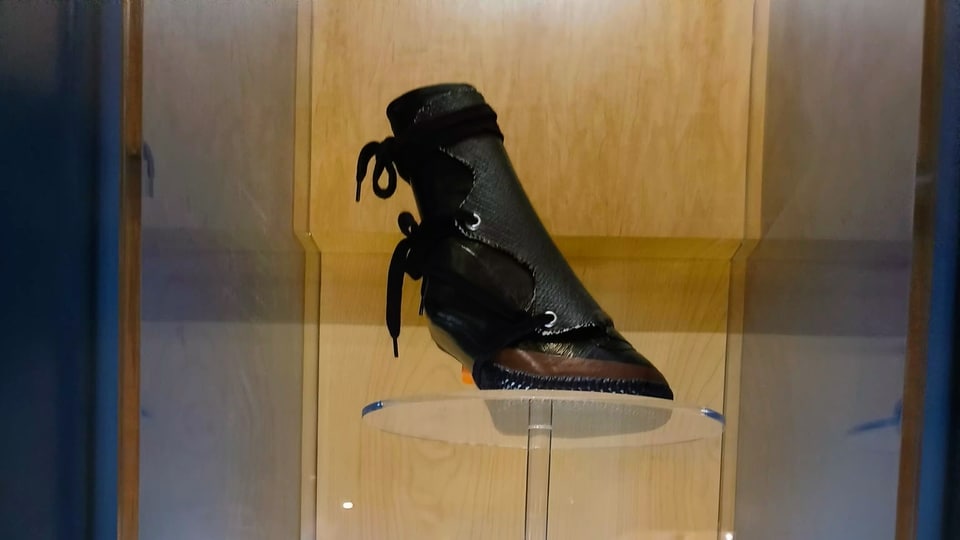
The black rubber boot used in Canada kept cow feet securely fastened while recuperating after injury or surgery, according to the information given in the exhibit on display. This could well serve as food for thought for Gau Sevaks.
Though there are about a dozen or more shoe museums across the world, what connects a visitor from India to the Bata Shoe Museum is not only its name but displays that include padukas. The note with the display stated: “Ahimsa, or the avoidance of harm, is a fundamental tenet in Hinduism, Jainism and Buddhism, and led to practices such as vegetarianism and the avoidance of leather. A reflection of this belief can be found in the design of the Paduka, one of the oldest forms of Indian footwear. Padukas are stilted to reduce the risk of injury to insects and microscopic life by raising the sole of the foot off the ground.”
The note refers to Lord Ram’s 14-year-long exile: “In Indian culture, footwear has also been used as a means of expressing submission. In the Ramayana, one of Hinduism’s most famous epics, the deity Vishnu comes to the Earth in the form of Prince Rama, heir apparent to the throne of King Dasharatha. The palace intrigue leads to the exile of Rama for 14 years. Bharata takes the throne and to demonstrate his loyalty places Rama’s golden sandals on the throne and rules in his name until his exile is over.”
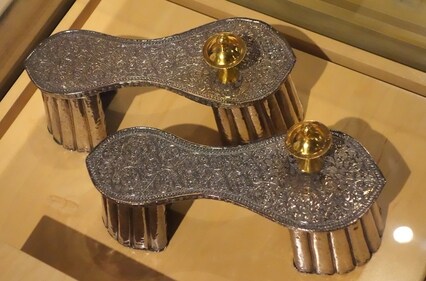
An unusually high silver-coloured paduka from Jaipur was worn by women for an important aristocratic occasion. From the 18th century, the fine quality of intricate engraving, the gold toe-knobs, and the high stilts identified them with the upper class. A pair of saffron Mojari, featuring gold zardozi embroidery with jade beads and brass bells, was worn by a temple dancer in Rajasthan.
Another paduka on display had interesting information from the 19th century. “The toe-knobs on these padukas originally featured carved lotus blossoms. With each step, a button was pushed and the lotus petals would release perfumed water. Lotus blossoms are important in Hinduism because the lotus has its roots in the mud, its stems in the water and its flower in the air. It represents the different stages of being and references the quest for enlightenment.”
A gold enamelled necklace that features amulets called kavach with footprints that reference the Hindu deity Krishna is also on display. The note reads: “Necklaces like this were a visual indication of the wearer’s religious commitment. The necklace on display was worn by a devotee on a pilgrimage to the Shrinathji temple at Nathdwara.”
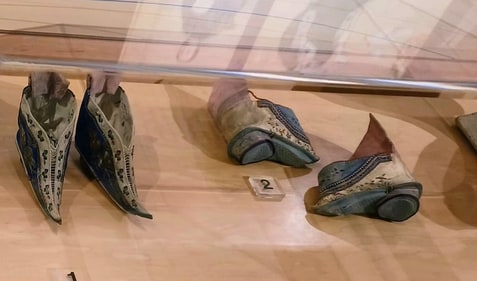
The ‘Shoes and Religion’ exhibition also references other faiths in noting how religious beliefs have impacted the form and function of footwear around the world. Many religions have ceremonial footwear which reflects denominational status or the liturgical calendar. Many cultures also require the removal of footwear upon entering sacred places as an expression of humility. Footwear has always been a status symbol, a practice that continues today. From bridal wear to Phulkari from India to bound shoes from China, the exhibits take you through about 4,500 years of the footwear industry.
The collection of the Bata Shoe Museum began after Sonja Bata began to travel the world on business with her husband Thomas J. Bata in the late 1940s. Intrigued by the traditional footwear of the places she visited, she began collecting examples that eventually inspired the creation of the Bata Shoe Foundation in 1979 to sponsor field research, support publishing and promote education. The foundation opened a three-storeyed museum in 1995 and it currently holds over 13,000 shoes and related artefacts.
Bata, a name Indians identify with, has closed down in many countries but remains operational in India even today despite the competition from various contemporary brands.
From her perch in Lucknow, senior journalist Sunita Aron highlights important issues related to Uttar Pradesh


