
 E-Paper



Policies and People | Involve students in monitoring climate crisis impacts
Children worldwide have inherited a problem that is not of their making. There's still time to turn things around, but we must act now. Educational institutions in Kerala show the way

 Prefer HTon Google


The recent round of heatwaves across the country forced many state governments to change school timings and curtail outdoor activities for students. Worried about their children's health due to extreme heat, parents in Delhi urged the city government to either revise the school timings or advance the summer holidays. Such demands are not unexpected and will become much more vociferous as the impact of the climate crisis becomes more pronounced.
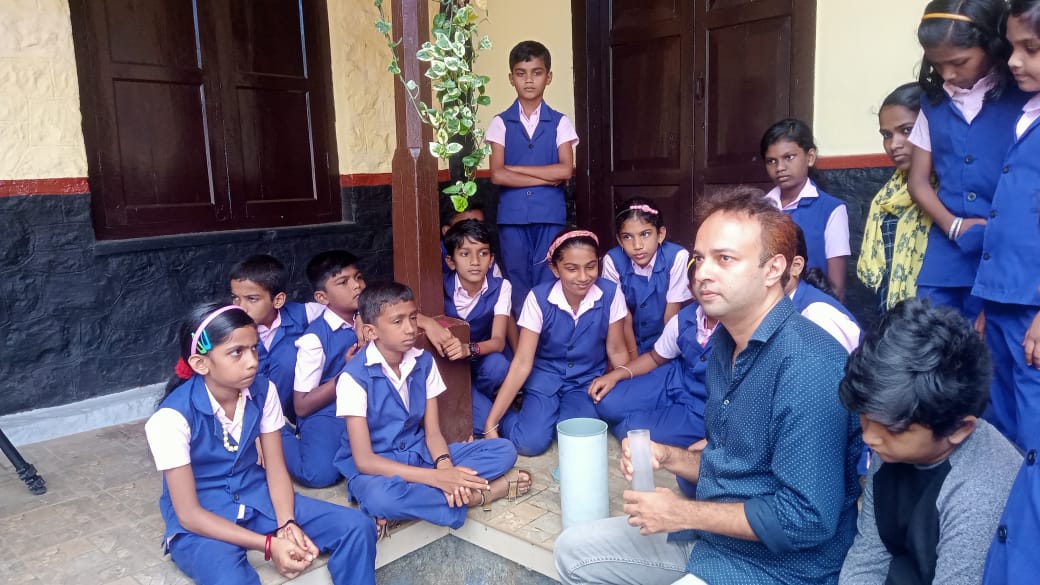
Children worldwide have inherited a problem that is not of their making.
Last year, Save the Children, a non-profit, released Born into The Climate Crisis: Why we must act now to secure children's rights. According to a report, which was developed by an international team of leading climate researchers led by the Vrije Universiteit Brussels (@VUBrussel), children born in 2020 will be more often hit by the climate crisis in their lifetime than their grandparents.
The report said that children in low- and middle-income countries would continue to bear the heaviest burden of these dangerous climate crisis impacts. Moreover, for the most vulnerable children – including those exposed to multiple hazards, those living through conflict, those most profoundly impacted by Covid-19, and those experiencing inequality and discrimination – the impacts of the climate crisis will be made worse, placing their access to rights and essential services at additional risk.
Involve children in climate planning
There's still time to turn things around, but we must act now. One of the key ways to do so is to factor children into climate planning.
"Investing in children is also economically sound because they will grow up with the knowledge of how to address the root causes of the climate crisis and adapt to its impacts. Children are telling us repeatedly how the climate crisis is impacting them, how urgent is it for us to act, and how they want to be involved in finding solutions," the report added.
This is exactly what some schools in Kerala's Kottayam district are doing under the guidance of Meenachil River Protection Council (MRPC), a non-profit. The student groups are helping MRPC to run a high-tech flood alert system.
Every morning volunteer students record the rains their area has received over the past 24 hours with the help of rain gauges installed at their homes. Then they log on to a website, run by MRPC, and upload measures collected, adding to the series of rain monitoring data collected from different parts of the Meenachil river basin.
"Students from almost 80 schools and several colleges are involved in the project. We have already installed rain gauges in over 150 locations along the river basin, besides scales to measure the river's depth at 10 points," MRPC's secretary Eby Immanuel told me over the phone. "Many of these students lost families and friends in recent climate-induced flashfloods and understand that the climate crisis is for real. Naturally, they are interested in doing their bit." The data that MRPC's volunteers generate are shared with the district and disaster management authorities.
The importance of micro monitoring
"Today's children will be exposed to far greater climate change risks than most living adults. What MRPC and the schools in Kerala are doing can be easily scaled up for better monitoring of the climate crisis, raising timely alerts and plan adaptation measures," says Roxy Mathew Koll (@rocksea) a climate scientist at the Indian Institute of Tropical Meteorology, Pune. Koll is also deeply involved in the MRPC project.
"If you look at the climate crisis, it's a global problem, but its impacts are localised based on local topography and geography. So, solutions need to be localised," explains Koll.
"To plan adaptation strategies we need good, solid data. The India Meteorological Department cannot reach beyond the district level, but people at the village level are witnessing the impacts (drying rivers, frequent landslides). The climate crisis is affecting their and their children's lives, livestock, and farms. It has come as a requirement for them to understand what is happening around them and so these kinds of micro efforts that can join the dots to provide a larger picture," he added.
Koll wants the movement of measuring rain to expand across India and is working on a handbook that educational institutions and panchayats can use to track climate changes.
"India needs uniform guidelines for environmental monitoring equipment (such as rain gauges) so that every school can measure in the same way. Only then we can compare data and use them for policymaking," he said.
"In Kerala, the government is planning to spend a considerable amount on environmental monitoring in schools. This is a great move, and it can be expanded to other related things such as monitoring soil condition, water quality, air pollution etc. and this data can then be used for designing adaptation policies. Once a school leads the way and sets an example communities will also take it up."
In its reports, the Intergovernmental Panel on Climate Change has also mentioned that only a national-level climate crisis will not be not enough; the local administration and citizens have to work together to tackle the challenge.
The importance of such micro-level interventions and the involvement of citizen groups, especially the young, is best explained by what eminent ecologist Madhav Gadgil said after visiting the MRPC project areas.
"It is the people at the ground level who are suffering from the adverse [environmental] impacts... and it is for cooperative groups of citizens to properly document the situation in the field, share it openly with the public and promote positive actions."
The Kerala schools and MRPC are doing just that.
The views expressed are personal


