
 E-Paper



Questions that arise in the wake of AAIB report
Amid the investigations, officials of AAIB and the government who can be held accountable, from Air India to GE company representatives, have all stayed quiet.

 Prefer HTon Google


A theatre of the absurd has followed the release — in the early hours of July 12 — of preliminary findings of the Air Accident Investigation Bureau (AAIB) in the Air India crash last month.
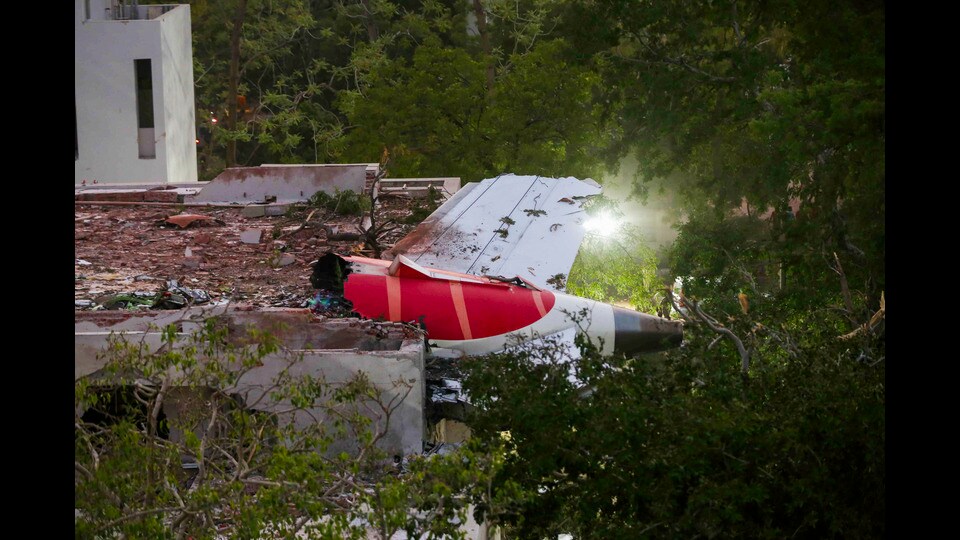
The AAIB preliminary report clearly indicated that the crash was caused by dual engine failure triggered by a loss of fuel supply soon after take-off. What it left unanswered is what led to the fuel cut-off.
Two possible theories emerged as the report was dissected. One group’s view was that some equipment failure led to the cut-off while the other favoured the view that the cut-off was triggered by deliberate manual action since the switches can’t move through inadvertent human action.
A few, selective leaks to the international media helped the ”crash as a result of a deliberate action by the captain” view gain traction. A tsunami of explanations by the group pushing this view has swept YouTube, WhatsApp, social media platforms and all corners of the internet. Reportage by many international publications and platforms has propped up this narrative, seeking to convince the public that this is the only possible explanation, notwithstanding the absence of adequate evidence to draw such a conclusion with certainty. This theory has effectively ruled out any kind of equipment failure.
The commonality among those in this cohort is the ability to hold attention based on sharp articulation, albeit with specious data and evidence. Speculations flew ad nauseam to cement the belief — with a tone of desperation creeping in — that no explanation barring deliberate pilot action was possible. Surprisingly, a former Indian captain went on record to say that he was absolutely certain that this was a case of pilot suicide.
Not everyone agrees with this narrative, and this has led to the formation of a new, equally aggressive group defending the pilot. This primarily comprises Indian commanders, crew, pilot associations, and aviation industry professionals — many of whom are willing to bet their careers that this was not pilot suicide, but was some kind of equipment failure (due to a design fault, a design or software-led malfunction, poor maintenance leading to malfunction or electrical failure). This group has also argued that sabotage leading to the twin-engine failure couldn’t be ruled out, pointing to the government forming a high-level committee under the home secretary right after the crash as evidence. They also questioned why airlines such as Emirates and Singapore Airlines are conducting checks on the switches when there is no apparent need as per the AAIB. Voluble aggression has crept into such defence. A few Boeing commanders in India also claim to have lost confidence in the aircraft they have believed in and piloted for decades.
Amid all this, officials of AAIB and all government officials who can be held accountable, Air India and Tata management, Boeing and GE company representatives, have all stayed quiet (except for a brief comment by the US National Transportation Safety Board chief that reports blaming the pilot are premature). Bloomberg recently reported, “The AAIB didn’t immediately respond to requests for comment sent outside normal business hours. The US National Transportation Safety Board (NTSB), which is assisting on the investigation, referred questions to the Indian authorities. Boeing also referred questions to the AAIB. Air India and GE Aerospace, which manufactured the engines, declined to comment.” This effectively covers all those directly vested in the accident and amounts to passing the buck, allowing the fog created over the entire incident to thicken.
To this last group, some questions need to be posed — after all, 260 lives have been lost. Here are some fundamental, non-technical questions that the public and families of victims may be interested in and deserve answers to.
Was the report release timed to suit reportage in the US (since past midnight is not the ideal time for Indian media), home to Boeing and GE Aerospace? Why not hold a press briefing to clarify matters and answer questions for enhanced transparency? Why was such a loosely-worded report that fosters speculation and creates more doubt in everyone’s minds released? Are we not entitled to know exactly who all were involved in the investigation, with a detailed annexure on their credentials and why they have been selected for this job? Why is the report unsigned? Why aren’t there a few B787 captains or some experienced Boeing commanders in the investigating team? And, if there are, why are their names not known to the public? Why not release the Cockpit Voice Recorder transcript and the Flight Data Recorder data? If the data is controlled by privacy laws, the breach and the leaks to the press should be investigated by the AAIB since it is the custodian of the data.
Air India CEO Campbell Wilson has reportedly told employees in a memo that the report identified no cause and didn’t make any recommendations. The question that arises then is: What purpose has it served exactly, and for whom?
Anjuli Bhargava writes about governance, infrastructure and the social sector. The views expressed are personal.


