
 E-Paper



Reform the Raj-style politically useful police
The relationship that existed between the police and the colonial administration has continued in the modern Indian State, despite talk of reforms

 Prefer HTon Google


As far back as 1903, the Fraser Commission recorded that “the police force throughout the country is in a most unsatisfactory condition, that abuses are common everywhere, that this involves great injury to the people anddiscredit to the government, and that radical reforms are urgently necessary.” The need for “radical reforms” in the police was thus felt 123 years back, and ironically we are still struggling to achieve that. Time seems to have stood still for the police all these years.
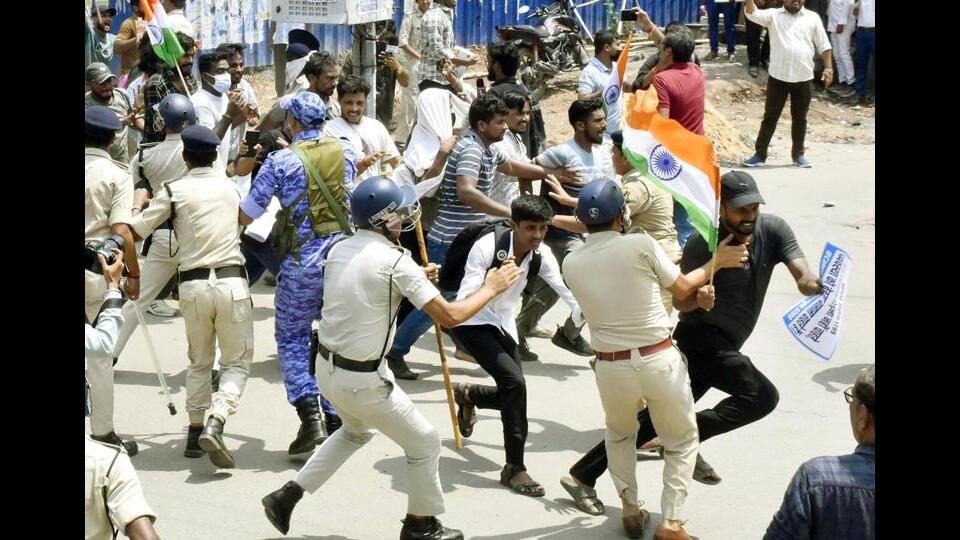
After Independence, while the Constitution was being drafted, there was a great opportunity to redefine the role and functions of the police, but it was missed because the founding fathers of the Constitution probably felt that the All India Services would henceforth function as servants of the people. However, the relationship that existed between the police and the colonial administration was, unfortunately, allowed to continue; the only change, as recorded by the National Police Commission, was that “the foreign power was substituted by the party in power”. As the years rolled by, a symbiotic relationship developed between the politicians on the one hand and civil servants on the other. The Emergency (1975-1977) exposed the brutal face of the administration, when thousands of people across the country were arrested not because they had committed any crime but only because they were opposed to the ruling dispensation. As observed by the 1977 Shah Commission, “the manner in which the police was used and allowed themselves to be used for purposes, some of which were, to say the least, questionable” and that “some police officers behaved as though they are not accountable at all to any public authority.” The Commission warned that “if a recurrence of this type of subversion is to be prevented, the system must be overhauled with a view to strengthen it in a manner that the functionaries working in the system do so in an atmosphere free from the fear of consequences of their lawful action”. The suggested overhaul was never taken up.
A National Police Commission was appointed in 1977 as it was felt that despite radical changes in the political, social, and economic situation of the country, there had been no comprehensive review at the national level of the police system after Independence. The Commission produced a comprehensive report covering the entire gamut of police workings in eight volumes. But, its salutatory recommendations received no more than cosmetic treatment at the hands of government.
In 2006, the Supreme Court delivered a historic judgment on police reforms in the form of seven directives, six of which were meant for the state governments and the remaining one for the Union government. The Court clearly emphasised that “the commitment, devotion, and accountability of the police has to be only to the rule of law” and that “the supervision and control has to be such that it ensures that the police serves the people without any regard whatsoever to the status and position of any person.” The judgment raised great expectations. However, the states have dragged their feet on implementing these orders and, although 18 states claim to have passed laws purportedly in compliance of the judicial directions, a close examination shows that these laws violate the letter and spirit of Supreme Court’s directions. The Union government has also not shown any keenness to implement the directions. They have not passed even the Delhi Police Bill, which Soli Sorabjee had drafted way back in 2006. The political class is apparently not enthusiastic about the reforms because these would dilute their authority over the police. The bureaucracy is also opposed because it has become addicted to lording over the police. And so, the executive stranglehold over the police continues. The prime minister has repeatedly pushed for doing away with all vestiges of colonialism, but the colonial system of policing bequeathed to us by the British continues.
The British could be excused for having drafted the Act of 1861, which was designed to raise a “politically useful” police force. However, there could be no justification for our leaders continuing with the same construct after eightdecades of Independence.
The suggested reforms are imperative on two counts: political and economic. The country’s democratic structure is being threatened by the rising number of persons with a criminal background entering Parliament and the state legislatures. Amongst parliamentarians, 40% face criminal charges; this share stands at 45% in the state assemblies.
In the Rule of Law Index developed by the World Justice Project, India figures at number 86 out of 143 countries. This is not a happy situation. The criminal justice system of the country should be enabled to prevent at least those with serious criminal charges against them from entering the temples of democracy.
From a purely economic point of view, according to the Institute for Economics & Peace, internal disturbances cost the country $1.23 trillion in 2023, which is equivalent to about 6.7% of the GDP. This is a huge cost. A professional police would be able to reduce this economic burden. Effective law and order should not be only a security or social objective — it is, in fact, an important prerequisite for sustained economic growth. A Viksit Bharat must have a progressive, modern police committed to serving the people and upholding the rule of law.
Prakash Singh is a retired director general of Police. The views expressed are personal


