E-Paper



‘The tears are gone’: The journey of a queer person from 2013 to now
The Supreme court scrapped a colonial-era ban on gay sex on Thursday in a landmark judgement that sparked celebrations across India where gay sex had been punishable by prison for up to 10 years.

 Prefer HTon Google


I had just moved to Delhi for my first job when the Supreme Court’s decision stung us. The morning of December 13, 2013 small clots of queer people had gathered outside the apex court, our hearts buoyed with hope. After all, the Delhi high court had read down Section 377 four years ago, the government hadn’t opposed us, and the media seemed supportive. Being depressingly Bengali, I was wearing an ill-fitting floral-patterned shirt that didn’t go at all with the cotton trousers I paired them with. In the auto to the court - this was a time before Uber - I was worried if people would make fun of my shirt. How will I impress people in the celebrations that were sure to follow, I worried.
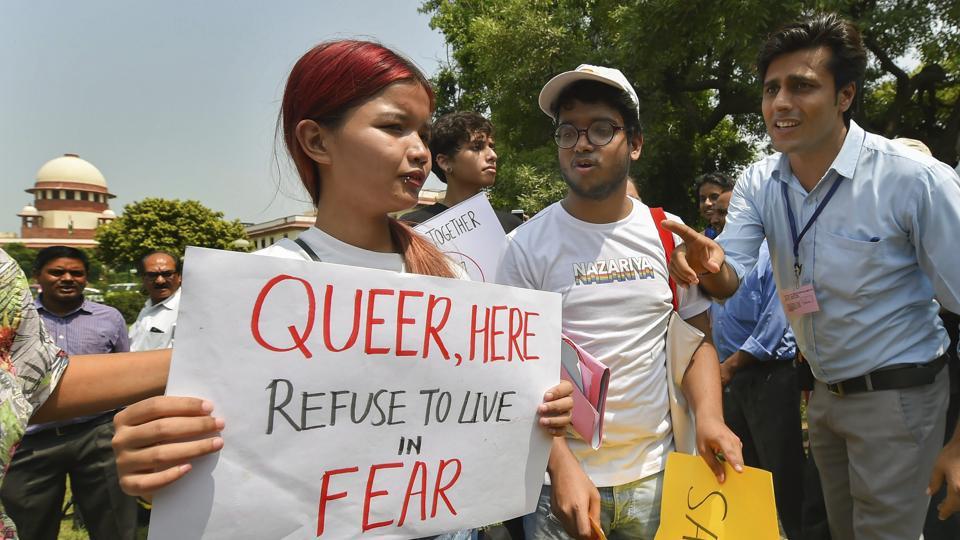
There was no need. In about five minutes, the top court had broken our hearts refusing to confirm the “so-called rights” of this “minuscule minority”. Our friends, veteran activists many of them, stumbled out of the court, ashen faced. Many fought to bite back the sobs as television cameras focused on their face. Stunned, I slunk away, almost comfortable in the shame and humiliation that is the everyday for many queer people in a country where violence and abuse is mundane and commonplace.
On the face of it, Section 377 of the Indian Penal Code outlaws “unnatural sex against the order of nature” - a term that applies to everyone indulging in any kind of non-procreative sex, oral, anal, digital or something more imaginative. But in practice, the law shrouds queer communities in a cloud of abuse, humiliation and doubt, making it impossible for them to lead lives of dignity and self-respect.
Those among us who look different from what the society has ordained, who dress differently from what is the norm, who identify with genders and sexualities that cause us discomfort, who do not come from powerful castes and those without money enough to buy freedom often bear the brunt of this law - which targets the most vulnerable among us.
The unique nature of this violence is that it leaks out of every moment of our life - the friends who taunt us, the relatives who abuse us, the parents who hit us, the lovers who shame us and the society that alienates us. That queer people rise from this morass and work to create beauty and compassion has always sounded unreal to me.
There is a memory I carry with me from that December evening, when many of us gathered in the heart of Delhi to protest the unbearable wrong of Koushal with fire in our hearts. One is a young teenager who had travelled alone all the way from Udaipur to Delhi for the judgment, had changed in the bus into his best shirt for the celebration, shouting the loudest slogans at the back. Aren’t you disappointed, I had asked him. “This is the first time in my life I have met anyone else who is gay. I know you all are sad, but you don’t know what this moment means to me,” he said.
September 6, 2018 seems a lifetime away from December 11, 2013. The court then said they didn’t recognize a minuscule minority, the court now says ‘Take me as I am’. I have not been able to stop smiling since the morning. The tears are gone. Civilisation is brutal, as the judges say, and the shame of queerness will take some more time to lift, but there is a rainbow at the end of this tunnel.
HT Conversations: 5 Big takeaways from the Sec 377 verdict