
 E-Paper



Setting the agenda for good governance a must
Political parties come out with manifestos to pronounce their plan of providing good governance. However, these are at macro level, expecting individual candidates of their party to draw out micro-level plans.

 Prefer HTon Google


It is election time again, and that too, a national one. The Election Commission is rightly urging us to go to the polling booth and vote.
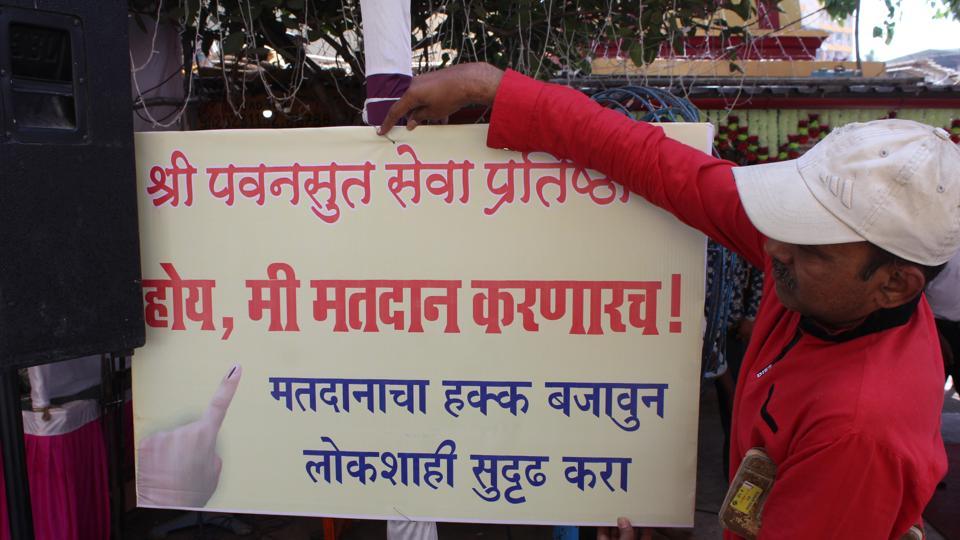
At this juncture, it may be worthwhile to ask: “Why do we vote?”
I guess the answer will be varied: starting from exercising our franchise to following the crowd. Be that as it may, our votes get us something in return.
What kind of return we seek from our effort? Again, the answer will greatly vary depending on individual orientation depending on tribe, caste, religion, political leanings, local considerations or freebies on offer.
At the end of the day, everyone seeks good governance on the basis of his/her understanding; and expects the winning candidate to provide that.
Political parties come out with manifestos to pronounce their plan of providing good governance. However, these are at macro level, expecting individual candidates of their party to draw out micro-level plans.
Many candidates are unable to draw an effective micro-level action plan for their constituency. They either parrot what their national leaders are speaking, or endlessly badmouth the opposition candidates and their parties. The aim is to gain advantage by lowering the esteem of others, which is an antithesis of good governance.
Each political party tries to convince the voters why it is the most deserving one; and is also best suited to provide good governance.
However, parties do differ in their view of what good governance comprises of, each seeing the task from its own perspective. This means each individual voter and each political party – if not each candidate – will have a differing perspective on what the task of governance entails.
The big question is, “Whether the twain ever meet?” No one knows for sure.
For the sake of clarification it may be worthwhile to amplify a little on the factors that contribute to good governance. But, to start with, what is governance?
Governance is the process of decision-making and the process by which decisions are implemented (or not implemented). The concept centres around the responsibility of governments and governing bodies to meet the needs of the masses as opposed to select groups in society.
Setting an agenda for reaching good governance is of huge interest but is also a complex task. It is, therefore, proposed that we think of a “good enough governance” agenda rather than what is ‘good’ in a theoretical sense.
In the construction of this “simpler” agenda, one needs to revisit the nature of policies that have worked in the past and set priorities in a strategic way.
Since governments carry out with goals like the provision of public goods to its citizens, there is no better way to think about good governance other than through deliverables, which are precisely the one demanded by citizens, like security, health, education, water, enforcement of contracts, protection to property and environment.
Rather than blindly vote, the central question a voter needs to ask is: ‘Will my candidate be able to deliver those in my constituency?’.
(The writer is a former dean & director-in-charge, Indian Institute of Management, Lucknow, and former director, Jaipuria Institute of Management, Lucknow. Views are personal.)


