
 E-Paper



Sheela Barse: A life to be celebrated
The lawyer was one among a handful of active citizens who took upon themselves the task of putting Public Interest Litigations to good use

 Prefer HTon Google


The late 1970s and 1980s are known as the golden period of Public Interest Litigations (PIL) in India. This was the time when the Supreme Court took up matters of little Indians filed by any person who had no individual interest in the matter, entertaining a slew of petitions and sometimes taking up matters suo moto.
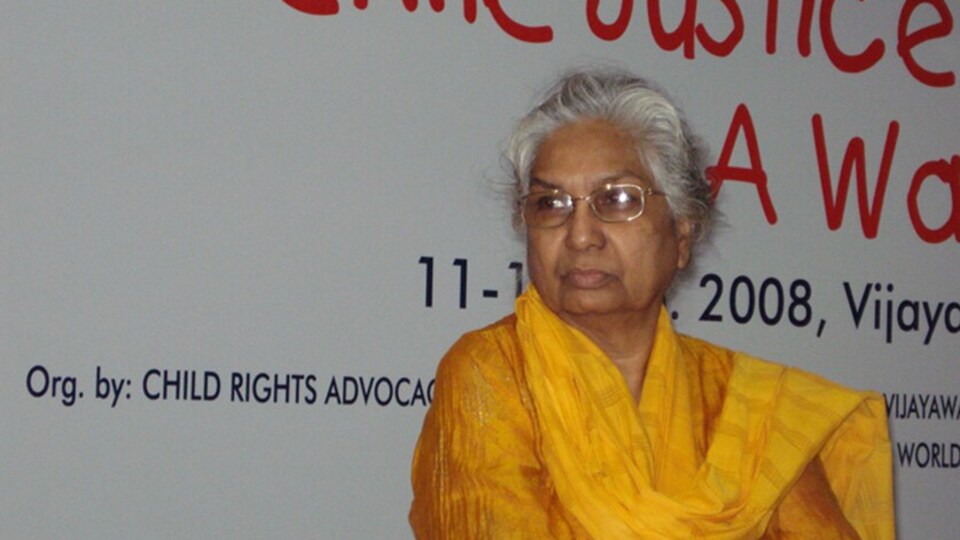
Sheela Barse, who passed away on March 25 at the age of 84, was one among a handful of active citizens who took upon themselves the task of putting this instrument to good use.
Barse was a freelance journalist, and daughter of a police officer, who had her ear to the ground, identifying issues like the rights of women prisoners, especially with regard to custodial violence in police custody, prison conditions and lack of legal aid, as well as children housed in prisons and juvenile homes. She was a fine legal mind which she honed by studying law and doing legal research to bolster her petitions in courts. Her interventions led the courts to pass various directions with regard to the condition of women in police lock-ups and in prisons, the detention of children below 16 years in prisons and the setting of observation homes for children in conflict with law.
Barse successfully lobbied for a uniform law for children that led to the enactment of the Juvenile Justice Act in 1987. In fact, it is said that she had helped draft the JJ Act in record time during the Rajiv Gandhi government, which was eventually passed by the Parliament.
Her letter to the Supreme Court, based on her interviews with women prisoners in the Arthur Road Prison (Mumbai Central Prison), led to a Suo Moto PIL in (1983 AIR 378)in the Supreme Court on custodial violence faced by women in police lock-ups. The then director of the College of Social Work, Nirmala Niketan, Dr Armaity Desai, who later became the director of TISS and chairperson of UGC, conducted an enquiry into the matter. The report confirmed the allegations made by Barse and led the SC to pass orders to provide legal assistance to women in lockups and prisons.
In fact, it can be said that the history of PILs bears a close link with the history of prison reforms through prison PILs. It began with KF Rustamji, a retired senior police officer and member of the National Police Commission when he wrote two articles in the Indian Express in January 1979, about the languishing of undertrials in the prisons of Bihar, many of whom well beyond the maximum sentence that they would have got if they had been convicted for the offences they were charged with. This matter was taken up by the Supreme Court through advocates Pushpa and Nirmal Hingorani who filed a habeas corpus petition on behalf of 18 prisoners including six women languishing in Patna and Muzaffarpur prisons.
In those days, only the affected party could file a writ petition, and therefore the decision by the lawyer couple to file a habeas corpus petition. This case would eventually go down in history as the Hussainara Khatoon case, which led to the release of more than 40,000 undertrials across the country, and opened the floodgates to the ingenious judicial innovation called PILs.
Barse continued to take up various issues relating to the human rights of women and children throughout her life through her research, writings and public advocacy. For example, she filed a petition in the Supreme Court asking for the release of children below the age of 16 years detained in prisons, and sought complete information on children in prisons and whether juvenile courts and observation homes existed in all the states. She also asked for a direction to the State Legal Aid Boards to appoint duty counsels to ensure the availability of legal protection for children as and when they are involved in criminal cases.
One was a witness to her arguing a matter in the Bombay high court in 2004 (in which she was the petitioner) relating to the malnutrition of children living in the Melghat, a tribal area in the Amravati district in Maharashtra. The passion and conviction with which she made her arguments, left everyone in the court spellbound. She poked holes in the arguments made by the government pleader about the steps being taken to address the issue of malnutrition with field data which was difficult to refute.
Barse’s life needs to be celebrated, and her achievements taught to future generations. We acknowledge the debt owed to her each time we act to right an injustice we witness, as she did with the passion and zeal she brought to correcting it.
Vijay Raghavan is a Professor with the Centre for Criminology and Justice, School of Social Work, TISS and Project Director, Prayas, a TISS field action project
Maja Daruwalla is the Chief Editor, India Justice Report
The views expressed are personal


