
 E-Paper



Small big steps towards clear skies, cleaner cities
Successful pilot programs in Delhi and other cities show that collaborative efforts can effectively reduce air pollution levels.

 Prefer HTon Google


We know air pollution kills. We also know that there exists widespread evidence to show how air pollution is caused, how it impacts us, how it can be addressed, and what benefits clean air can have on individual lives and communities. And yet, air pollution kills so many in India every year. According to a study in The Lancet, in 2019 alone as many as 1.67 million deaths in India were linked to air pollution. The sheer number of lives lost that year was enough to pile upon the country the ignominy of having the highest pollution-related death toll in the world. These deaths accounted for nearly 18% of all deaths in the country that year; and by some estimates resulted in an economic loss of $36.8 billion, i.e. 1.36% of the country’s gross domestic product.
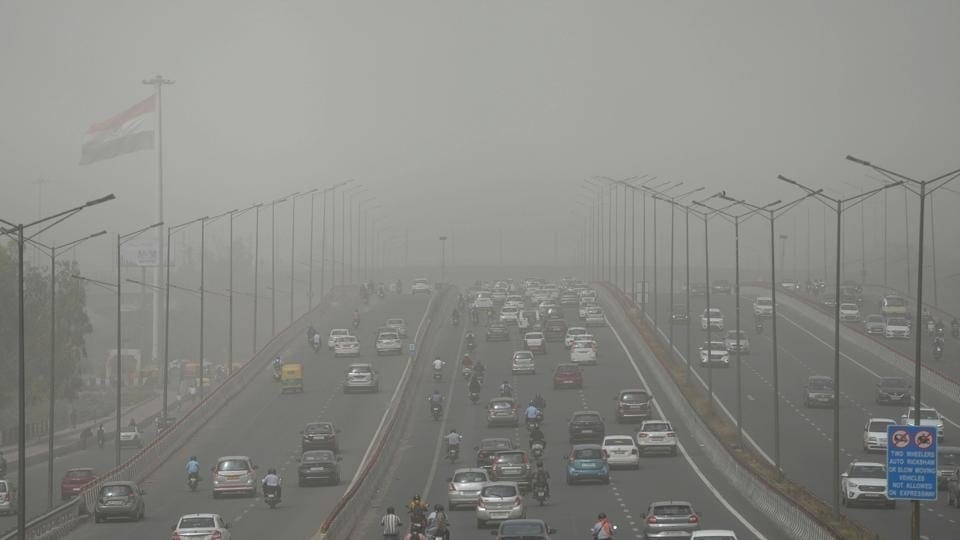
The answer doesn’t lie in resigning to the gloomy statistics but to ask the obvious question: Are we doing enough to reduce air pollution levels across the country? In 2019, the central government launched the National Clean Air Programme (NCAP) with the aim of reducing air pollution levels across cities in India by 40% by 2026. More recently, the Commission for Air Quality Management (CAQM-NCR) was set up to manage air quality in the National Capital Region (NCR). These initiatives are a testament to the government’s commitment to clean up the air. Yet, we must acknowledge that more needs to be done to tame the beast. More so if the goal has to be achieved by 2026. Since sources of air pollution are many, addressing each will also likely need different approaches and action plans. The good news is, as mentioned earlier, there is enough knowledge available to devise effective result-oriented solutions. All we need to do is tailor the solutions to our context and pilot them in different geographies. If the pilots are successful, the solutions can be replicated in other geographies. The path to the goal for 2026 gets easier then.
Take an example from Delhi. Under the leadership of CAQM-NCR, the Air Pollution Action Group (A-PAG) rolled out a joint programme in 2020 with the Municipal Corporation of Delhi (MCD) and other Urban Local Bodies (ULBs) to address pollution caused due to dust and garbage. As per the programme, specially trained surveyors systematically identify issues that contribute to pollution due to these sources — like, unpaved roads, broken footpaths and potholes; debris from construction and demolition sites; and garbage dumped on the roadside — across the city. The surveyor team uploads photographs of these issues wherever spotted onto an app along with their location details. The app then allocates resolution or elimination of these sources to government officials, as per the jurisdiction. The officials, in turn, upload photos of the same spot once the issue is addressed. This makes it easy for A-PAG to monitor the resolution status of each issue flagged. So far, close to 150,000 such issues have been identified across the national Capital; 85% of which have been resolved.
Given such success in Delhi, A-PAG has gone on to collaborate with government officials in some other cities. This programme today has expanded to Patna, Muzaffarpur, and Gaya in Bihar; Lucknow, Varanasi, Ghaziabad, Mathura-Vrindavan, and Prayagraj in Uttar Pradesh, and Gurugram in Haryana. Lucknow, particularly, is an interesting case study. In a first-of-its-kind effort to combat air pollution, the Smart City Integrated Command and Control Centre (ICCC) is being used to run this programme in Lucknow. So far, over 22,000 issues have been identified in the city, 90% of which have been resolved. I dare say, that the Lucknow collaboration can serve as a model for all smart cities in India when it comes to controlling air pollution. The success of this action-oriented programme in these 10 cities speaks volumes about how programmes that change things on the ground can easily be rolled out with only a few tweaks to suit the context of specific cities or states.
Programmes that target other sources of air pollution can also be similarly piloted, evaluated for impact, and scaled up in collaboration with willing governmental partners. This programme has also held up that air pollution levels can be addressed successfully when there exists a synergy between private and public collaborators. While the government(s) leads the charge — since no large-scale, meaningful impact is possible without the government driving it —everyone from land-owning ULBs to non-profit organisations needs to work collaboratively to ensure a reduction in air pollution levels. Perhaps it is also important to remind ourselves that the benefits of clean air cannot be emphasised enough -- longer life spans, reduced risk of heart stroke, contracting asthma and other lung diseases, and improved cognitive function. And, apart from safeguarding public health, clean air will also boost India’s economic prosperity by way of reduced health care costs and increased productivity. With the knowledge available today, we know enough about air pollution, and enough to check it. We also have at least some proven models and good practices to show that such frameworks can help us soften their impact on the daily lives of a large swathe of people. The goal for 2026 set by the government is achievable. All we need to do is firm up that resolve by joining hands to clean up the air; to ensure that in India, breathing needn’t kill anymore.
Mohit Beotra is director, Air Pollution Action Group (A-PAG). The views expressed are personal


