E-Paper



Social Justice Matters | On gender, the conservative backlash hits classrooms
The NCERT pulled down a teachers’ training manual on integration of transgender or gender non-conforming students in schools from its website

 Prefer HTon Google


Gender is as diverse as the human experience. The world over, many people are slowly moving towards embracing this richness and vibrancy of expression and being, abandoning centuries of tortured attempts to wrestle gender into a binary straitjacket. They are discovering that language can be respectful, public infrastructure not limiting, and social attitudes liberating.
But as queer and trans groups push for a more equal world, undoing ideas and structures of what gender looks and feels like, they are increasingly battling hostility from conservative groups fiercely proud of tradition and intrinsic ways of life, as if these are not things meant to evolve. This friction is as visible in so-called first-world countries, such as the United States and United Kingdom, as in developing nations such as Brazil.
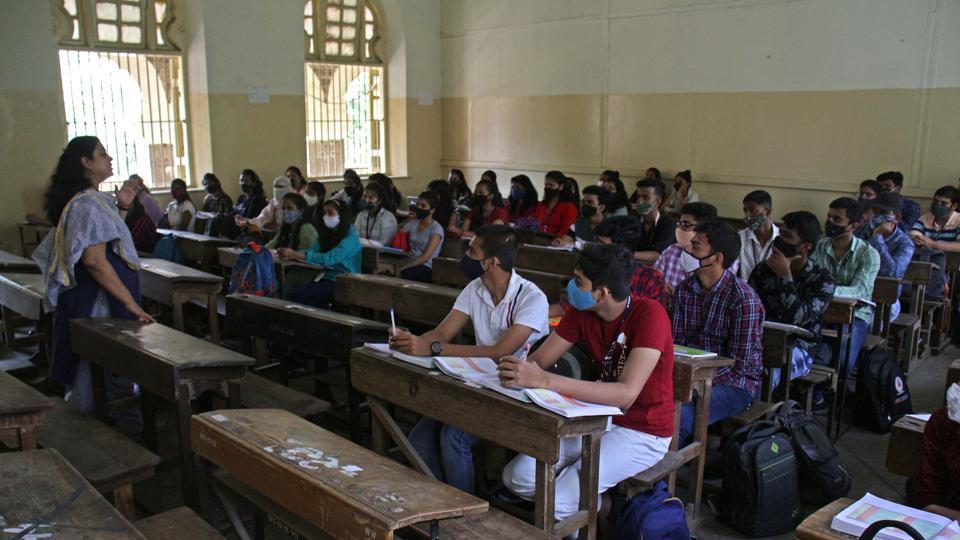
Last week, India appeared to join these ranks. The National Council for Educational Research and Training (NCERT) pulled down a teachers’ training manual on integration of transgender or gender non-conforming students in schools from its website, after a complaint was forwarded by the National Commission for the Protection of Child Rights (NCPCR), which also asked for the rectification of certain alleged anomalies. Separately, some authors of the manual faced hate and attacks on social media.
The NCERT module, which was put together after months of discussion and research, had lofty aims. It hoped to train a generation of teachers and classroom educators, sensitise them to the variety and nuances of sex and gender, and build a nurturing and non-judgmental environment for children.
It explained a plethora of gender and sexuality terms, and attempted to delineate the differences between things like gender identity and sexual orientation. It listed various trans communities in India, making the important point that identities are not immutable and that gender variance is very much rooted in the subcontinent’s cultural fabric.
It detailed the harrowing history of the Criminal Tribes Act, the reasons for paltry numbers in the census, and the problems of enumeration. It spotlighted the educational, economic and social vulnerability of these communities and why their school enrolment is perilously low and unemployment indices are unbelievably high.
The document also explains various national and international policies and judgments, including the 2014 Supreme Court verdict affirming transgender rights, the 2019 transgender rights bill, and guides teachers on how to navigate tricky issues of identity crisis and binary gender segregation.
But objections have been raised on two counts.
One is the suggestion for more gender-neutral infrastructure. The manual argues that enforcing gender binaries in uniforms, seating arrangements, playgrounds, sports teams and other areas causes confusion and stigma to those who identify outside these set norms. It suggests steps like toilets for transpersons and de-emphasising gender in mixed-group activities. But complaints to the NCPCR say steps like this will not be commensurate with the gender realities of many children and expose them to psychological trauma.
Second is the suggestion to teachers to talk to students about puberty blockers. These are medicines that are usually used to delay puberty, or the onset of changes in the body that may not be commensurate with the person’s gender expression. The manual asks teachers to talk to students about puberty blockers (hormones) and convey that these are available and accessible for adolescents experiencing gender dysphoria. The complaint objects to this without giving reason and also raises questions about the background of the people who drafted the training material.
Many of these objections are echoed by conservative groups the world over who view such steps as diluting education. But sensitising teachers and educators to help trans and gender diverse students in the classroom is a net good for a country that believes in democracy and human rights for all. Such steps are common for all marginalised groups in ways that upset the status quo and the dominant majority (50 years ago, similar steps were taken to boost women’s participation in primary and secondary education) and it is the responsibility of policymakers to mitigate the hostile environment that transpeople face, to ensure that the community realises its full potential.
It is important to remember that these are not instructions to children, but suggestions to their teachers to ensure a more rounded and accepting environment for children already struggling with dysphoria. Ensuring some washrooms for transfolk don’t mean eliminating all gendered washrooms (the manual specifically mentions separate washrooms for transfolk, on the lines of washrooms for female students created decades earlier to boost their attendance) and schools have a duty to ensure that trans or gender diverse students don’t feel stigma or fear in using washrooms. Similarly, conversations about medicines to delay puberty to raise consciousness at an appropriate level cannot hurt anyone’s education or growth.
A raft of recent high court judgments— particularly from Madras and Kerala — have fixed the responsibility of trans inclusion and gender-sensitive policies on state agencies. The new education policy hopes to provide “equitable quality education” to girls and transgender students. The transgender rights bill, though contested on some provisions, unequivocally talks about equality in access to education for transgender people. Therefore, creating a nurturing classroom environment is a part of stated government policy with little room to debate.
Ultimately, expanding someone’s gender horizons is about pulling them out of set notions of what is normal, natural and accepted. The idea of education is to show young people that the world is vast and diverse, that many things we see around us and take for granted, are in fact, much more complex, and equip them with the tools to navigate life. Sensitising teachers about gender identities, health and lives, helps gender diverse communities, sure, but it also helps create a well-rounded, sensitive, empathetic and intelligent student cohort who are not closed to new perspectives and welcome change.
In the absence of the manual, many students won’t get to hear the story of India’s first trans Padma awardee, the first Dalit-trans engineer or emphasise with people their age who hesitated to use the bathroom, or felt awkward in the playground, or dropped out due to taunts. Their lives will not have the richness of diverse friendships, conversations and experiences. The loss will not just be theirs, it will be all of ours.
The views expressed are personal