
 E-Paper



Stubble or no stubble, Delhi’s air pollution will continue to pinch | Opinion
The air pollution levels in Delhi go up in the winter as particulate matter gets trapped at the ambient level due to negligible wind speed for dispersal, coupled with some contribution by farm fires in the northern plains of India.

 Prefer HTon Google


Delhi assembly election is just four months away and air pollution is a poll issue, though not raging.
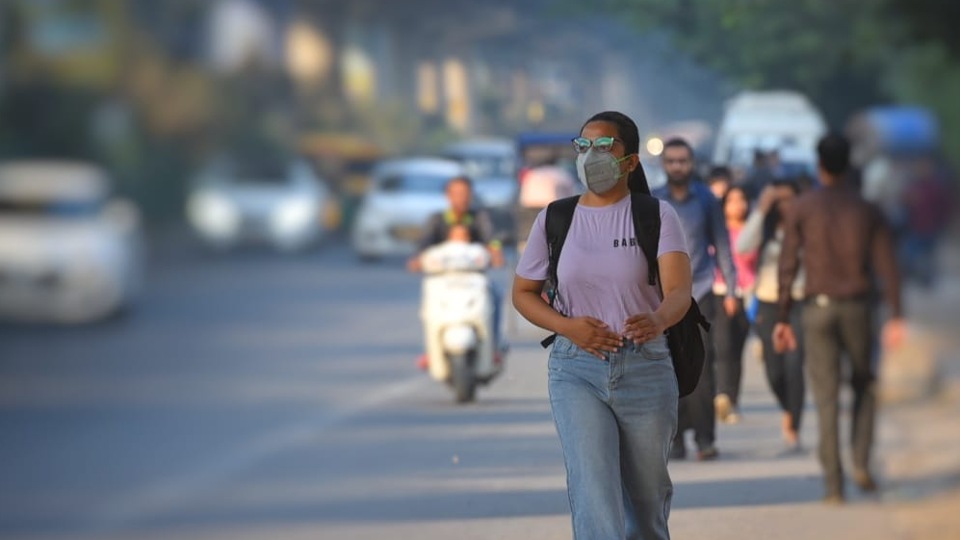
The period between October 29 and November 12 will be the most critical. Scientists from IIT-Kanpur have said that pollution spikes in the national capital in this period. In 2018, IIT-Delhi researchers too had said that October 29 to November 4 is the period when pollution levels shoot up in Delhi.
The pollution levels so far this year are slightly lower than the previous years, thanks to favourable weather conditions.
The air pollution levels in Delhi go up in the winter as particulate matter gets trapped at the ambient level due to negligible wind speed for dispersal, coupled with some contribution by farm fires in the northern plains of India.
The reason is simple—if there is no wind speed in Delhi to disperse particulates causing temperature inversion, how can there be wind bringing smoke pollutants from the northern plains. In such a scenario, the air pollution gets locally trapped even in the farm fire zones, which has high concentration of pollutants. Sadly, there is not much scientific data on the air pollution levels in the farm fire zones.
Some scientists argue that due to its geological positioning Delhi sees witnesses an air islanding impact. But, if that had to happen than towns in the foothills of the Himalayas such as Chandigarh and Dehradun should also have higher air pollution impact as they face higher islanding impact than Delhi and are closer to farm fire areas in Punjab, Haryana and western Uttar Pradesh.
The Central Pollution Control Board’s real-time air data from October 1 to October 18, 2019, of Delhi and towns in the farm fire regions of northern India does not support that argument that stubble burning causes major spike in the national capital’s air pollution.
During this period, the stubble burning cases in Punjab and Haryana this year were almost same as in 2018, meaning that farms of Punjab and Haryana emitted same amount of smoke. But, the impact on Delhi was much less.
The reason could be found in the CPCB air pollution data.
On national highway-1 (GT Karnal road), the average particulate matter (PM 2.5) air pollution level in Ambala between October 1 and 18 was 72.5 micrograms in cubic meter of air. At Karnal, the next major town on the highway, it increased to 96.24 and was 102.56 in Panipat. In south of Delhi in Haryana, the pollution levels at Ballabgarh was 122.5 and on the eastern side, in Bahadurgarh, it was 103.25 micrograms in cubic meter of air.
At the major stubble burning areas in Haryana in districts of Karnal, Kaithal, Jind and Rohtak, the PM 2.5 level was much less. In Kaithal, the average for the period was about 47.32 micrograms in cubic meter of air and in Jind it was 54.5. In the paddy growing areas of Punjab such as Patiala, Jalandhar and Amritsar districts, the PM 2.5 level during this period ranged between 43.22 micrograms in cubic meter of air to 81.88.
Data provided by the Punjab and Haryana governments show that there is not much increase in stubble burning cases this year as compared to 2018.
In Punjab, till October 17, the government booked 1,198 cases against farmers for stubble burning as compared to 1,631 in 2018 and 2,927 in 2017. In Haryana’s Panipat, Sonipat and Karnal districts, till October 18, 2019, about 1,200 cases have been registered against farmers as compared to 1,224 for the same period in 2018 and 1,788 in 2017.
If the stubble burning was the real cause for Delhi’s rise in air pollution, its impact should have been visible in the outskirts of the national capital, from where the smoke laden air from Haryana and Punjab would descend.
The CPCB data shows that the pollution levels are higher in congested central parts of Delhi such as Punjabi Bagh, ITO and Kashmere Gate as compared to outskirts such as Narela in north, Mundka in west and Karni Singh Stadium in south Delhi.
For instance, PM 2.5 level in Narela between October 1 and October 18 was 142.5 micrograms in cubic meter of air, in Mundka it was 118.3 and in Karni Singh Stadium 114.5 whereas in Lajpat Nagar the average for the period was 210.4 and in Kashmere Gate 221.9.
This data clearly shows that vehicular congestion is a major reason for spike in pollution levels during this season when dispersal of pollutants is poor and experts also agree.
“Two factors are major contributors for air pollution in Delhi. Rising vehicular traffic and poor dust management,” said Sunita Narain, director general of Centre for Science and Environment. “Air pollution rises during this period as dispersal of pollution is very low because of almost zero wind speed.”
Narain said that during festival season, there are more vehicles on the road, which leads to increase in local generation of air pollutants.
“Poor management of dust and no landscaping around roads leads to further circulation of dust in ambient air leading to higher pollution levels. But, this also shows the bad state of our civic authorities,” she said.
The argument is not that Punjab and Haryana should not scientifically deal with the paddy stubble. It should to improve air quality in rural parts of the two agrarian states. Also, scientific management of stubble burning can add to the earning of farmers as several bio-renewable products can be produced from paddy stubble.
But Delhi must not blame its inefficiency on someone else and refuse to deal with the in-house problem. Close to 80% of the capital’s air pollutants are produced locally and the administration needs to implement several plans in place to deal with it.


