
 E-Paper



The Canadian election will matter for India too
While Carney is already proving to be more businesslike than Trudeau’s government, Poilievre could feel like a better ally from New Delhi’s perspective

 Prefer HTon Google


Canada is generally seen as a benign middling power with a Scandinavian penchant for high-quality living and ordinariness in its current affairs. But lately, it has seen all manner of issues exploding within and around it: A national housing crisis, a cost of living crisis and incendiary threats from United States (US) President Donald Trump, who first mooted the idea of making Canada the 51st state of the US on his campaign trail.
The situation made Justin Trudeau, Canada’s prime minister (PM) at the time, deeply unpopular. After Trump won a second term, a Canadian federal election seemed imminent. Trudeau loyalists, including deputy PM Chrystia Freeland, broke ranks and castigated his policies, prompting him to resign in January. Parliament was suspended till late March and a new Liberal Party leader was to be chosen, making the person the first unelected PM of Canada — a unique situation.
All this felt as if it was happening in the background because Trump had become the lead character in the lives of Canadians. Trump’s tariffs against Canada (if he does push them into effect tomorrow) are expected to drive the nation into a deep recession — the US is Canada’s largest trading partner. At risk are deeply integrated supply chains in industries such as automotive, agriculture and energy, carefully put together since the creation of the North American free trade zone in the 1990s.
Canadians are extremely angry. Lately, they have avoided buying American goods, cancelled holidays south of the border and asked each other to go “Elbows Up!” — a war cry from ice hockey that asks team members to anticipate unfair play from the other side (and not skate away from a fight).
Many more events that have made life in Canada feel anything but ordinary: The wildfires in Jasper, a brutally cold winter (a 25-year record for snowfall in some parts), a parliamentary investigation into allegations of foreign interference from China and India, a snap election in Ontario (the most populous province) and Canada’s historic victory in the Four Nations hockey tournament against the US last month, which transcended the sport and worked even non-hockey fans into a frenzy.
And if all that didn’t sound exciting enough, a federal election is being held six months ahead of schedule. Canadian anger has transformed what seemed like a slam dunk victory for the Conservative Party and their leader, Pierre Poilievre, into a real horse race. For much of 2024, Poilievre and the Conservatives led by huge margins in unofficial polls and many pundits saw their victory as a foregone conclusion.
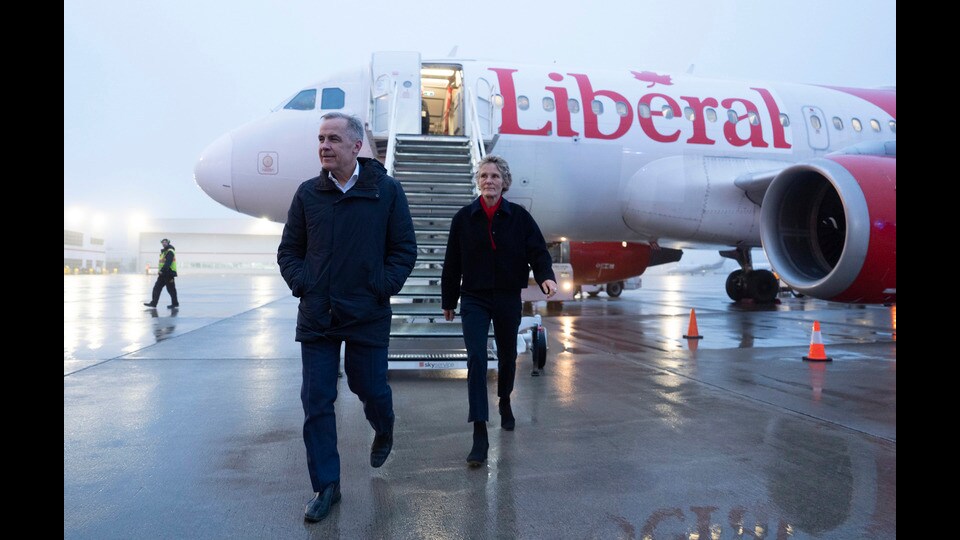
Enter Mark Carney, the newly elected leader of the Liberal Party and PM. A former Goldman Sachs banker, he carries a reputation as a crisis manager for having steered Canada through the 2008 recession as the Governor of the Bank of Canada and seeing the British economy through Brexit when he helmed the Bank of England. However, he is a rookie politician, having never contested an election. He has robust connections to Bay Street (Canada’s corporate elite) and is seen as a moderate in comparison to Trudeau. He is telling Canadians that he is what the country needs to fend off Trump’s threats.
Carney might well have a point. In their maiden call on Friday, he and Trump promised to begin negotiations on trade and both leaders said the call was positive. Carney said the call was “positive, cordial, constructive — exactly what we want.” Trump too posted on social media, “an extremely productive call, we agree on many things.”
Poilievre, in contrast, is a career politician and an Ottawa operator. He rose to the leadership of the Conservatives post the pandemic. He is 15 years younger than Carney and maintains a similar degree of disdain for Canada’s corporate elite as Trump’s MAGA Republicans in the US, although not as extreme. His record was built by taking on Trudeau’s policies in Parliament. Many Canadians are hoping to see him at the helm due to anti-incumbency — the Liberals have been in government since 2015. However, Poilievre’s bête noire, Trudeau, is no longer on the stage. The absence of a main rival and his likeness to Trump have made Poilievre look like a deer in the headlights. How he compares to Carney (and can he deal with Trump?) is what Canadians will be weighing. It doesn’t help that over a third of his supporters like Trump and his ideas.
So, which leader might be better for India, Carney or Poilievre? Historically, the Conservatives have been the party that New Delhi favoured. Indo-Canadian relations hit a highwater mark during Stephen Harper’s term (2006-15). Relations reached their lowest points during Trudeau’s time in office, after September 2023 when Trudeau stood up in Parliament and accused the Indian State of being involved in the assassination of Hardeep Singh Nijjar, a pro-Khalistan separatist. Even before this, Trudeau and Indian PM Narendra Modi had little love lost between them.
A Carney-led Canada is already proving to be more businesslike than Trudeau’s government with both sides looking to reverse last year’s diplomatic expulsions. Doubtless Trump’s tariffs are forcing everyone to reassess their relationships. But Poilievre could feel like a better ally from New Delhi’s perspective because of his disdain for Trudeau’s appeasement tendencies — more in line with the Modi government’s own views. On that note, fresh allegations emerged that India enabled Poilievre to win the Conservative leadership race in 2022. Poilievre said he had no knowledge of such interference.
It is a fraught moment in the global economy because of Trump’s bull-in-a-china-shop style of operating. Canadians haven’t felt more alone in decades. Ottawa is pushing hard to enhance its trading relationships with the rest of the world. Needless to say, whoever wins next month’s election, it offers a fresh chance for India and the rest of the world to explore partnerships in a fast-changing world order.
Nikhil Kanekal is a journalist based in Toronto. The views expressed are personal


