
 E-Paper



The centrality of the Tibet question
On China, we cannot make simplistic deductions of blaming one person for what happened during those years — in particular Jawaharlal Nehru, as is often done

 Prefer HTon Google


In my new book, The Fractured Himalaya: India Tibet China 1949-62, I have attempted to recount the history of the relationship between India and China, while keeping in mind the Tibet factor in this equation, from 1949 to 1962. This mid-century period was a formative, yet self-destructive phase, in the relations between the two Asian giants.
The history of those years has been copiously rendered by many scholars over the decades, but my interpretation is from the viewpoint of a diplomat-practitioner, of personal border-crossings between a practitioner’s world and a historian’s. The aim is to provide a rational understanding of this complex subject and to understand, as Martin Luther King said, that wars are imperfect chisels to carve out peaceful tomorrows.
It is important to assess the various facets, policies, and personalities involved in the enactment of this history. A wide-angle perspective of the early period of the contemporary India-China relationship is necessary because what happened in those years influences our thinking on these disputes with India’s northern neighbour, to this day. I hope that a young demographic will base their understanding of this subject, both with the use of reason and with imagination.
We cannot make simplistic deductions of blaming one person for what happened during those years — in particular Jawaharlal Nehru, as is often done. History has to be understood and envisioned with the aim of grasping the complex warp and weft of its fabric. In those early years of nationhood, India faced formidable challenges that are hard to imagine today. Nehru’s so-called follies cannot be our textbook gospel.
Yes, there were weaknesses and oversights — haphazard, ad hoc, careless — in policymaking during this period. But I do not apportion blame because the faculty of hindsight, which it is natural to possess in abundance once the event is over, is never 20/20 and is subject to our own personal leanings and inclinations. We must understand the circumstances in which these decisions were made. Narrowly-defined nationalism is fodder only for the untutored historian.
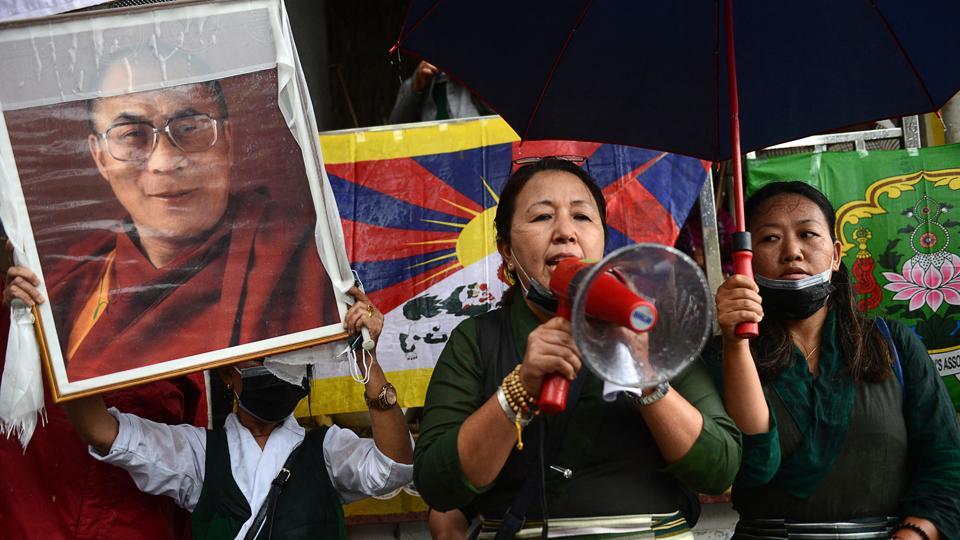
Where we faltered was in glossing over the deep linkage of the Tibetan question to the question of India’s northern boundaries. India’s ties with Tibet are complex — dictated not only by geography, but by religion, pilgrimage, trade and cultural osmosis. And this makes the India-China relationship a three-body problem.
In the Himalayas, cultural boundaries transcend political boundaries; they “overflow”, both linguistically and culturally, no matter how much you divide them by various borderlines. The strategic dilemma posed by Tibet in relations between India and China remains far from resolved. Tibet provides the foundation, that “centrality of marginality”, on which both India’s and China’s border claims are based.
A new post-1949 China, the year of the establishment of the People’s Republic, driven by nationalism and the determination to throw off the shackles of past foreign humiliations, would advance soon on India’s periphery. A newly-independent India was unprepared for the advance of the Chinese People’s Liberation Army on Tibet in the autumn of 1950.
India’s ties with Tibet were old, and Buddhism cemented this closeness. The British had established a presence in Lhasa and southern Tibet from the early 20th century onwards, and India had inherited these privileges, together with the border drawn by the British and the Tibetans in the Eastern Himalaya by the McMahon Line in 1914. That border had not been accepted by the Chinese, who questioned Tibet’s right to transact international agreements.
Despite the show of distinct Chinese belligerence as their troops marched on Lhasa, Nehru, as the only architect of India’s foreign policy, was convinced that there was no imminent threat to India’s frontiers. The conclusion was that there was no territorial dispute or controversy between India and China, and Delhi construed that Chinese silence on border issues meant Beijing’s tacit consent to the border as defined by India. Chinese sovereignty in Tibet was acquiesced in, and India showed little inclination to put together an international defence of Tibet’s rights in the United Nations. All this was done to the advantage of a strong and nationalistic China, and not with concern for Tibet.
A “billing and cooing phase” of friendship between India and China followed. The encounters between Nehru and Zhou Enlai showed the contrast between these two leaders, each conditioned by very different historical circumstances, Nehru, the visionary dreamer, the patrician intellectual, a romantic, Gandhi’s favourite disciple, undoubtedly dedicated to India and its cause; and Zhou, soldier of a violent revolution, a man of cunning, tenacity and charm, ever deferring to Mao Zedong. China’s self-image, as a nation destined to lead, was clearly enunciated even in the early years of the PRC.
The deterioration of relations between India and China from the late-1950s onwards, occasioned by differences over interpretation of their shared border, and the flight of the Dalai Lama to India, left Nehru with the realisation of his “misplaced faith” in Chinese “friendship”. It was not as if he had not harboured doubts about Chinese expansionism before this, but he had pitched his tent in an imagined world of pan-Asian unity led by India and China. That would prove his undoing. Meanwhile, Chinese contempt for Nehru was reflected in Mao’s words, when he asked, “Who is Nehru? He is a middle-of-the-roader of the Indian bourgeoisie.”
This illustrates why the overarching compass of India-China relations today is defined by the past, and why a complicated future beckons. As time has gone by, positions have hardened, and the flexibility and the willingness to adjust and seek “win-win” solutions seem increasingly in short supply in both countries. The widening asymmetry of power between an ascendant China and an ascending India only complicates the situation further.
Nirupama Rao, author of ‘The Fractured Himalaya: India Tibet China 1949-62’, (Penguin, 2021) is a retired foreign secretary and a former ambassador to China
The views expressed are personal


