
 E-Paper



Prohibition of Child Marriage (Amendment) Bill: A positive move
Those against the bill must realise that rather than being guided by political leaning and posturing, the welfare of our youth should remain at the centre of the debate

 Prefer HTon Google


Acknowledging the long-term negative repercussions of early marriages and teenage pregnancies on women in India and their children, the government is contemplating raising the age of marriage for girls from 18 years (as prescribed under the Prohibition of Child Marriage Act, 2006) to 21 years. In this respect, the Union Cabinet recently approved raising the legal age of marriage to 21, based on the recommendations of the Jaitley Committee. This decision was based on the principle of equality (i.e. same age of marriage for men and women) and to ensure that women’s “physical, mental and reproductive health” is protected. However, rather than viewing this measure as a step in the right direction, many (Opposition members and civil society) disagreed with the government’s move. Their arguments, however, defy logic and reasoning.
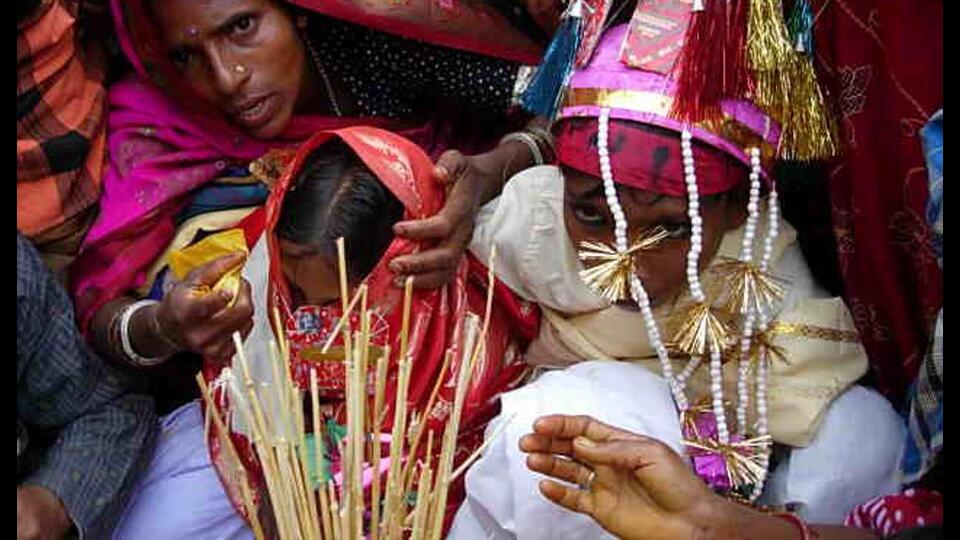
Critics have questioned the bill’s rationale, based on the fact that 18 years confers majority under Indian law, and accordingly, girls should have the choice to marry at 18. These critics, however, fail to acknowledge the Prohibition of Child Marriage Act, 2006 (PCMA) confers the right to marry for boys at 21, and equality mandates the same privilege be granted to girls too. Unfortunately, many have failed to see the benefits of the bill thanks to deeply rooted patriarchal beliefs and customary practices.
The National Family Health Survey-5 (NFHS-5) statistics showing that 23.3% of women (20-24 years) were married before 18 years has been cited by critics as evidence of the failure of the current law to tackle the problem. They argue that increasing the age of marriage will, in turn, lead to a further increase in numbers.
Undoubtedly, the enactment of the revised child marriage law according to parliamentary approval of the bill alone will not resolve the problem of child marriage. However, the argument that the incidence of child marriage will increase due to the proposed amendment is no reason to avoid adopting legislation aimed at giving young girls (mainly from the most disadvantaged homes) an opportunity to complete secondary education and garner requisite skills to become financially independent. Moreover, the ineffective implementation of PCMA must be used as a defence to avoid amendment to the law.
On the contrary, implementation is key to realize the bill’s vision and impact the girls who are most vulnerable to child marriages, including those in rural India and from lower wealth quartiles, and this should be the focus of policy reform. Further, grassroots advocacy campaigns are vital to generate awareness among the community and build catalysts of change within these communities. Additionally, the National Policy of Education should act as an enabler to ensure that girls are provided access to secondary and higher education and windows of opportunity for skill development to empower them to make more informed life choices rather than allow others to decide their fate.
Of all the critical arguments, the least tenable construes the amendment as a means to criminalise women’s sexuality. The connection made by critics between a law restricting marriage under 21 years and restriction on women’s sexual choices assumes all child marriages are consummated by girls on their accord as a consequence of sexual freedom. This limited understanding of child marriage and sexual freedom requires a serious rethink.
Rather than relying upon anecdotal evidence justifying or negating the impact of increasing the age of marriage, Young Lives India has analysed NFHS-4 (2015–2016) data to ascertain how growth and development outcomes of women are affected by their age at the time of marriage. The analysis reveals that 62.6% of women in the age group 20-30 got married before 21 and only 21.2% of women got married after 21.
Noticeable differences are seen on the impact of increasing marriage age, with only 28.1% of the women who married before 21 years, completing secondary education as opposed to 61.8% who married after they were 21. It is no surprise that women who married early, i.e. below 21 years, were majorly employed in agricultural (80.4%) and/or manual-skilled and unskilled work. Additionally, we observe inter-generational transmission of poverty with a higher proportion of children born to women married below 21 years being anaemic (59.7%), stunted (40.6%) , and underweight (37.8%), as compared to children born to women married after the age of 21 years i.e. 56.2% anaemic, 29.1% stunted, and 27.3% underweight.
Given this evidence, the bill is a positive step in the right direction and can become the harbinger of social change. Notwithstanding, it is equally essential that Section 3 of the PCMA be amended to make child marriage void-ab initio. We, as a society, owe our youth the opportunity the grow, be nurtured and develop to their fullest potential rather than trapping them within the confines of an early marriage on account of outdated customs, traditions and worst of all on account of chronic poverty and lack of education. Those against the bill must realise that rather than being guided by political leaning and posturing, the welfare of our youth should remain at the centre of the debate, and we must secure the rights of India’s youth to make informed choices related to marriage.
Renu Singh is executive director, Young Lives India
The views expressed are personal


