
 E-Paper



What Gaza teaches us about the ethics of war
Israel-Palestine war shows a trend where people are losing the capacity to see individuals as they are and seeing them only in terms of a collective identity

 Prefer HTon Google


War has entered our homes now in far more graphic ways than before. It is almost as if wars have become a spectator sport for the public, through the circulation of images and stories in social media. We are flooded with live reports of casualties of babies, children and women, of hospitals being bombed, houses being raided, and women being raped.
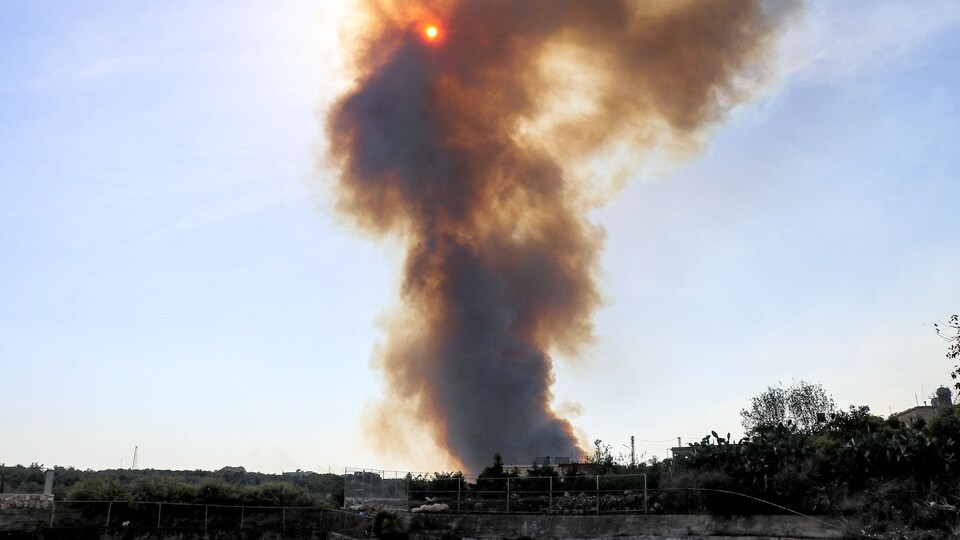
But there is another mode by which war enters our homes. It is not as visual and blatant as these images but is nevertheless the reason why we are drawn to them. This is through ethical questions that arise when we encounter visuals and stories of the barbarities of war.
Our response to these questions, our attempts to make sense of this senseless violence, is often reduced to a judgement that one side is right and the other, wrong. But these are not ethical responses on our part. Just because we can justify something does not make it ethically correct.
These moral questions bring us closer to war in a tangible way. It disturbs us and makes us establish a relationship with a war in foreign lands. It is as if moral thought is the only universal mode through which we recognise our common inheritance of humanity.
Moral thoughts that are triggered by the current conflict between Israel and Palestine are primarily those that are related to punishment and revenge in the wake of an act of violence. However, the moral world surrounding the themes of punishment and revenge is not restricted to such conflicts. It is also part of our everyday lives. We encounter these questions in our relationships with those around us.
While there are legally sanctioned punishments and agents who can punish, such as the police and the judiciary, we nevertheless constantly punish people in various ways. We punish children, spouses, siblings, friends, colleagues and strangers, although the intensity and depth of punishment may differ vastly in each of these domains.
There is an essential relation between morality and punishment because, often, our desire to punish is itself a reaction to perceived injustice, a violation of some moral norm. Ironically, punishment is often seen as a moral path to set right a wrong.
When the images of the war enter our homes, when we see civilians being hunted down and killed in Israel, or the destruction of civilians, homes and hospitals in Gaza by impersonal bombs, what should our moral responses be? If we reduce ethics to a set of arguments for and against an act, then we are not experiencing the moral dilemma associated with this present conflict. We can discover our relationship with the war in our thoughts and responses to punishment and revenge in our own personal and social lives.
A moral conflict in the act of punishment is the degradation of the human being who is subjected to punishment. Degrading a person in many ways is the most potent punishment. When we punish somebody, we participate in the process of some kind of degradation of that individual. Prisons have always been a site of terrible degradations of the human subject, and many of them continue to be so. In this war, the degradation of thousands of civilians is happening under a public gaze, for the whole world to see.
However, there are major differences in the nature of punishment and revenge in a war in contrast to our personal lives. First, in this war, the punishment for thousands of people is death.
Death as punishment is most unethical. Even the case of capital punishment raises many troubling questions about punishment by death. In a war, in the name of collateral damage, thousands of innocent people are sentenced to death, not through judicial deliberation but through the arrogance and callousness of a few people.
Second, in a war, it is not only those individuals who cause harm that are being punished. Punishment is also meted out to those who are bystanders in the war and who have nothing to do with the conflict.
How ethical is it to not punish the person who committed the crime and instead, punish somebody else? Worse, for a crime committed by a few individuals, a whole group of people is being punished. What sense does this make? What happens in this process of punishing a group instead of the person who is responsible for a crime? In such a case, individuals lose their individuality since a group identity is imposed upon them. Seen as a group, their moral value as an individual is lost.
Taking revenge on a group for crimes not committed by them (on both sides of the conflict) is immoral. It is also reflective of global trends where we are fast losing the capacity to see individuals for what they are, and seeing them only in terms of a collective identity. In doing so, we are punishing the other for the crime of not being like us.
The seeds of this war, the attitude that is driving the present insanity, have entered our lives in India today. Increasingly, we see another person only in terms of a group identity that we impose on him or her, and not in terms of common qualities of humanity.
We cannot see an individual without adding categories of religion, gender, caste, background and a host of other frameworks. The killing of children in wars is not seen as the most abhorrent crime against humanity because we do not see them as children but only as representatives of something else. We are losing the capacity to see children as children and instead see them only as boys, girls, Muslims, Jews, Christians, and Hindus
This inability to see the others for all that they are, this conscious blindness in the way we perceive others, is a learned act, but unethical in its foundation. The images of the war should hopefully be a mirror to our prejudices that are producing so many other conflicts around us today.
Sundar Sarukkai is the founder of Barefoot Philosophers and author of the novel, Following a Prayer. The views expressed are personal


