
 E-Paper



What the court is not expected to tell media
The Supreme Court’s remark in Wikipedia case offers a moment of clarity in the relations between two important institutions

 Prefer HTon Google


On May 9, the Supreme Court handed down an important judgment in a long-running litigation between Asian News International (ANI) and Wikipedia (and its parent organisation, the Wikimedia Foundation). ANI had originally sued Wikipedia on the ground that the Wikipedia page for ANI had certain disparaging remarks about its independence and impartiality. A single judge of the Delhi High Court (HC) — which was hearing the case — had initially passed an interim order requiring Wikipedia to disclose its subscriber details.
To those familiar with how an online, crowd-sourced encyclopaedia works, what followed should not be surprising. Considering the public importance of the case, a fresh page was created on Wikipedia chronicling the legal developments, the contents of which were debated on the website’s Talk forum. ANI’s lawyers complained about this to the division bench of the Delhi HC, which was hearing Wikipedia’s appeal against the single judge’s order. The Division Bench noted that the page’s observation that the single judge’s order amounted to “censorship and a threat to flow of information” amounted to “an interference in judicial proceedings” that bordered on “contempt”. It directed Wikipedia to take down the pages within 36 hours.
It should be obvious that the Delhi HC’s numerous orders betrayed a complete lack of understanding of how an online encyclopaedia like Wikipedia works, and how a system of internal peer-review and community checking (through Wikipedia’s Talk page) functions. Matters were not helped by numerous intemperate oral remarks made by the Bench during the hearings, such as telling Wikimedia’s counsel that Wikipedia could leave the India if it did not “like” India and that the Court would ask the government to block the Wikipedia website.
It is, therefore, clear that the direction that the HC was going in presented a clear and present danger to the freedom of speech and expression, and to the dissemination of community knowledge in India. Anyone who has used Wikipedia even once in their life can testify to how, despite all its flaws and imperfections, the encyclopaedia is a sterling example of a vast community of human beings coming together regardless of borders and identities and contributing to the global knowledge commons. Wikipedia is a testament to how the open internet, at its best, can work.
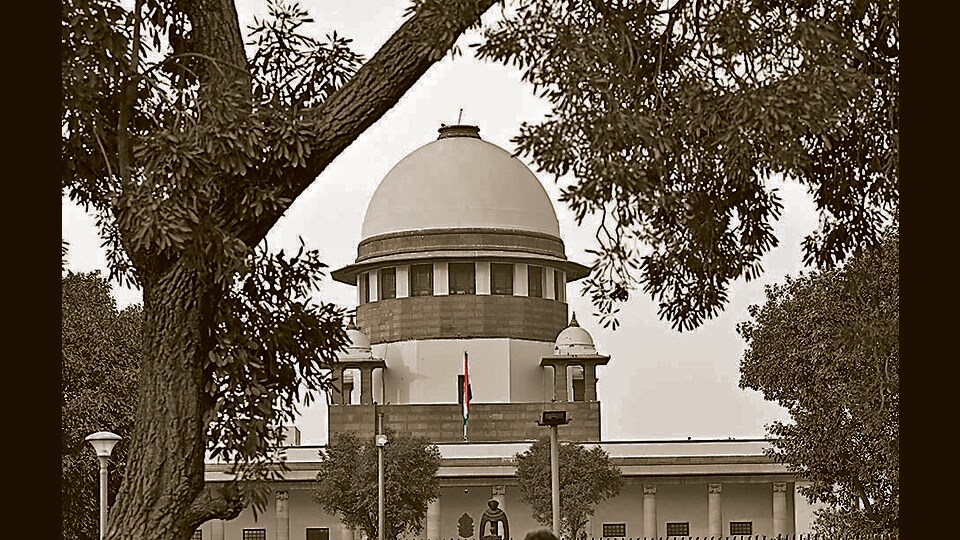
In the present case, the Wikimedia foundation was, therefore, constrained to approach the Supreme Court. In a short and closely reasoned judgment, a two-judge bench of the apex court, comprising justices Abhay S Oka and Ujjal Bhuyan, set aside the HC’s interim order directing the take-down of the Wikipedia pages. After surveying the Supreme Court’s precedent on this point, which counselled judges to exercise reticence before issuing contempt orders, the Court concluded that “courts, as a public and open institution, must always remain open to public observations, debates and criticisms. In fact, courts should welcome debates and constructive criticism”. This was a timely rebuke to the Delhi HC, which — it would appear — could not abide even the mildest critique of its own orders. As the apex court went on to note in blunt terms, “it is not the duty of the court to tell the media” to “delete this, take that down”.
The Court’s plain-speaking here is both salutary and much needed. Even though judicial precedent is clear that take-down and postponement orders should only be used as a last resort, where there is an imminent threat to the fair administration of justice, these words and terms are vague enough to allow for extremely subjective interpretation by judges across the country. Indeed, this is why this case needed to come to the Supreme Court in the first place: It was because of an unconscionable interpretation of the law by the Delhi HC that forced Wikimedia to appeal to the apex court. Clear reminders of the legal position, therefore, seem to be regrettably necessary from the highest Court.
It is also important to remember that ANI’s main case against Wikipedia is continuing in the Delhi HC. This is a case that deserves close and continuing scrutiny. Any publicly created encyclopaedia that covers current events will, inevitably, annoy and offend a great number of people. That is the nature of impartial and even-handed analysis. In such circumstances, the Indian judiciary should avoid becoming a forum of choice for people to have critical or unflattering analysis about themselves on Wikipedia be taken down by a judicial order. This would amount to a distorting influence upon the free exchange of ideas, which is one of the greatest contributions of the internet.
There is a reason why Wikipedia’s Talk page exists, and why Wikipedia has a great number of volunteer-moderators: It is to ensure that all the information in the encyclopaedia is based on public sources and is thoroughly vetted. Wikipedia is not perfect in this regard; nothing is However, the very extent of its use reveals how successful it has been, and its value to the global quest for free and open access to information. It would be a pity if this quest was irreparably damaged in India due to heavy-handed judicial orders.
Gautam Bhatia, a Delhi-based advocate, is the author of Offend, Shock or Disturb: Free Speech Under the Indian Constitution. The views expressed are personal


