
 E-Paper



Why the EC order on Gujarat Rajya Sabha polls is extraordinary
The Election Commission used its constitutional powers on Tuesday night.


The Election Commission’s order disqualifying the votes of two Congress rebel lawmakers in the Gujarat Rajya Sabha polls on Tuesday is extraordinary in many ways.
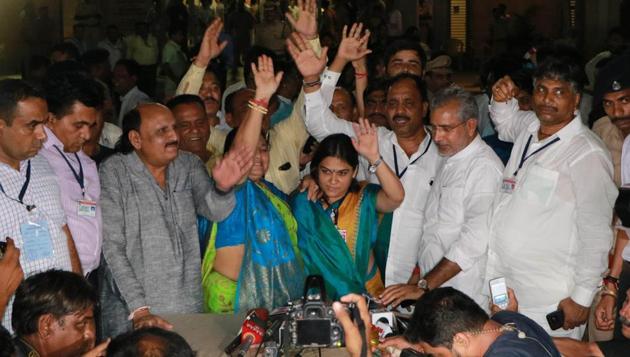
The commission invoked its constitutional powers to overrule the returning officer, who had declared the votes valid, and by doing so it maintained the panel’s neutrality.
The commission turned to Article 324 of the Constitution, which gives the panel unprecedented powers to hold free-and-fair polls in situations not covered by the representation of people’s act, the law governing the election process in India.
Besides, the Supreme Court too had said Article 324 gives the commission reservoir of power in those “vacuous areas where either the law made by Parliament is silent or insufficient” to deal with elections.
The commission used its constitutional powers on Tuesday night because the law makes the returning officer the final authority during polls and there is no provision to overrule the official representing the panel.
In Gujarat, the returning officer declared the two votes valid. But the legally binding secrecy of the vote was not maintained as the two Congress lawmakers showed their marked ballot papers to the rival candidates — BJP chief Amit Shah and Union minister Smriti Irani.
In the Rajya Sabha election, a lawmaker can show his vote only to his party’s polling agent. Independent MLAs cannot display their vote to anyone at all.
A year ago, the Congress was at the receiving end because of this provision when party leader Randeep Surjewala’s vote in the Haryana Rajya Sabha election was cancelled by the returning officer after he showed it to the party’s legislature party chief, Kiran Choudhary.
The poll panel did not interfere with the decision, though the Congress challenged it.
But in the Gujarat case the commission overruled its officer his decision was contrary to rules.
The commission could have avoided a confrontation by asking the Congress to seek remedy against the returning officer’s order in a court of law.
Responding to the Congress’s demand for cancellation of the two votes, finance minister Arun Jaitley and law minister Ravi Shankar Prasad argued before the commission that only a court can overrule the returning officer.
A legal battle could have changed the outcome of the election. Ahmed Patel, political secretary to Congress president Sonia Gandhi, might have lost should the court decide to go with the returning officer.
Discounting two votes meant that Patel needed 44 votes to win, which he got. Had the two votes, which went to the BJP, been counted Patel would have lost as he would have required the support of 45 MLAs.
The commission decided to uphold the dignity of the election process and take an extraordinary step by invoking its powers under Article 324, which the constituent assembly said should be sparingly used.
It once again proved the apolitical its stature that strengthens India’s democratic ethos.


