
 E-Paper



Within the natal family, the real threat of violence
Normally, the natal family is the one a woman turns to for help, but during the pandemic, staying at home did not always mean staying safe for many women.

 Prefer HTon Google


Violence against women comes in many forms and from various sources. One that is not highlighted enough is the violence they face from their birth family or natal kin — parents, siblings or close relatives. New Delhi-based non-governmental organisation (NGO) Shakti Shalini recently brought out an incisive report, UnKahi- the Unspoken, documenting the rise of violence against women from natal families during the pandemic.
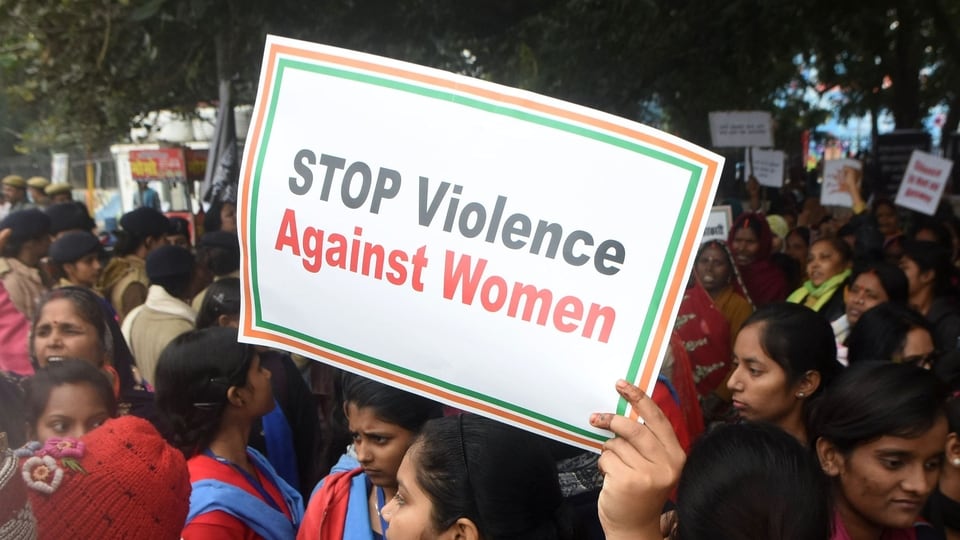
Normally, the natal family is the one a woman turns to for help, but during the pandemic, staying at home did not always mean staying safe for many women. A woman complaining about violence from a partner is more easily believable than one who makes such allegations against her family, conditioned as we are to the concept that elders and immediate kin offer protection and physical and emotional safety. So, to name and shame them is not easy.
Shakti Shalini’s study was based on women who approached the NGO for help during the pandemic and encompassed those between 18 and 27 years, with 65% of them belonging to the 22-27 age group. A majority of these women belong to the working and lower middle classes.
Media reports during the pandemic highlighted the increase in the incidence of marital violence, but single women living with their natal families had similar experiences. Bharti Sharma, honorary secretary, Shakti Shalini, says, “Natal family violence is a phenomenon which is structurally based in our society and, therefore, needs a structural approach. Though our society lays a claim on the integrity of ‘family as a cohesive unit’, it equally needs to be accepted that the family is as much an environment of abuse of its vulnerable members, especially girls and women.”
The women spoke of abusive and coercive behaviour from their natal families and all of them reported emotional abuse and psychological trauma. Fifteen out of 20 women in the study faced physical and verbal violence that included being slapped. Three women reported physical abuse while one was threatened with forced marriage. In terms of the identity of the person who caused harm, in 60% of the cases, it was both male and female relatives.
In most cases where the violence was perpetuated by female members of the family, the women were also tasked with gatekeeping gendered and patriarchal values and norms. Under the influence of patriarchy and its false consciousness, these female gatekeepers too were controlled by the values of their male gatekeepers who called the shots about “right” and “wrong”.
Tanmoyee Bhattacharjee, researcher, Shakti Shalini, says, “One of our research participants described how the fact that her own parents were abusing her left her feeling so confused about whether anyone would understand her situation even if she sought help. This is because domestic violence is frequently perceived as something that only affects married women and occurs in their marital homes.”
What can be done? One would have to institute long-term sensitisation interventions with girls and boys in schools and colleges for perspective building. The concept that violence even at the hands of close family is unacceptable must be normalised. There have to be campaigns to help build young women’s awareness and agency regarding their rights. Psycho-social support and mental health and counselling for girls and young women should be provided wherever possible. There must be exclusive spaces in communities where women can talk without fear about natal family violence. And, of course, there has to be a much greater focus in the media on this insidious form of violence against women.
lalita.panicker@hindustantimes.com
The views expressed are personal


