
 E-Paper



Photos: Diseases, allergies stalk residents of India’s most polluted city Jharia
Jharia is the hub of coal mining in Jharkhand and has 40 opencast mines, which are mostly affected by underground fires, according to government officials. Over 2,500 trucks ferry coal out of the region daily. According to Greenpeace India’s Airpocalypse-IV annual report released last week, Jharia was India’s most polluted city in 2018. Experts say Jharia’s air has high levels of nitrogen oxide and sulphur oxide, which can further aggravate breathing ailments, emitted by diesel trucks that move around the city daily carrying coal.
Updated on: Jan 28, 2020 12:33 PM IST


Share via


Copy link

1/8

 View Photos in a new improved layout
Updated on Jan 28, 2020 12:33 PM
Arshad Jamal, 48, has been battling a skin disease for four years in addition to asthma. Doctors have advised him to remain indoors, drink clean water and avoid dust pollution to avoid aggravation of his health issues . There is, however, little he can do to heed the advice for Jharkhand’s Jharia, Jamal’s home for 35 years, continues to be among the country’s most polluted cities. (Chandan Paul / HT Photo)
2/8
 View Photos in a new improved layout
Updated on Jan 28, 2020 12:33 PM
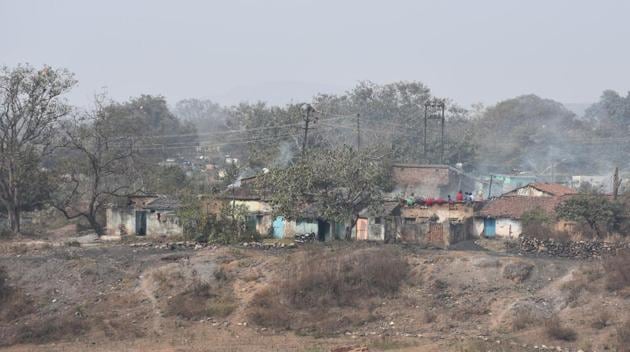
Jharia is the hub of coal mining in Jharkhand and has 40 opencast mines, which are mostly affected by underground fires, according to government officials. Over 2,500 trucks ferry coal out of the region daily. According to Greenpeace India’s Airpocalypse-IV annual report released last week, Jharia was India’s most polluted city in 2018. (Chandan Paul / HT Photo)
3/8
 View Photos in a new improved layout
Updated on Jan 28, 2020 12:33 PM
Residents of Mohribandh speak about life amid the pollution at Jharia. Many in the city of half-a-million known worldwide for its underground coal fires suffer from pollution-induced diseases. Shatia Bhuniya, 50, a local resident who suffers from regular chest pain, said she can feel coal dust and ash inside her body. Babita Devi, a housewife, said they cannot even dry their clothes in the open because of layers of dust that stick to them. (Chandan Paul / HT Photo)
4/8
![A truck carrying uncovered coal seen at Jharia. In neighbouring Dhanbad that was second on the list of most-polluted cities in 2018 as per the report, Patliputra Medical College and Hospital (PMCH)’s Dr Bibhuti Nath Mittal said most patients from Jharia they treat suffer from pollution-related diseases. “... [They] complain of skin allergies, burning sensation in eyes and allergic bronchitis. Pollution plays a significant role in aggravating such diseases,” said Mittal. (Chandan Paul / HT Photo)](https://images.hindustantimes.com/rf/image_size_630x354/HT/p2/2020/01/28/Pictures/living-in-jharia-pollution-story_bfc9c85c-4192-11ea-bfa0-35d85fc987f6.jpg "A truck carrying uncovered coal seen at Jharia. In neighbouring Dhanbad that was second on the list of most-polluted cities in 2018 as per the report, Patliputra Medical College and Hospital (PMCH)’s Dr Bibhuti Nath Mittal said most patients from Jharia they treat suffer from pollution-related diseases. “... [They] complain of skin allergies, burning sensation in eyes and allergic bronchitis. Pollution plays a significant role in aggravating such diseases,” said Mittal. (Chandan Paul / HT Photo)") View Photos in a new improved layout
View Photos in a new improved layoutUpdated on Jan 28, 2020 12:33 PM
A truck carrying uncovered coal seen at Jharia. In neighbouring Dhanbad that was second on the list of most-polluted cities in 2018 as per the report, Patliputra Medical College and Hospital (PMCH)’s Dr Bibhuti Nath Mittal said most patients from Jharia they treat suffer from pollution-related diseases. “... [They] complain of skin allergies, burning sensation in eyes and allergic bronchitis. Pollution plays a significant role in aggravating such diseases,” said Mittal. (Chandan Paul / HT Photo)
5/8
 View Photos in a new improved layout
Updated on Jan 28, 2020 12:33 PM
Coal is the biggest contributor to high air pollution in Jharia, which according to the Greenpeace study, was 50% more than the average annual pollution levels in Delhi in 2018. The Greenpeace report said Jharia recorded highest PM10 at 322 micrograms per cubic meter (ug/m3) in the country in 2018. It was more than five times the normal limit of the 60 ug/m3. (Chandan Paul / HT Photo)
6/8
 View Photos in a new improved layout
Updated on Jan 28, 2020 12:33 PM
Coal picker Laxmi Bind (L) at Lilori Pathra at Jharia. Kolkata-based organisation Science for Human Being’s March 2017 survey found 17% of Jharia residents face hair loss, 17% suffer from skin diseases and 13% from respiratory issues due to pollution. (Chandan Paul / HT Photo)
7/8
 View Photos in a new improved layout
Updated on Jan 28, 2020 12:33 PM
Activist Pinaki Roy of Save Jharia campaign said the steps being taken were inadequate. “Opening cast mining has reached the city’s boundaries. The height of the coal dumps is much higher than permitted. Even slight wind brings ashes and dust from the mining areas to the city,” he said. (Chandan Paul / HT Photo)
8/8
 View Photos in a new improved layout
Updated on Jan 28, 2020 12:33 PM


