
 E-Paper



Photos: Japan, United States Navy join India in Malabar exercise
The navies of India, Japan and the US have gathered for the 21st edition of the Malabar joint naval exercises for a two part programme scheduled in Chennai and later the Bay of Bengal.
Updated on: Jul 13, 2017 12:57 PM IST


Share via


Copy link

1/7
 View Photos in a new improved layout
Updated on Jul 13, 2017 12:57 PM
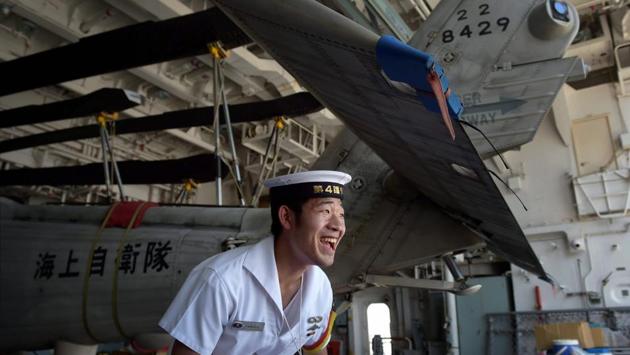
The 21st edition of the Malabar naval exercises commenced on Monday, July 10, 2017 bringing together the largest vessels along with naval forces from India, the United States and Japan for onshore and at-sea drills aimed at enhancing the interoperability between the trilateral navies. The drills have brought together 16 warships, submarines and approximately 95 aircraft. (R Senthil Kumar / PTI)
2/7
 View Photos in a new improved layout
Updated on Jul 13, 2017 12:57 PM
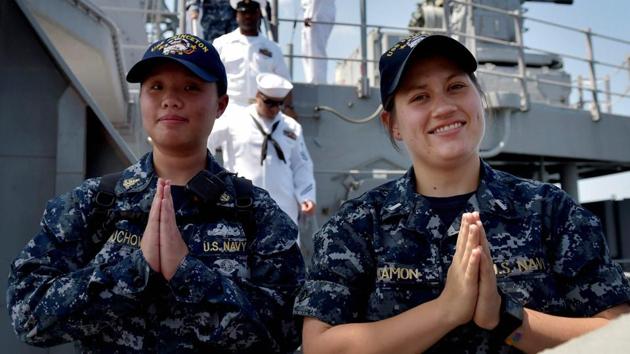
US sailors gesture ‘Namaste’ aboard USS Princeton which arrived at Port Trust in Chennai to take part in ‘Malabar Naval Exercise-2017’. The USS Nimitz, the world’s largest aircraft carrier, Indian Navy’s INS Vikramaditya, and Japan’s Izumo helicopter carrier will be among the warships taking part in the exercise. (R Senthil Kumar / PTI)
3/7
 View Photos in a new improved layout
Updated on Jul 13, 2017 12:57 PM
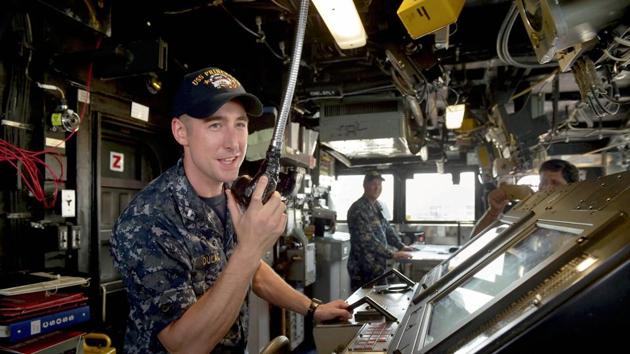
A US sailor engaged in a discussion on board the USS Princeton in Chennai.Traditionally a bilateral exercise between the US and India since 1994, Japan had been participant in the past along with Singapore and Australia but was elevated to a permanent member position in January 2015. (R Senthil Kumar / PTI)
4/7
 View Photos in a new improved layout
Updated on Jul 13, 2017 12:57 PM
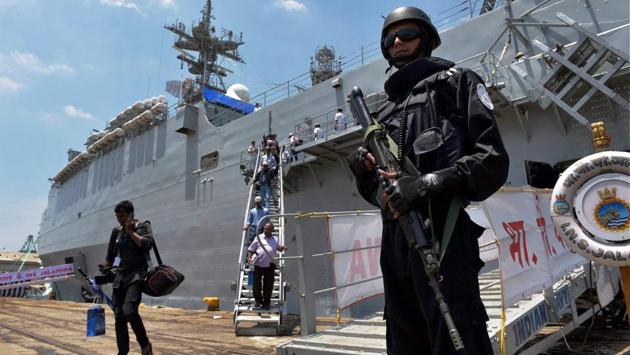
An Indian Navy commandant maintains vigil aboard INS Shivalik. The ashore leg of the exercises will take place in Chennai, covering exchanges on carrier strike group operations, maritime patrol and reconnaissance operations, surface and anti-submarine warfare, explosive ordnance disposal (EOD) and visit, board, search and seizure (VBSS) operations. (R Senthil Kumar / PTI)
5/7
 View Photos in a new improved layout
Updated on Jul 13, 2017 12:57 PM
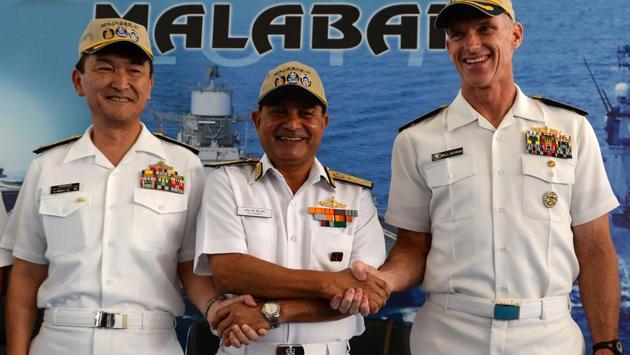
Flag Officer Commanding-in-Chief, Eastern Naval Command HCS Bisht (C), Japan Maritime Self-Defense Force Vice Admiral Hiroshi Yamamura (L), US Navy Commander Rear Admiral William D Byrne Jr (R), at the inauguration of the trilateral Malabar Exercise 2017. The at-sea leg of the exercises to be held in the Bay of Bengal is geared towards building maritime co-operation between participants and the planning and execution of tactical operations. (AFP)
6/7
 View Photos in a new improved layout
Updated on Jul 13, 2017 12:57 PM
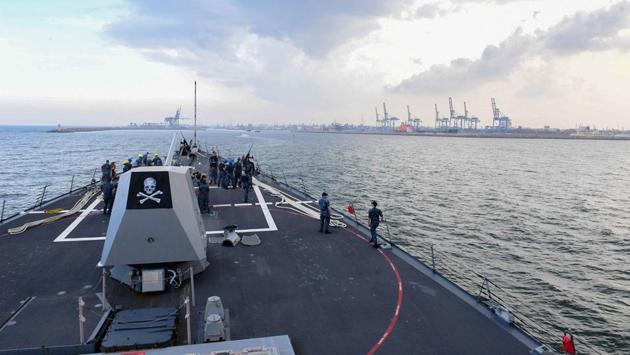
The Arleigh Burke-class guided-missile destroyer USS Kidd (DDG 100) arrives in India for Malabar 2017. This edition of the Malabar exercises follows a period of increased sightings of Chinese vessels and submarines in the Indian Ocean by the Indian Navy in recent months. The Chinese intelligence gathering ship, Haiwingxing is also believed to have headed towards the region in June-end. (REUTERS)
7/7
 View Photos in a new improved layout
Updated on Jul 13, 2017 12:57 PM


