
 E-Paper



Photos: Panipat’s blanket industry trumped by new Chinese fleece
For decades, the West’s discarded winter wear has come to Haryana’s Panipat to be ripped apart, tuned into shoddy yarn and reborn as cheap, warm blankets. But a new type of Chinese fleece, which is lighter, softer and cheaper, has shifted demand, shrinking business at the world’s castoff capital, with blankets made from virgin polyester yarn. Panipat, once accounting for 90% of shoddy blankets used worldwide now finds its prime product facing failure, rising production costs and the industry shifting to cotton yarn to compete.
Updated on: May 3, 2018 11:37 AM IST


Share via


Copy link

1/10
 View Photos in a new improved layout
Updated on May 3, 2018 11:37 AM
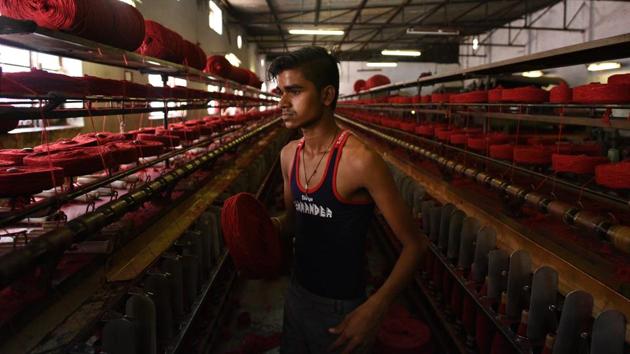
A worker seen at a yarn factory in Panipat, Haryana. In this castoff capital of the world, woollens from the US, Canada, the UK, Western Europe, Japan and Korea are brought to be reused, recycled and resold. Most are turned into shoddy yarn, to make coarse blankets that sell cheap but are exceptionally warm. At one point, Panipat accounted for 90% of shoddy blankets used worldwide. (Vipin Kumar / HT Photo)
2/10
 View Photos in a new improved layout
Updated on May 3, 2018 11:37 AM
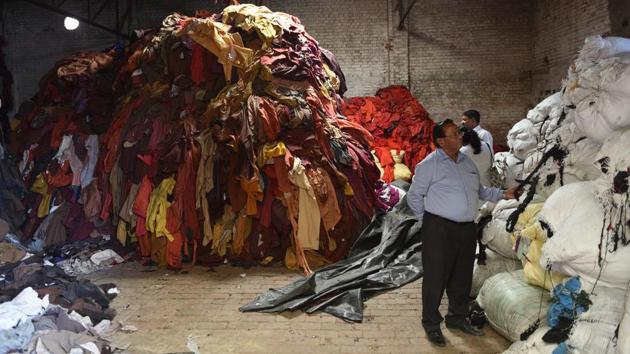
At Shankar Woollen Mills, the bustle continues but production has dropped by half over the past two years. The factories have dwindled from about 400 in the early 2000s to 100 today. Production is now at 300 tonnes of yarn a day, down 25% from 2008. The falling numbers are a result of a new type of artificial fleece being used for blanket, made from virgin polyester yarn in China. (Vipin Kumar / HT Photo)
3/10
 View Photos in a new improved layout
Updated on May 3, 2018 11:37 AM
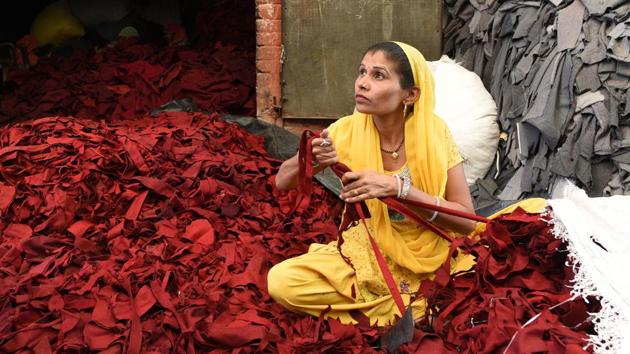
A woman shreds clothes with special slicers. The shredded woollen scrap is turned back into a yarn called shoddy. The piles of clothes have already been sorted into the basic colour families of gray, red, blue, camel and green --winter clothing colours in the West. Shoddy blankets are rough, coarse and usually brown or grey but the Chinese blankets are light, soft and come in a variety of colours. (Vipin Kumar / HT Photo)
4/10
 View Photos in a new improved layout
Updated on May 3, 2018 11:37 AM
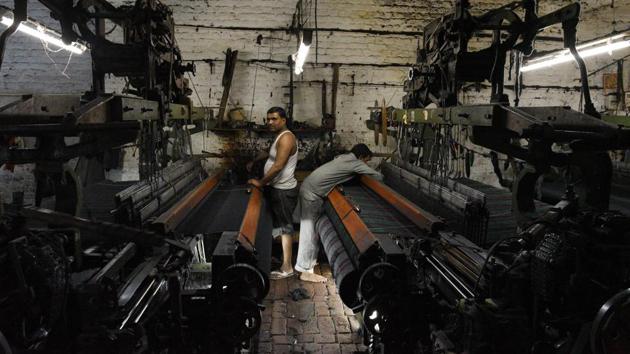
The hundred factories are still holding on because there is still demand from the disaster relief segment. But Pawan Garg, president of the All India Woollen & Shoddy Mills Association believes the end is near as even they have started rejecting shoddy blankets on grounds of quality. And ranging between Rs 80 and Rs 250 each the Chinese blankets are cheaper than shoddy’s Rs 70 and Rs 300 range. (Vipin Kumar / HT Photo)
5/10
 View Photos in a new improved layout
Updated on May 3, 2018 11:37 AM
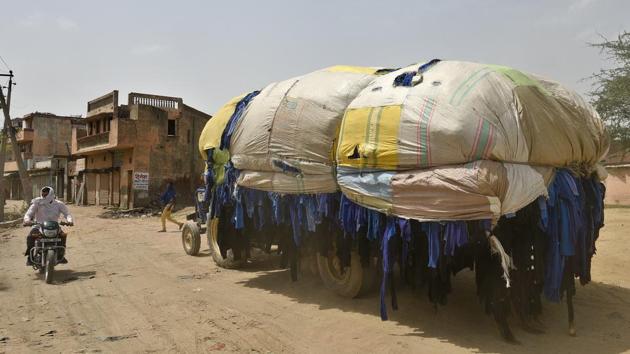
Garg recalls older times when Panipat’s roads would be blocked by lines of trucks, carrying tonnes of clothes to the factories. The trucks can still be seen, but they don’t cause traffic jams anymore. Ironically, 50 years back it was theses low-cost alternatives which helped Panipat acquire the castoff capital title from Prato, an industrial city in Italy. (Vipin Kumar / HT Photo)
6/10
 View Photos in a new improved layout
Updated on May 3, 2018 11:37 AM
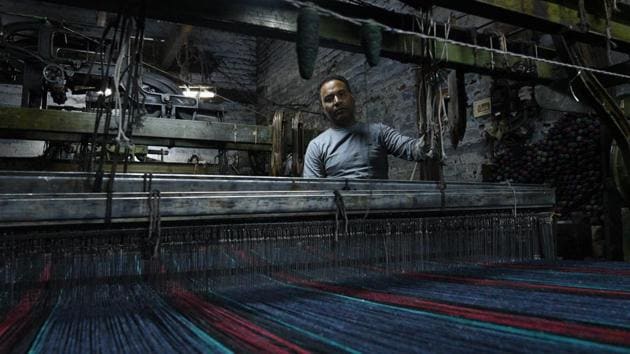
Explaining the process of making these blankets, Surender Gupta, owner of Shankar Woollen Mill said, once the zips, buttons and linings are ripped, the shredded clothes are put into rag-pulling machines. Uniformly coloured fluff emerges from that and then the fluff is soaked in oil for conditioning and re-conditioning, after which it is pulled apart in a carding machine and finally twisted into yarn. (Vipin Kumar / HT Photo)
7/10
 View Photos in a new improved layout
Updated on May 3, 2018 11:37 AM
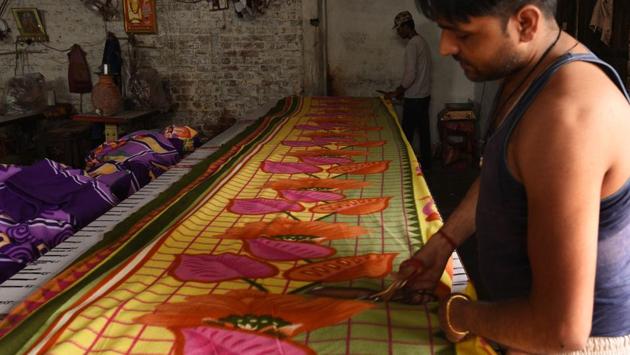
Some factories like Birmi International, set up in 1992 have switched over to the Chinese fleece. Pankaj Bansal, owner of the factory believes, Chinese fleece is the future of the industry as shoddy is facing a product failure. He asks if people can get a better product at a lower price, why wouldn’t they buy it. (Vipin Kumar / HT Photo)
8/10
 View Photos in a new improved layout
Updated on May 3, 2018 11:37 AM
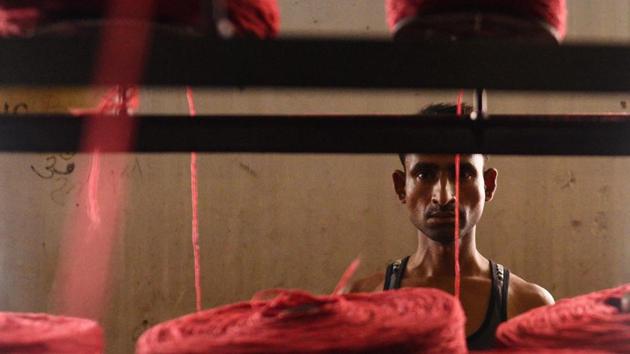
A worker seen in a thread making unit for shoddy blankets. The factories not shifting to Chinese fleece are trying to survive by diversifying into cotton yarn. Garg’s own factory, Swastika Spinning Mills, has also diversified into cotton yarns. He says, the shoddy yarn industry has lost its sheen. “There are now about 50 cotton yarn units in Panipat. They started coming up 10 years ago,” Garg said. (Vipin Kumar / HT Photo)
9/10
 View Photos in a new improved layout
Updated on May 3, 2018 11:37 AM
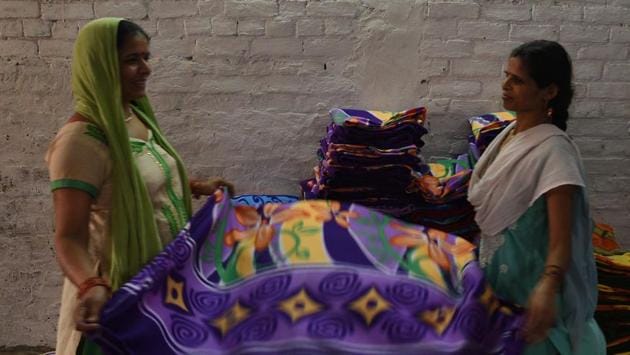
Workers fold fleece blankets at a factory in Panipat. The local fleece blanket industry also faces competition from imported Chinese blankets. “But as the quality is almost the same, the competition is healthy,” Bansal said. “We also don’t do year-round production any more. Our production cycle goes from August to January, to coincide with winter demand.” (Vipin Kumar / HT Photo)
10/10
 View Photos in a new improved layout
Updated on May 3, 2018 11:37 AM


