
 E-Paper



Photos: Rafogoors from UP shed light on the seamless art of darning
Rafoogars from Uttar Pradesh’s Najibabad, specialising in the darning of shawls demonstrated their craft and discussed the significance of this ‘invisible’ craft over the weekend, during a workshop in an ongoing exhibition titled ‘Making Visible: The Rafoogars and the Journey of a Shawl,’ at the art gallery of India International Centre (IIC) in New Delhi. Contrary to popular perception of the rafoo required only as a mending of damaged or worn fabric, the exhibition highlights its importance in the manufacturing of textile pieces and the dwindling of rafoo practitioners.
Updated on: Apr 16, 2018 10:22 AM IST

Share via


Copy link

1/6
 View Photos in a new improved layout
Updated on Apr 16, 2018 10:22 AM
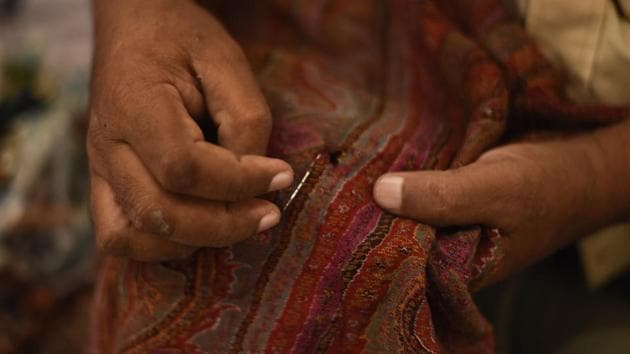
Three rafoogars from Uttar Pradesh’s Najibabad town specialising in the darning of shawls, demonstrate their craft and discussed the significance of the ‘invisible’ craft of darning to assert the value of their community in the social and cultural domain at the ongoing exhibition ‘Making Visible: The Rafoogars and the Journey of a Shawl,’ at India International Centre Annexe, New Delhi. (Burhaan Kinu / HT Photo)
2/6
 View Photos in a new improved layout
Updated on Apr 16, 2018 10:22 AM
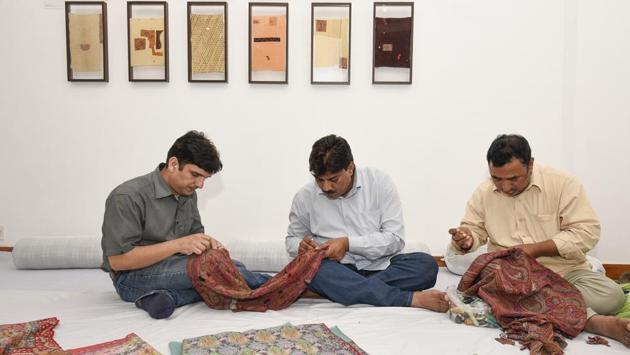
Arif Anvar, Mohammad Zakir and Intekhab Ahmed are sixth generation rafoogars from Najibabad. Survival by carrying forward an art that people are barely aware of is difficult. Zakir said that work comes from studios and private clients. They also travel in search of work and are in Delhi for around five months every year, when the business of Kashmiri shawl traders is at peak. (Burhaan Kinu / HT Photo)
3/6
 View Photos in a new improved layout
Updated on Apr 16, 2018 10:22 AM
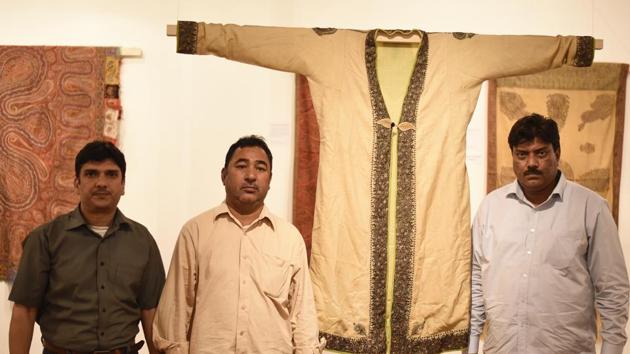
The rafoogars pose for a photo during the exhibition. Apart from the fact that darning is a lesser known craft, what is tragic is that practitioners are dwindling with every passing year. In Najibabad, only 12 families are today carrying forward the tradition. (Burhaan Kinu / HT Photo)
4/6
 View Photos in a new improved layout
Updated on Apr 16, 2018 10:22 AM
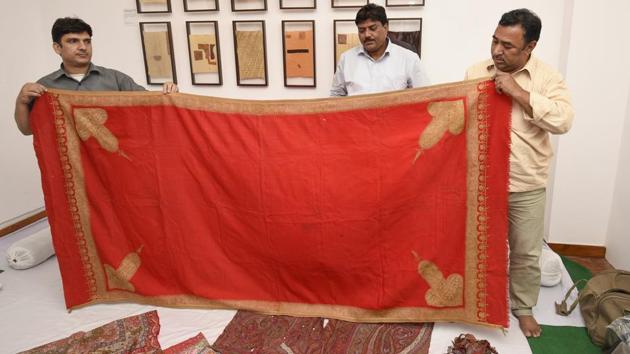
Parallel to this exhibition, a two-day baithak of six rafoogars skilled in darning and mending different kinds of shawls, carpets and rugs, was also conducted over the weekend. Traditionally, rafoogars operate in baithaks or groups of three to five in a karkhana (workshop) -- a collaborative effort in which seniors mentor young artists, and together discuss the best fix possible. (Burhaan Kinu / HT Photo)
5/6
 View Photos in a new improved layout
Updated on Apr 16, 2018 10:22 AM
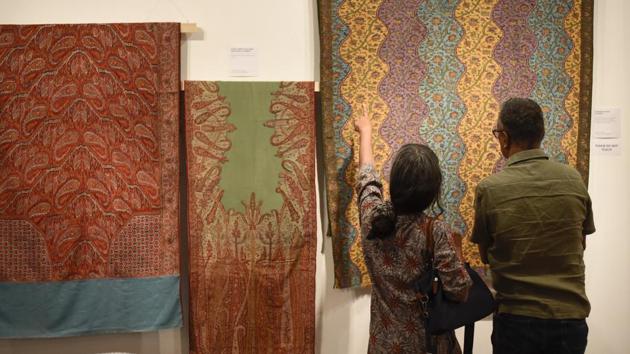
Visitors look at the details of the shawl exhibited at IIC, Delhi. Ritu Sethi (not pictured) chairman, Craft Revival Trust said, “Among all the ancient textiles that are available, the largest collection is that of shawls. And shawls were not possible without rafoogars. They are the ones responsible for maintaining and preserving these marvellous pieces.” (Burhaan Kinu / HT Photo)
6/6
 View Photos in a new improved layout
Updated on Apr 16, 2018 10:22 AM


