
 E-Paper



Photos: Red Fort’s Mumtaz Mahal opens to tourists restored
Mumtaz Mahal, a palace in the Red fort complex that housed the Mughal harem since Shah Jahan’s time and for over a century housed one of the Archaeological Survey of India’s (ASI) oldest museums, opened by the British in 1911 in preparation for King George V’s Delhi durbar has undergone extensive restorations to its interiors, peeling back additions overlaid over the centuries and taking the structure to something that more closely resembles the Mughal original. The Mahal’s museum has been shifted and the restored structure was opened to public viewing earlier week.
Updated on: Sep 12, 2019 12:48 PM IST

Share via


Copy link

1/8

 View Photos in a new improved layout
Updated on Sep 12, 2019 12:48 PM
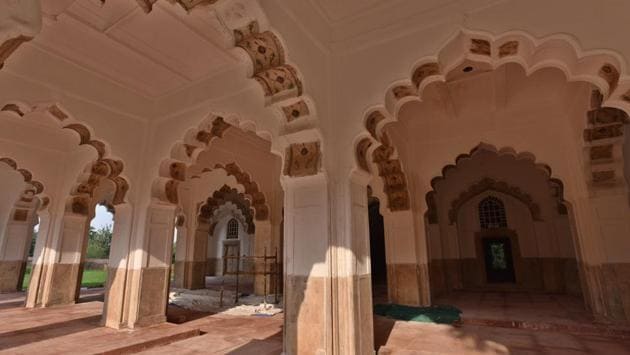
Mumtaz Mahal, one of the only surviving palaces to have housed the Mughal harem inside Delhi’s Red Fort, has been conserved and thrown open to the public after renovations were completed, from this past Sunday. Mumtaz Mahal was constructed from 1639-48 AD. (Sanchit Khanna / HT Photo)
2/8
 View Photos in a new improved layout
Updated on Sep 12, 2019 12:48 PM
After 1857, British troops had destroyed and altered large parts of the Red Fort complex. Almost every other palace housing the imperial harem was demolished, but the Mumtaz Mahal was retained. It served for a while as a prison and later as a sergeants’ mess. In 1911, the British housed a collection of historical objects here during the visit of King George V. The museum remained here till about a few months ago. (Sanchit Khanna / HT Photo)
3/8
 View Photos in a new improved layout
Updated on Sep 12, 2019 12:48 PM
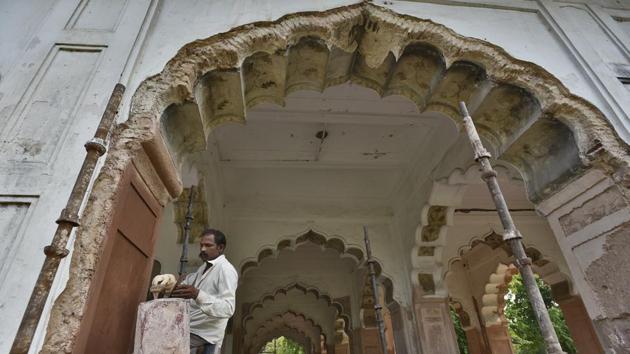
The museum containing Bahadur Shah Zafar’s ‘farmans’, his clothes, astronomical instruments and pottery has been shifted to another building and will open for viewing before October-end. Apart from removing the antiquities, the museum doors and wooden partitions from the 17th century palace, the year-long conservation included the monument’s flooring in red sandstone and the application of lime punning on its walls. (Burhaan Kinu / HT Photo)
4/8
 View Photos in a new improved layout
Updated on Sep 12, 2019 12:48 PM
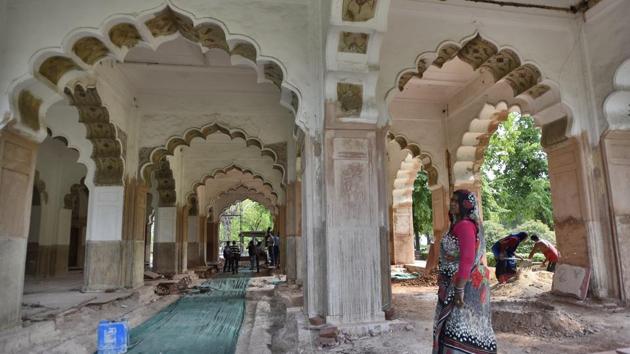
The whitewash on the arches and ceilings was removed to expose Mughal paintings. During the conservation, the ASI found evidence of the Mughal-era ‘Nahr-i-Bahisht’ (canal of paradise), here. It is known to have flowed through all the buildings inside the Red Fort and drained into the moat. It provided a continuous supply of water through the gardens and the interiors and acted as an air-conditioner. (Burhaan Kinu / HT Photo)
5/8
 View Photos in a new improved layout
Updated on Sep 12, 2019 12:48 PM
A view inside Mumtaz Mahal after restoration work. Conservation of the Mumtaz Mahal was carried out with a cost of ₹1.7 crore. At present, the ASI is constructing a pathway to connect the palace with the Asad Burj and Delhi Gate to its south. (Sanchit Khanna / HT Photo)
6/8
 View Photos in a new improved layout
Updated on Sep 12, 2019 12:48 PM
The ornate archways inside the Mumtaz Mahal. The name of the structure appears to have undergone an interesting alteration over the years. “Syed Ahmed Khan, writing in the mid-19th century, called this the ‘zenana mahal shahi’, and this would have been the place where the chief queen and earlier Shah Jahan’s daughter Jahanara would have stayed. The name ‘Mumtaz Mahal’ is a later development,” said historian Rana Safvi. (Sanchit Khanna / HT Photo)
7/8
 View Photos in a new improved layout
Updated on Sep 12, 2019 12:48 PM
A closeup of the restored murals. Interestingly, records suggest the palace was also called Chhota Rang Mahal (small house of paintings), the Rang Mahal being situated north of it. “Most of the Mughal-era names got corrupted over the years. Rang Mahal itself is a later development, perhaps because of the paintings in its interiors. It was originally coined ‘Imtiaz mahal’ by Shah Jahan,” said Safvi. (Sanchit Khanna / HT Photo)
8/8
 View Photos in a new improved layout
Updated on Sep 12, 2019 12:48 PM


