
 E-Paper



Photos: Revisiting Mirza Ghalib in Delhi as he turns 220
Born on December 27, 1797, Mirza Ghalib is perhaps the most popular and influential poet in Urdu, who wrote at a time when the Mughal empire was entering its last quarter and the British were taking over in India. His layered ghazals have been interpreted and sung in various forms over the centuries and his writing continued to hold strong in the hearts of the Hindustani diaspora.
Updated on: Dec 27, 2017 6:37 PM IST


Share via


Copy link

1/8
 View Photos in a new improved layout
Updated on Dec 27, 2017 6:37 PM
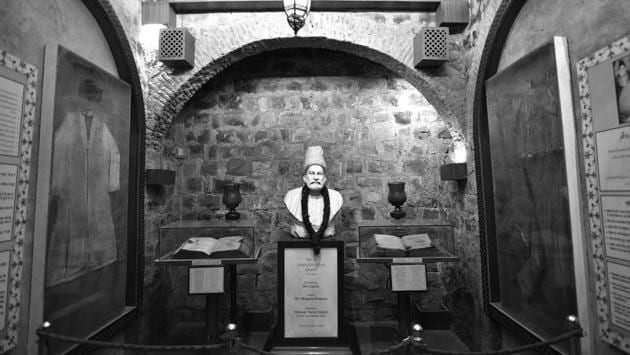
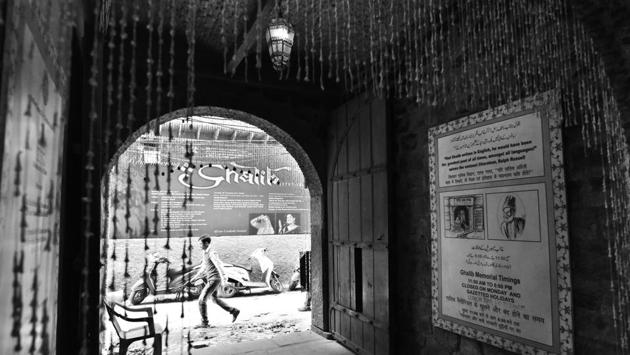
A general view of Mirza Galib’s haveli in Old Delhi. Now a heritage site, the Haveli is where the poet spent the last six years of his life till his death on February 15, 1869. Born in Agra on December 27, 1797, Mirza Asadullah Baig Khan, who later wrote under the pen name ‘Ghalib’ is bestowed with the honorific titles such as Dabir-ul-Mulk and Najm-ud-Daula and regarded as the last great poet of the Mughal era. (Sanchit Khanna / HT Photo)
2/8
 View Photos in a new improved layout
Updated on Dec 27, 2017 6:37 PM
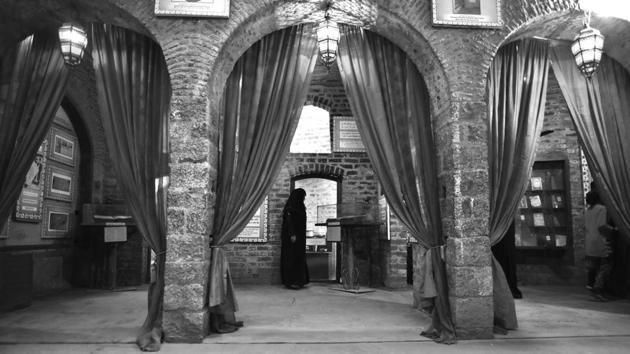
It was during his stay in several rented houses, and this haveli, when Delhi was witness to the most turbulent times during the 1857 revolt that Ghalib penned down couplets and anecdotes still populating the cultural landscape of the National Capital and beyond. Ghalib, it is said, wrote his Diwan (a collection of poems) at this haveli. (Sanchit Khanna / HT Photo)
3/8
 View Photos in a new improved layout
Updated on Dec 27, 2017 6:37 PM
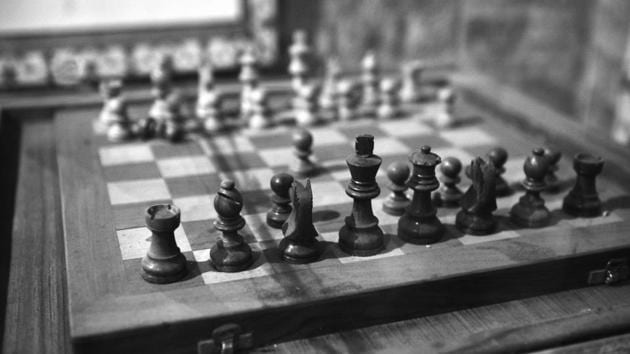
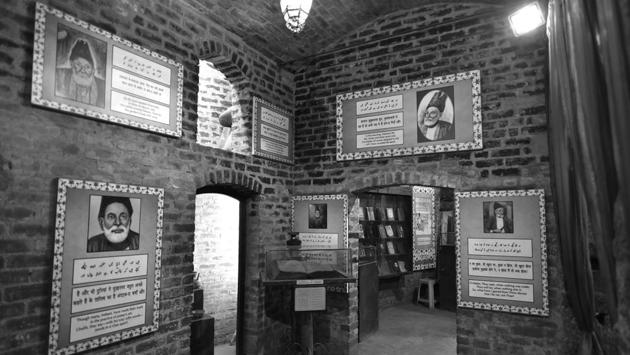
Inside the haveli, there are life-sized portraits of Ghalib’s Urdu verses translated in English and Hindi, his bust donated by poet-filmmaker Gulzar in 2010, replicas of famous handwritten letters, a lookalike of his clothes and a few brass utensils from the poet’s time. (Sanchit Khanna / HT Photo)
4/8
 View Photos in a new improved layout
Updated on Dec 27, 2017 6:37 PM
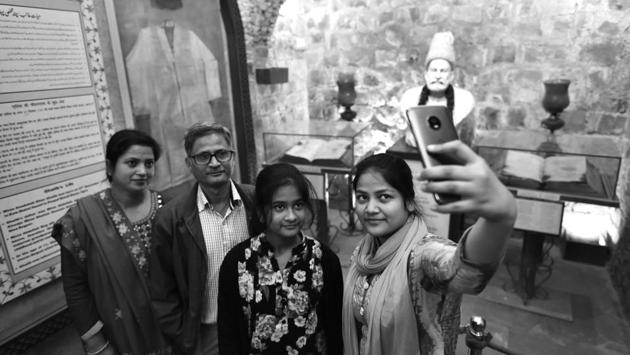
For heritage lover Girish Srivastava, a talk on Delhi is not possible without Ghalib. Srivastava belts out a famous couplet by Ghalib on his love for Delhi. “Ik roz apni rooh se poocha, ki dilli kya hai, to yun jawab main keh gaye, yeh duniya mano jism hai aur dilli uski jaan (I asked my soul, ‘What is Delhi?’ It replied: ‘The world is the body, Delhi its soul”) (Sanchit Khanna / HT Photo)
5/8
 View Photos in a new improved layout
Updated on Dec 27, 2017 6:37 PM
Ghalib’s poetry in translation cannot but evoke a heady mix of love, beauty, intoxication and despair. “His work becomes most relevant in this day and age because his non-conformity pushes us to question hierarchical structures of society,” says Dolan, 25, a history student at Jawaharlal University. Others with knowledge of Urdu are swayed by his invincible grip on the language, which sets him apart. (Sanchit Khanna / HT Photo)
6/8
 View Photos in a new improved layout
Updated on Dec 27, 2017 6:37 PM
Heritage activist Firoz Bakht Ahmed he explains the obscurity Ghalib faces with the poet’s verse: “Poochtey hein woh ke Ghalib kaun hai, koi batlao ke hum batlayen kya,” which translates to “They ask me, who is Ghalib? Someone tell them, what can I say?’” He adds, “Not just in the lanes of Shahjahanabad, where Urdu tehzeeb prevailed, even children of Urdu medium schools don’t know who Ghalib was.” (Sanchit Khanna / HT Photo)
7/8
 View Photos in a new improved layout
Updated on Dec 27, 2017 6:37 PM
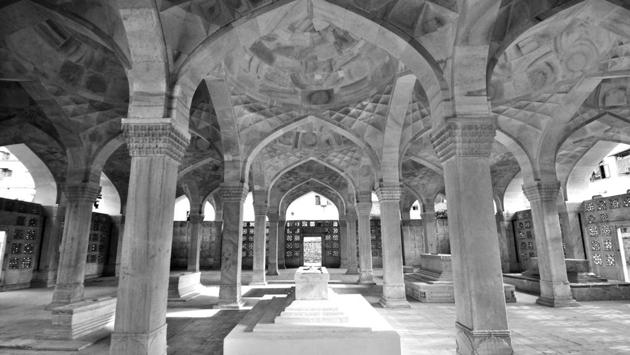
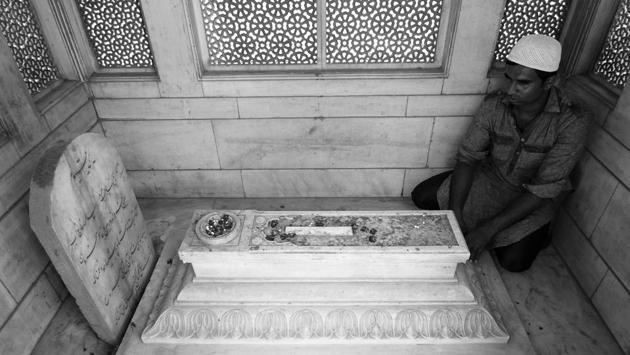
Nestled in a quiet corner on the left side of the crowded narrow alleys leading to the shrine of Hazrat Nizamuddin Auliya, southward of Old Delhi, lies the desolate tomb of Ghalib decked in white marble. A few metres from the tomb, a plaque mentions Ghalib as “among the greatest poets of South Asia”. (Sanchit Khanna / HT Photo)
8/8
 View Photos in a new improved layout
Updated on Dec 27, 2017 6:37 PM


