
 E-Paper



Photos: China’s first National Park designed to be on Tibetan plateau
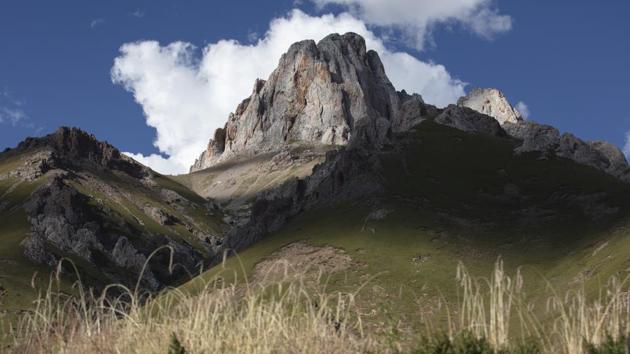
There's a building boom on the Tibetan plateau, one of the world's last remote places. Mountains long crowned by garlands of hovering prayer flags are newly topped with sprawling steel power lines. Circled by the world's tallest mountain ranges, the region long known as "the rooftop of the world" is now in the crosshairs of China's latest modernization push. But this time, the Chinese government wants to set limits on the region's growth in order to implement its own version of one of the US's proudest legacies — a national park system.
Updated on: Nov 18, 2019 10:28 AM IST


Share via


Copy link

1/9
 View Photos in a new improved layout
Updated on Nov 18, 2019 10:28 AM
Ringed by the world’s tallest mountain ranges, the region long known as “the rooftop of the world” is now in the crosshairs of China’s latest modernisation push. But this time, the Chinese government wants to set limits on the region’s growth in order to implement its own version of one of the US’s proudest legacies -- a national park system. (Ng Han Guan / AP)
2/9
 View Photos in a new improved layout
Updated on Nov 18, 2019 10:28 AM
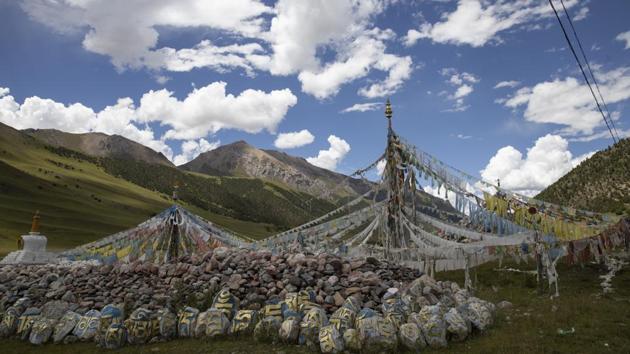
Tibetan prayer flags are seen during a clear day in Angsai, inside the Sanjiangyuan region in western China’s Qinghai province. Qinghai is a vast region in western China adjoining Tibet and shares much of its cultural legacy. In August, policymakers and scientists from China, the US and other countries convened in Xining, capital of Qinghai province, to discuss China’s plans to create a unified system with clear standards for limiting development and protecting ecosystems. (Ng Han Guan / AP)
3/9
 View Photos in a new improved layout
Updated on Nov 18, 2019 10:28 AM
A bat flies through a narrow crevice in Wuyishan in eastern China’s Fujian province. Zhu Chunquan, the China representative of the International Union for the Conservation of Nature, a Switzerland-based scientific group, notes that the country’s economy has boomed over the past 40 years. But priorities are now expanding to include conserving the country’s key natural resources. (Ng Han Guan / AP)
4/9
 View Photos in a new improved layout
Updated on Nov 18, 2019 10:28 AM
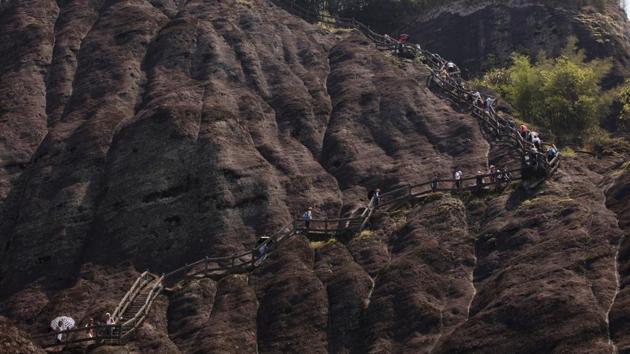
Visitors climb Tianyou peak in Wuyishan, Fujian. “It’s quite urgent as soon as possible to identify the places, the ecosystems and other natural features” to protect, Zhu says. Among other goals, China aims to build its own Yellowstone on the Tibetan plateau. (Ng Han Guan / AP)
5/9
 View Photos in a new improved layout
Updated on Nov 18, 2019 10:28 AM
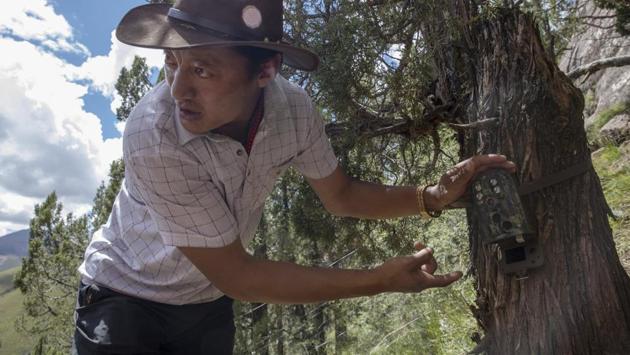
Kunchok Jangtse positions a camera trap in Angsai. The Tibetan herder also has a job installing and maintaining the motion - activated cameras, which help scientists monitor endangered species in the area. “Our religion is connected with wild animals, because wild animals have a consciousness and can feel love and compassion -- therefore, we protect wild-animals,” he said. (Ng Han Guan / AP)
6/9
 View Photos in a new improved layout
Updated on Nov 18, 2019 10:28 AM
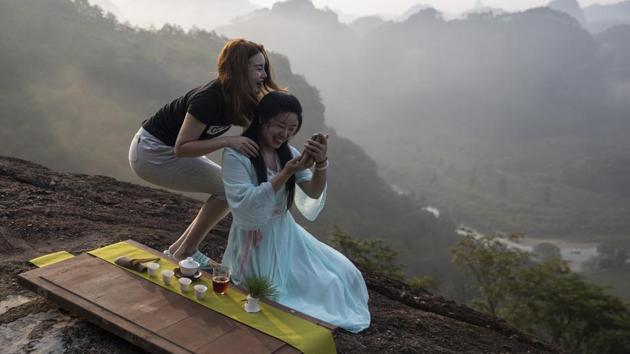
Women work on a photo for their tea products. The ambition to create a unified park system represents “a new and serious effort to safeguard China’s biodiversity and natural heritage,” Duke University ecologist Stuart Pimm says. The area also is home to some iconic and threatened species as the snow leopard and Chinese mountain cat, and encompasses the headwaters of three of Asia’s great waterway -- the Yangtze, Yellow and Mekong rivers. (Ng Han Guan / AP)
7/9
 View Photos in a new improved layout
Updated on Nov 18, 2019 10:28 AM
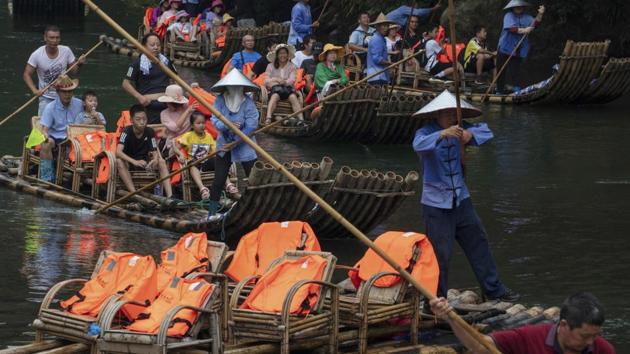
Tourists ride in bamboo rafts during a tour of the Nine Bends River in Wuyishan. But a key question looms over the project: Can China marry the goals of conservation and tourism, while safeguarding the livelihoods and culture of the approximately 128,000 people who live within or near the park’s boundaries, many of them Tibetan? (Ng Han Guan / AP)
8/9
 View Photos in a new improved layout
Updated on Nov 18, 2019 10:28 AM
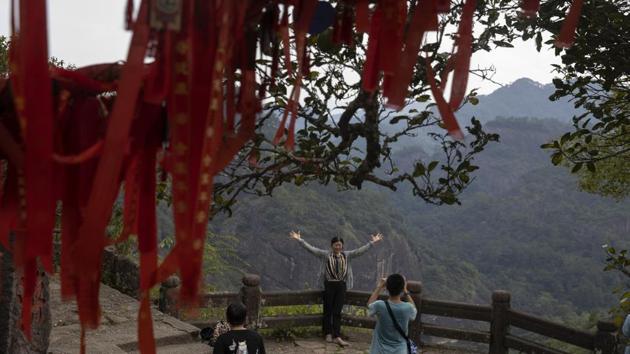
A visitor poses for a photo on Tianyou peak in Wuyishan. Yellowstone is widely considered the world’s first national park. After it was created in 1872, the U.S. government forced the Native Americans who lived in the area to resettle outside the park boundaries, in keeping with 19th-century notions of wilderness protection. But countries that establish park systems in the 21st century now must consider how best to include local populations in their planning. (Ng Han Guan / AP)
9/9
 View Photos in a new improved layout
Updated on Nov 18, 2019 10:28 AM


