

 E-Paper


Photos: Congo races to fix artisanal mining problem against ‘blood cobalt’ concerns
The Democratic Republic of Congo is by far the world’s biggest supplier of cobalt, a key ingredient in the rechargeable batteries needed to power everything from Apple Inc. gadgets to Tesla Inc. cars. With cobalt abundant just below the surface in most regions, illegal miners digging unregulated in their homes have been cause for concern ever since the cobalt rush began in 2013. The provincial government in Lualaba is now trying something new to regulate artisanal cobalt mining to show that it can be done safely while protecting thousands of livelihoods.
1 / 8
 View Photos in a new improved layout
Updated on Mar 29, 2018 02:17 pm IST
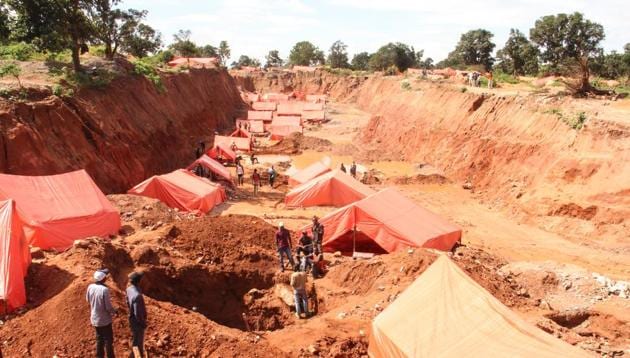
Legend in Kolwezi, Congo has it that a man digging a toilet in his backyard once struck a vein of cobalt. Ever since, pickaxes and shovels have turned working-class neighbourhoods into a hive of pits and tunnels running underneath. The Democratic Republic of Congo is the world’s biggest supplier of cobalt, a key ingredient in the rechargeable batteries needed in everything from cellphones to electric cars. (William Clowes / Bloomberg)
2 / 8
 View Photos in a new improved layout
Updated on Mar 29, 2018 02:17 pm IST
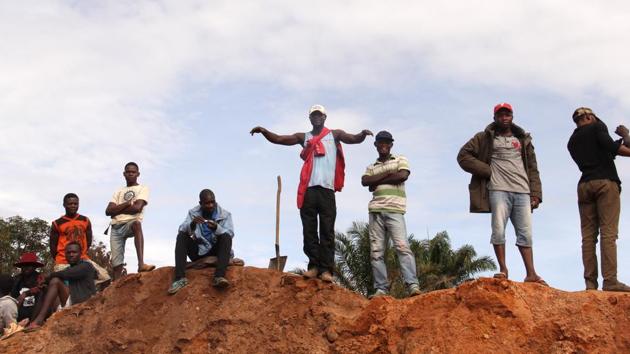
For many in Lualaba province, the region with the highest deposits, cobalt is the surest way to an income. These entrepreneurial miners digging for cobalt by hand have come to be known as artisanal miners. In a country where most live on less than $2 a day, artisanal miners report making as much as $12,000 since the cobalt rush began in 2013. (William Clowes / Bloomberg)
3 / 8
 View Photos in a new improved layout
Updated on Mar 29, 2018 02:17 pm IST
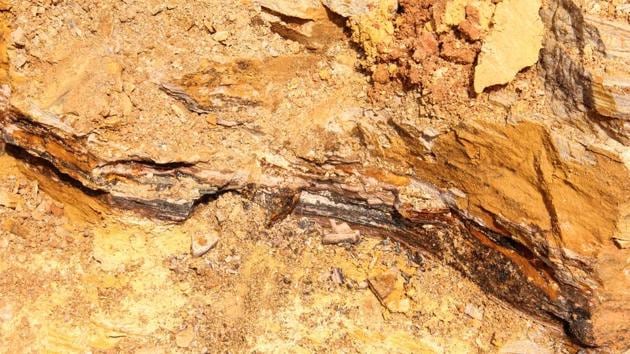
The mineral snakes just below the surface and locals chase it through townships and villages. Artisanal miners, accounting for 15% of the country’s output in 2017, have put corporate firms in a bind. Death was frequent in informal mines and Amnesty International found women and children involved in ore processing. The government banned such digging in April last year. (William Clowes / Bloomberg)
4 / 8
 View Photos in a new improved layout
Updated on Mar 29, 2018 02:17 pm IST
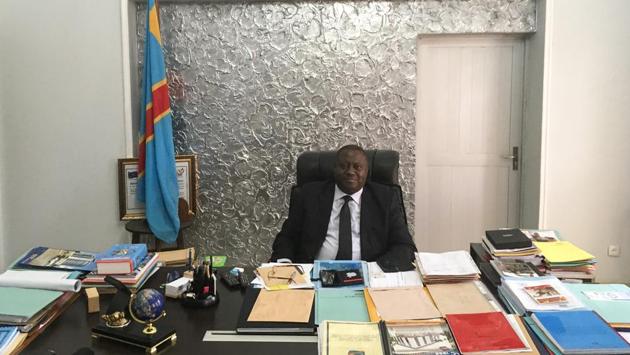
Richard Muyej, Lualaba governor says the anarchic ways of unsupervised mining were behind the rise of ‘blood cobalt’ and letting the free-for-all continue would risk driving away international buyers completely. For scale, just the artisanal mining efforts are valued at $1 billion at spot prices and demand is only expected to grow. (William Clowes / Bloomberg)
5 / 8
 View Photos in a new improved layout
Updated on Mar 29, 2018 02:17 pm IST
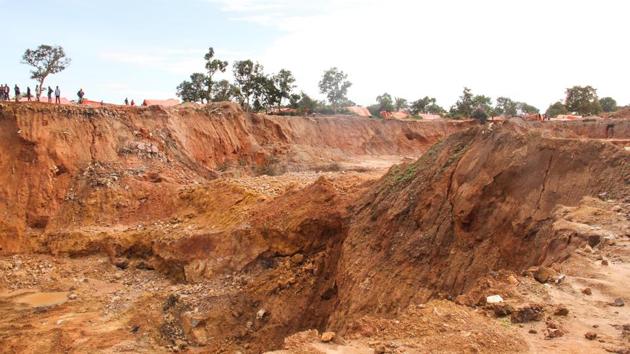
In Kolwezi, the government is now trying to regulate informal activity while preserving livelihoods. Local houses have been moved to create a vast opencast mine where China’s Congo Dongfang Mining International, has agreed to furnish machinery, safety and resettlement expenses in turn for exclusive rights to buy ore here. (William Clowes / Bloomberg)
6 / 8
 View Photos in a new improved layout
Updated on Mar 29, 2018 02:17 pm IST
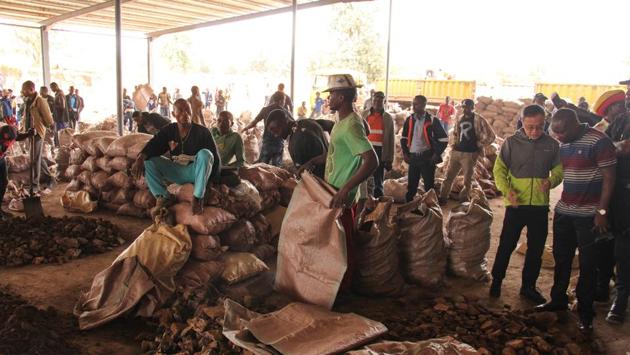
Men sort through cobalt ore ahead of its sale to Dongfang International, at a marketplace in Kolwezi. And while the Chinese firm itself has a past with illegal cobalt, the new initiative has security checks at the mine, safety gear, a no alcohol policy and entry barred for pregnant women and children. (William Clowes / Bloomberg)
7 / 8
 View Photos in a new improved layout
Updated on Mar 29, 2018 02:17 pm IST
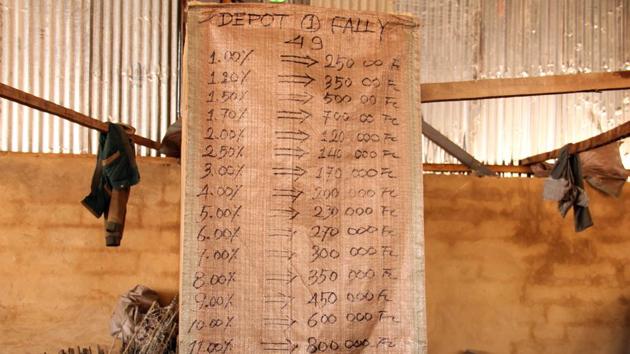
A price list for a 100kg sack of cobalt ore is displayed at a marketplace in Kolwezi. Rather than stop buying from illegal sites, the companies are weeding out illegal miners and the government is allowing partnering firms to buy half the production from official mines directly and let middlemen, essential to small miners, sell the rest at hangars created as marketplaces. (William Clowes / Bloomberg)
8 / 8
 View Photos in a new improved layout
Updated on Mar 29, 2018 02:17 pm IST