
 E-Paper



Photos: Families of Peru’s disappeared hope for answers
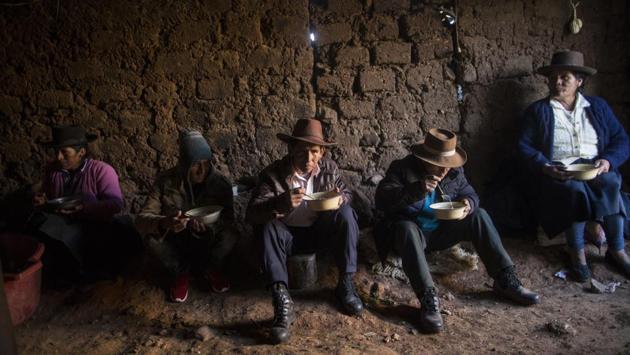
More than 20,300 Peruvians are still considered "disappeared" in the struggle between Peru's military and Shining Path rebels during the 1980s and 1990s. The Peruvian families who have spent decades wondering about their loved ones have new hopes under an innovative law. Under the new measure, authorities can turn over remains uncovered by forensic scientists before determining a cause of death or completing an investigation. Families are also no longer required to file a complaint with the chief prosecutor's office first.
Updated on: Aug 19, 2018 3:09 PM IST


Share via


Copy link

1/9
 View Photos in a new improved layout
Updated on Aug 19, 2018 3:09 PM
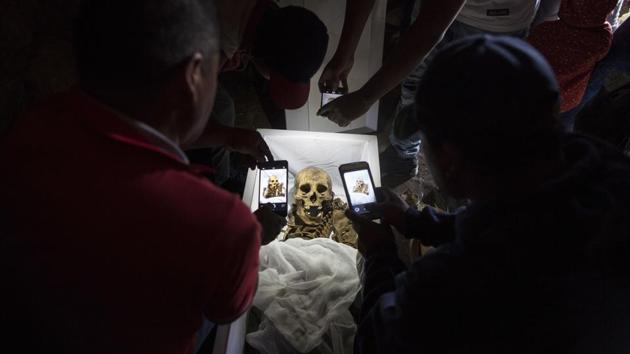
Relatives take cell phone pictures of the remains of Fortunate Ventura Huamacusi, a man who was killed by the Peruvian army in 1983, before placing the coffin in its niche at the Rosaspata cemetery in Peru. Thousands of families who have spent decades wondering about loved ones who disappeared during years of bloody conflict between the state and Maoist guerrillas have new hopes for getting the closure they have been searching for. (Rodrigo Abd / AP)
2/9
 View Photos in a new improved layout
Updated on Aug 19, 2018 3:09 PM
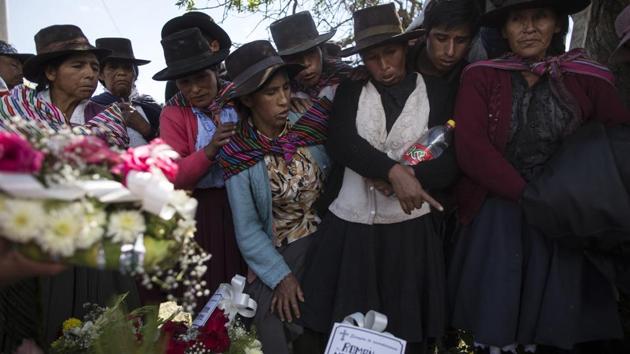
Relatives look at the remains of their loved ones before their burial at the cemetery in Quinuas, in Peru's Ayacucho province. The skeletal remains of 14 people were recently turned over to loved ones under an innovative new law that authorities hope will speed up what has long been a lengthy and burdensome process to identify those killed in the conflict. (Rodrigo Abd / AP)
3/9
 View Photos in a new improved layout
Updated on Aug 19, 2018 3:09 PM
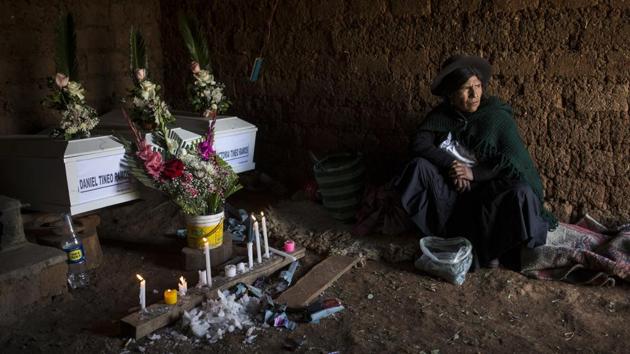
Marta Tineo Espinosa sits next to the coffins of her relatives in Tantana, Peru. Under this new measure, authorities can turn over remains uncovered by forensic scientists before determining a cause of death or completing an investigation. Families are also no longer required to file a complaint with the chief prosecutor’s office first. (Rodrigo Abd / AP)
4/9
 View Photos in a new improved layout
Updated on Aug 19, 2018 3:09 PM
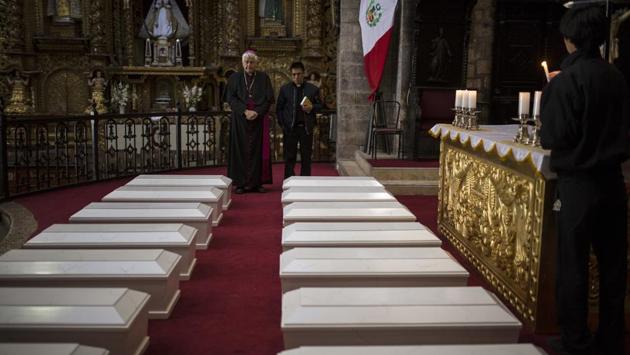
Ayacucho's Bishop Salvador Jose Miguel Pineiro, left, stands with an assistant behind the coffins of villagers. More than 20,300 Peruvians are still considered “disappeared” in the struggle between Peru’s military and Shining Path rebels during the 1980s and 1990s. Public prosecutors with heavy caseloads and few resources have been unable to identify suspects or help families find their missing relative’s remains in the vast majority of cases. (Rodrigo Abd / AP)
5/9
 View Photos in a new improved layout
Updated on Aug 19, 2018 3:09 PM
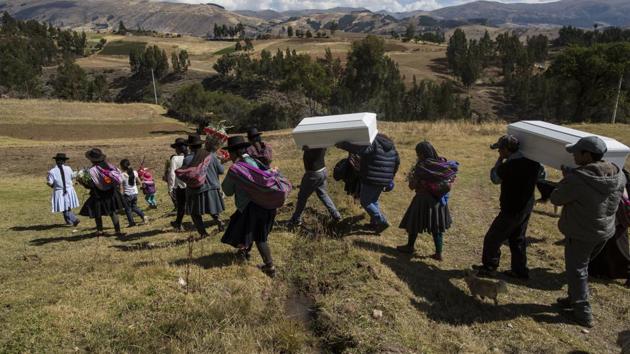
Forensic scientists in several countries in Latin America are still working to identify the remains of people killed during military dictatorships and civil conflicts decades ago. In countries like Peru, those remains are being found in remote areas that are difficult to access.Still, workers have made steady progress. Over the last 16 years, the remains of 3,823 people have been exhumed in the Andean nation. (Rodrigo Abd / AP)
6/9
 View Photos in a new improved layout
Updated on Aug 19, 2018 3:09 PM
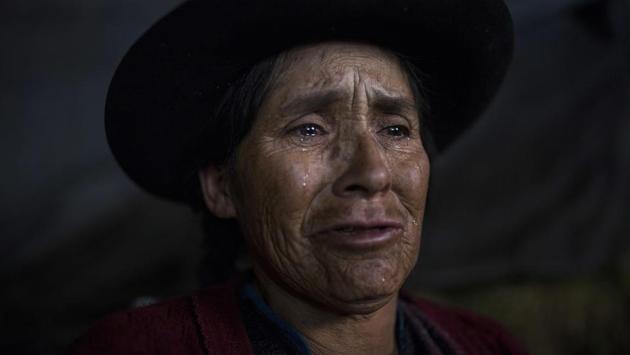
Antonia Yupanki Tineo, 58, cries near the coffin of her uncle Alejandro Tineo. Susana Cori, who is leading work by the International Red Cross in locating the disappeared in Peru, Bolivia and Ecuador, called the new Peruvian approach unique, saying that in other parts of the region, “this model with a humanitarian focus has not been used.” (Rodrigo Abd / AP)
7/9
 View Photos in a new improved layout
Updated on Aug 19, 2018 3:09 PM
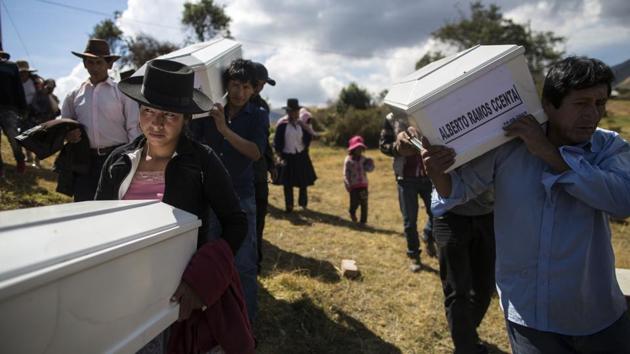
Relatives of people who were killed carry their remains to the cemetery for a proper burial. The new mandate is also aimed at helping families whose relatives were informally buried. (Rodrigo Abd / AP)
8/9
 View Photos in a new improved layout
Updated on Aug 19, 2018 3:09 PM
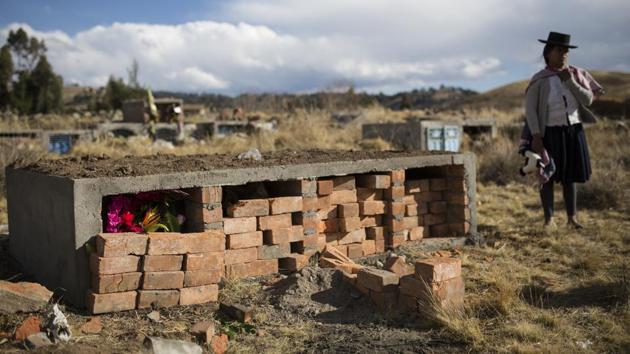
Flowers stand inside the niche of Fortunate Ventura Huamacusi, on the day of his proper burial at the cemetery in Rosaspata. The family of Alberto Ramos is among the first to benefit from that aspect. Military officers accused him of belonging to the Shining Path and shot him to death. Hours later, his frightened relatives buried him in a rural cemetery and never got a death certificate to formally declare his violent end. (Rodrigo Abd / AP)
9/9
 View Photos in a new improved layout
Updated on Aug 19, 2018 3:09 PM


