
 E-Paper



Photos: Goat farmers at climate change frontline in Argentina’s wine belt
In a vast valley at the foot of the Andes, Antonio Sazo counts his goats, having ushered them down mountain slopes in the south of the Argentine province of Mendoza, where climate change forces them higher every year in order to graze. Sazo and other goat breeders scattered along the Andes foothills here are on the frontline of climate change, devoid of the safety net of irrigation canals utilized by neighboring farms or by Mendoza's vineyards, where Argentina's highly prized Malbec wines are produced.
Updated on: Nov 7, 2019 12:07 PM IST


Share via


Copy link

1/8
 View Photos in a new improved layout
Updated on Nov 7, 2019 12:07 PM
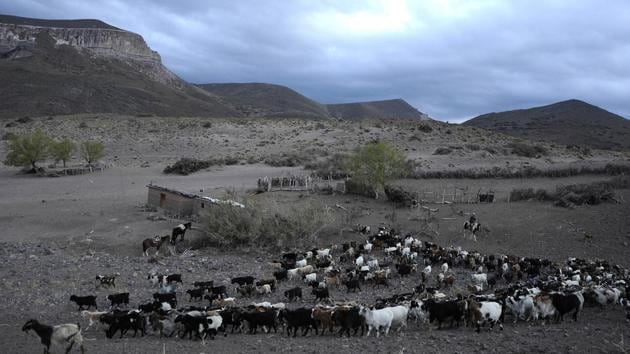
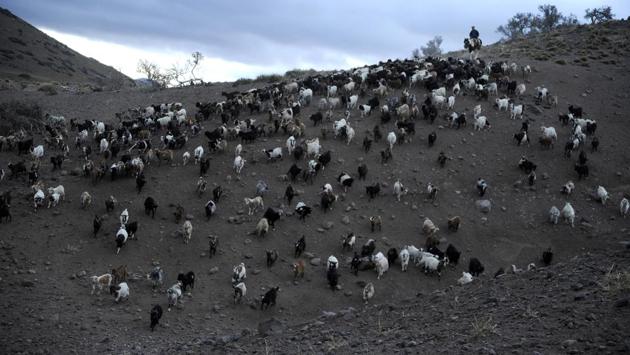
A view of goats as they are herd in El Alambrado, 136 Km from Malargue, Mendoza province, Argentina. Goat breeders scattered along the Andes foothills here are on the frontline of climate change, devoid of the safety net of irrigation canals utilized by neighbouring farms or by Mendoza’s vineyards, where Argentina’s highly prized Malbec wines are produced. (Andres Larrovere / AFP)
2/8
 View Photos in a new improved layout
Updated on Nov 7, 2019 12:07 PM
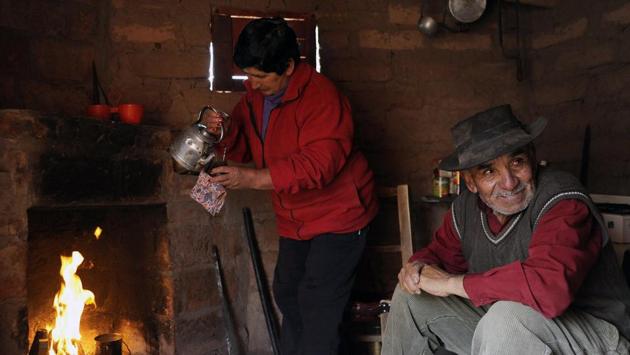
“The situation has changed a lot here. It’s not what it was two years ago, when the winter was good, with more snowfall,” 68-year-old Antonio Sazo said, sitting inside his wood and adobe traditional house. With his wife and three of his children, he ekes out a living from a herd of 300 goats in Arro Ponigue, 350 kilometers (220 miles) south of Argentina’s lush wine capital Mendoza. (Andres Larrovere / AFP)
3/8
 View Photos in a new improved layout
Updated on Nov 7, 2019 12:07 PM
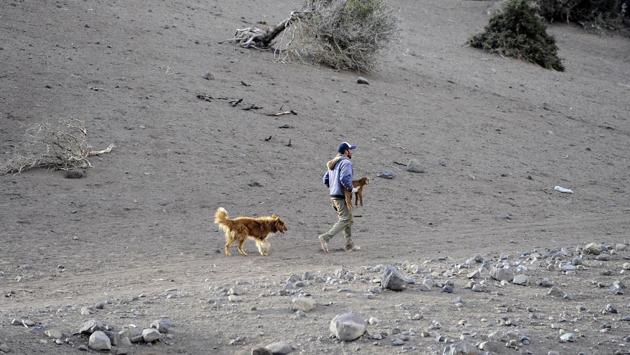
Argentinian goat farmer Nereo Sazo carries a newborn kid in El Alambrado. Here, 1,300 kilometers west of Buenos Aires, farmers have seen the affects of lighter winter snowfall in the austral spring, when meltwater was scarce on the slopes, lakes dried up and grassy pastures thinned out. “Climate change has altered the entire cycle of life in the region,” said Ivan Rosales, an agricultural engineer at the National Institute of Agricultural Technology (INTA) in San Rafael, Mendoza. (Andres Larrovere / AFP)
4/8
 View Photos in a new improved layout
Updated on Nov 7, 2019 12:07 PM
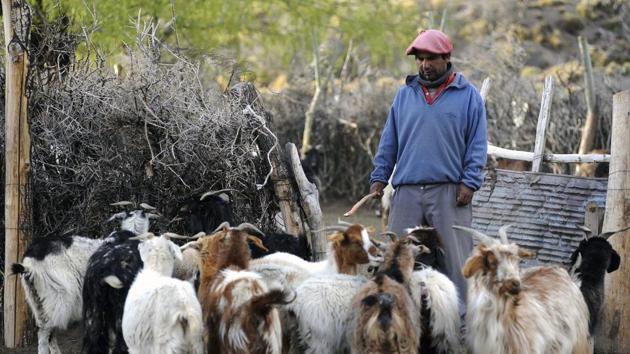
The quiet drama that has decimated Sazo’s herd -- recently a thousand strong -- contrasts with the robustness of Mendoza’s central and northern vineyards, where sophisticated irrigation systems have helped to absorb some of the shock of climate change. Climate warming has slowly but clearly been shrinking the glaciers along the Andean Cordillera above the valleys. (Andres Larrovere / AFP)
5/8
 View Photos in a new improved layout
Updated on Nov 7, 2019 12:07 PM
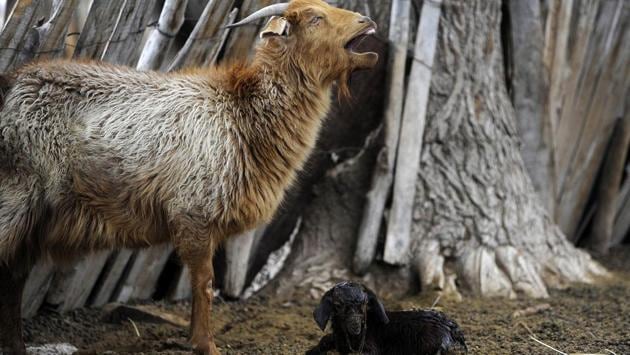
“Here we have a lot of drought. It is very cold and there’s a lot of wind,” said Sazo, his hands blackened from carrying pregnant goats to a corral where they will give birth to one or two kids. But Sazo knows that the yield will be lower this year, because the animals don’t give birth or stop feeding their offspring when there is a lack of pasture or water. He has seen the trend of recent years. (Andres Larrovere / AFP)
6/8
 View Photos in a new improved layout
Updated on Nov 7, 2019 12:07 PM
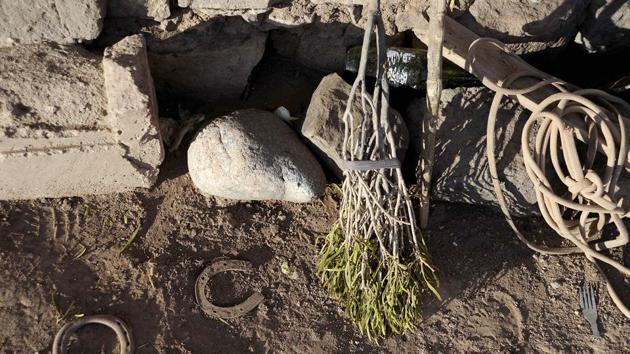
“About 5 percent of land in Mendoza is dependent on irrigation, and that’s where 95 percent of the population lives,” Rosales, the agricultural engineer, said. “Everything else is dry, depending on rain or the weather cycles. All they have there is sheep, goat and horse-breeding, there is no other activity possible.” (Andres Larrovere / AFP)
7/8
 View Photos in a new improved layout
Updated on Nov 7, 2019 12:07 PM
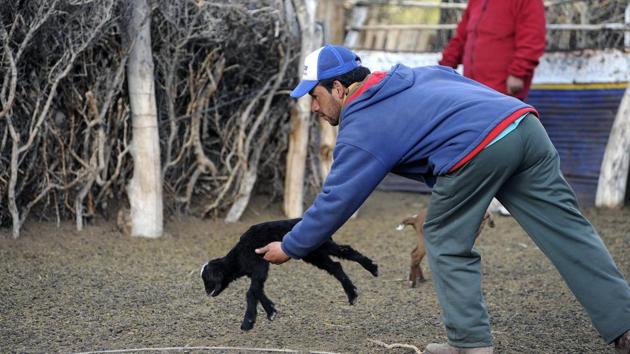
Sazo uses his herd to sustain his family. Four of his seven children have left the farm to look for work. Rosales says the break-up of rural families is another consequence of climate change here. (Andres Larrovere / AFP)
8/8
 View Photos in a new improved layout
Updated on Nov 7, 2019 12:07 PM


