
 E-Paper



Photos: Hardscrabble work at Egypt’s limestone quarries
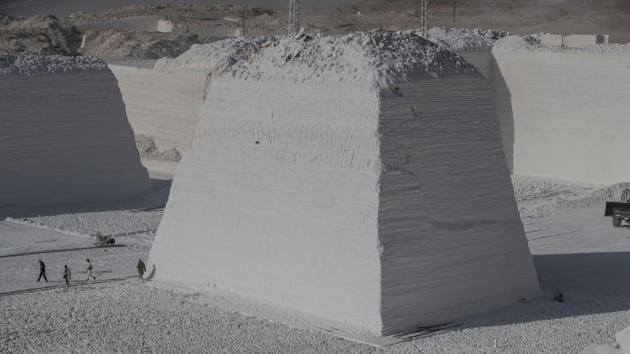
Nearly 400 limestone quarries have been closed east of the Nile but there are about 400 still operating, employing many who toiling for daily wages little more than 100 pounds ($6). Workers at such quarries handle the dangerous machinery with finesse, and shrug off the dangers of a job where a mistake can prove fatal. Huge electric saws on rails slice rows of blocks from the mountainside. The white bricks –the construction material of choice for cladding pyramids and tombs in ancient Egypt -- are today destined to be used in construction, or ground down for use in ceramics.
Updated on: Nov 26, 2019 12:23 PM IST


Share via


Copy link

1/10

 View Photos in a new improved layout
Updated on Nov 26, 2019 12:23 PM
A labourer walks wearing protective gear at the ‘White Mountain’ limestone extraction quarry site near Egypt’s southern city of Minya. Covered in fine white dust, labourers at this limestone quarry toil in brutal conditions with little workplace safety for paltry pay. (Khaled Desouki / AFP)
2/10
 View Photos in a new improved layout
Updated on Nov 26, 2019 12:23 PM
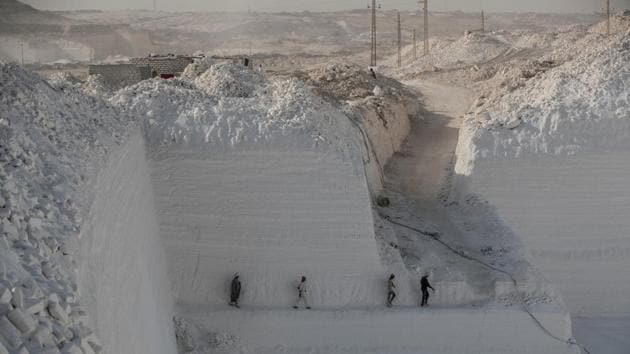
Labourers walk at the White Mountain limestone extraction quarry site. The labourers work here in shifts at the quarry in the so-called White Mountain east of the river Nile outside Minya, about 265 km south of the capital Cairo. At noon, the morning shift clocks out and the afternoon workers arrive to begin their seven hour shift. (Khaled Desouki / AFP)
3/10
 View Photos in a new improved layout
Updated on Nov 26, 2019 12:23 PM
But before the work beings, they gather to share a communal lunch. Under a makeshift palm frond shelter in the middle of the quarry, the workers sit on a ragged blanket to fill themselves on a humble meal of bread, cheese and eggs. (Khaled Desouki / AFP)
4/10
 View Photos in a new improved layout
Updated on Nov 26, 2019 12:23 PM
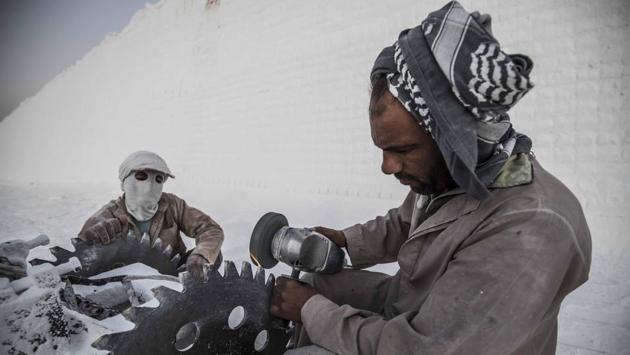
A labourer sharpens the blade of a stone saw at the limestone extraction quarry site. Once fed and ready for the day’s task, they don goggles and wrap scarves around their faces in an attempt to keep out the clouds of white powder thrown up by the whirring machines. (Khaled Desouki / AFP)
5/10
 View Photos in a new improved layout
Updated on Nov 26, 2019 12:23 PM
Huge electric saws on rails slice rows of blocks from the mountainside. Workers then stack the stone in long, neat rows. The white bricks are destined to be used in construction, or ground down for use in ceramics. (Khaled Desouki / AFP)
6/10
 View Photos in a new improved layout
Updated on Nov 26, 2019 12:23 PM
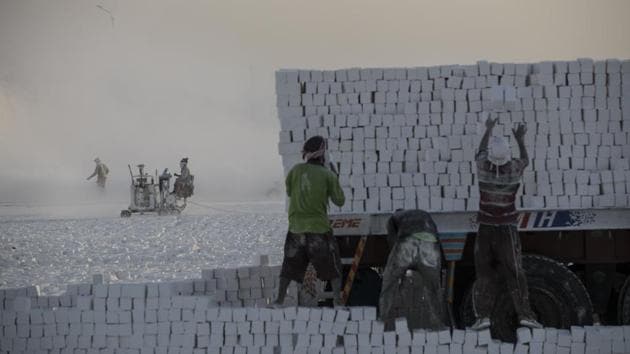
Labourers load limestone blocks on the back of a truck. This same stone was the construction material of choice for cladding pyramids and tombs in ancient Egypt. The site AFP visited has 16 shift workers and a foreman. (Khaled Desouki / AFP)
7/10
 View Photos in a new improved layout
Updated on Nov 26, 2019 12:23 PM
Workers at such quarries handle the dangerous machinery with finesse, and shrug off the dangers of a job where a mistake can prove fatal. “Workplace injuries here are severe -- either death or permanent injury,” Obeid Abu Ibram, a 34-year-old foreman, told AFP. (Khaled Desouki / AFP)
8/10
 View Photos in a new improved layout
Updated on Nov 26, 2019 12:23 PM
“The machines were once secure and covered but over time the safety covers have popped off making them hazardous to those who do not take precautions,” he said. In recent years, authorities have closed a number of unlicensed quarries where there has been a growing toll from fatal workplace accidents. (Khaled Desouki / AFP)
9/10
 View Photos in a new improved layout
Updated on Nov 26, 2019 12:23 PM
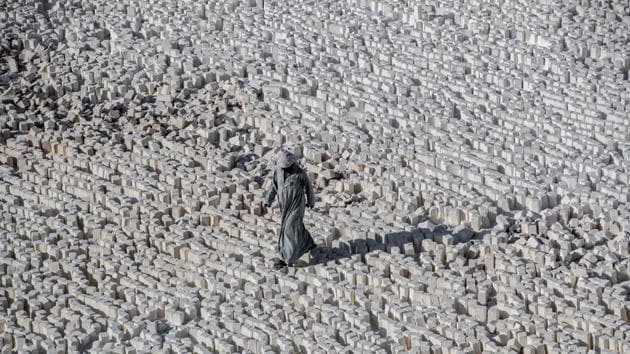
A labourer walks over cut stone blocks at the White Mountain quarry site. “Nearly 400 quarries have been closed east of the Nile but there are about 350 to 400 still operating,” said Abu Ibram, who has been toiling in the same dangerous industry since he was 14. The daily wage for labourers is little more than 100 pounds ($6), barely enough to support a family. (Khaled Desouki / AFP)
10/10
 View Photos in a new improved layout
Updated on Nov 26, 2019 12:23 PM


