E-Paper


Garbage piles up in Bhopal, other MP cities as municipal employees’ strike enters third day
More than 2,550 tonnes of garbage have piled up in Bhopal as over 6,000 municipal employees strike for higher wages, regularisation and an end to contract jobs.

 Prefer HTon Google


Madhya Pradesh is facing a mounting garbage and water crisis as a statewide strike by municipal employees entered its third day on Friday, disrupting sanitation and water supply in several cities.
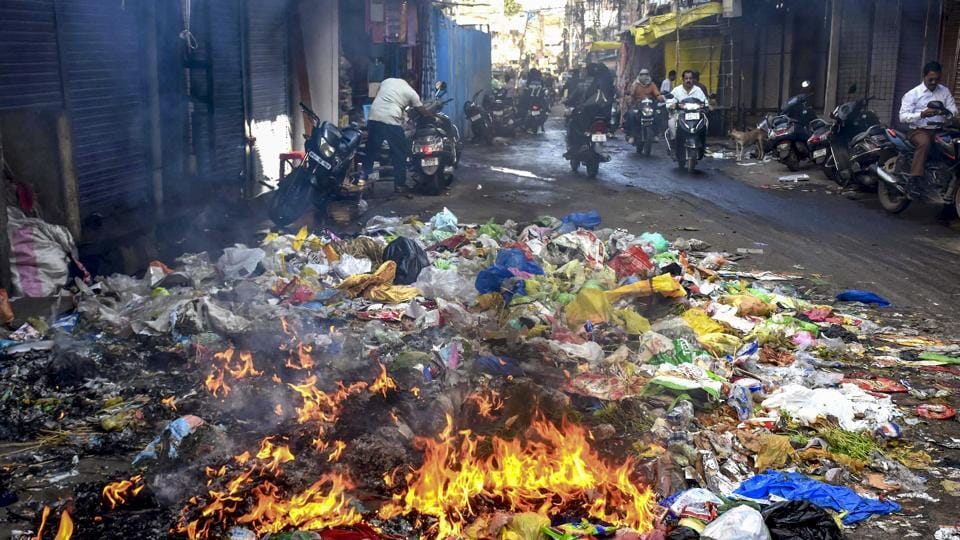
In Bhopal alone, around 2,550 tonnes of waste has piled up on roads, from residential neighbourhoods to markets, as more than 6,000 municipal employees joined the protest over demands including higher wages, regularisation and an end to the contract system.
The strike has affected several cities, including Jabalpur and Gwalior, while Indore has remained unaffected.
More than one lakh municipal employees across Madhya Pradesh are participating in the protest. In Indore, sanitation workers had gone on strike in October, which ended after authorities assured them of a wage hike and regularisation. In Bhopal, the protest has spread beyond sanitation workers to employees of the water supply, fire and electricity departments.
Union president Maganlal Jhanjhot said the employees were now prepared for an all-out fight as their demands remained unresolved.
The workers are demanding an increase in their monthly salary from ₹10,500 to ₹25,000, regularisation of their jobs, compassionate appointments and an end to the contract system. Around 6,000 other municipal employees joined the strike in Bhopal on Friday, while the suspension of water supply through tankers has triggered shortages in several areas.
Bhopal generates around 850 tonnes of garbage every day, but more than 400 garbage collection vehicles remain parked due to the strike. The municipal corporation has failed to make alternative arrangements, leaving heaps of waste across residential areas and markets, including the VIP locality of Char Imli, where ministers and senior bureaucrats live.
Bhopal municipal commissioner RP Ahirwar has been meeting the workers to resolve the issue, and an agreement is likely to be reached on Friday. “We are trying to resolve the issue,” he said.
Union leader Vasi Sultan said around 7,000 employees work for 25 days a month and get only ₹10,500 per month, which is not enough to run a household. The four demands are a salary hike, compassionate appointments, regularisation and an end to the contract system.
Congress spokesperson Anand Jat said things were worsening in the state, especially in the capital city and smaller cities, but the ministers were not paying attention to the situation. “The pile of garbage can cause health issues too. Why the BJP-led state government is silent,” he added.
Urban development department minister Kailash Vijayvargiya did not respond when contacted.