
 E-Paper



Photos: Hope for Florida Reef Tract as corals reproduce in lab setting
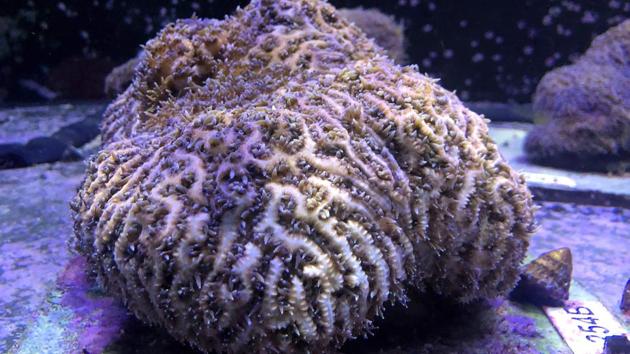
Florida's corals are deteriorating rapidly due to climate change and a destructive tissue disease that appeared in the waters of the southeastern state in 2014. A team of scientists in the US have managed to reproduce coral in a lab setting for the first time ever, an encouraging step in the race to save "America's Great Barrier Reef" off the coast of Florida. Scientists hope to reproduce healthy corals and repopulate the reefs through this technique.
Updated on: Aug 28, 2019 10:33 AM IST

Share via


Copy link

1/7
 View Photos in a new improved layout
Updated on Aug 28, 2019 10:33 AM
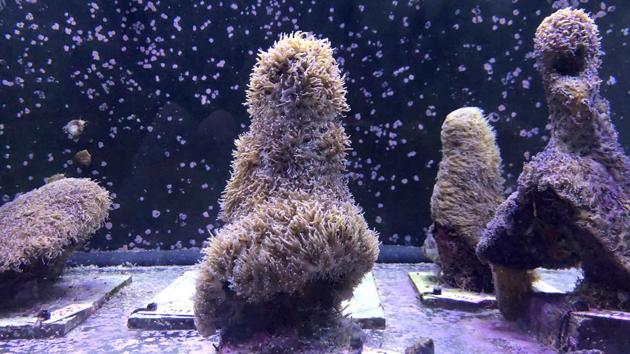
Pillar corals in a water tank at the labs of The Florida Aquarium Conservation Center in Apollo Beach, Florida. A team of scientists in the US have managed to reproduce coral in a lab setting for the first time ever, an encouraging step in the race to save “America’s Great Barrier Reef” off the coast of Florida. (Gianrigo Marletta / AFP)
2/7
 View Photos in a new improved layout
Updated on Aug 28, 2019 10:33 AM
Tourists snorkel at a Florida Barrier Reef sight, off Key Largo. Coral reefs harbour the highest biodiversity of any ecosystem globally and directly support over 500 million people worldwide. Over the last three years, reefs around the world have suffered from mass coral bleaching events as a result of the increased global surface temperature caused by greenhouse gas emissions. (Gianrigo Marletta / AFP)
3/7
 View Photos in a new improved layout
Updated on Aug 28, 2019 10:33 AM
Fish in a tank at the Florida Aquarium resembling Florida’s natural ecosystem. When conditions such as the temperature change, corals expel the symbiotic algae in their tissues, responsible for their colour. A spike of 1–2°C in ocean temperatures sustained over several weeks can lead to bleaching, turning corals white. If corals are bleached for prolonged periods, they eventually die. (Gianrigo Marletta / AFP)
4/7
 View Photos in a new improved layout
Updated on Aug 28, 2019 10:33 AM
Corals seen in a tank at Apollo Beach.”This amazing breakthrough was the first time that we spawned Atlantic corals in a laboratory setting that we’ve had for over a year in our greenhouses,” the aquarium’s director for conservation Amber Whittle, said. (Gianrigo Marletta / AFP)
5/7
 View Photos in a new improved layout
Updated on Aug 28, 2019 10:33 AM
Dr. Amber Whittle (L) and Emily Williams, coral biologist inspects corals in tanks at The Florida Aquarium. “It’s been done before at the Horniman Museum in London with Pacific corals, never with Atlantic corals, and the Pillar coral that we spawned is a highly endangered species.” (Gianrigo Marletta / AFP)
6/7
 View Photos in a new improved layout
Updated on Aug 28, 2019 10:33 AM
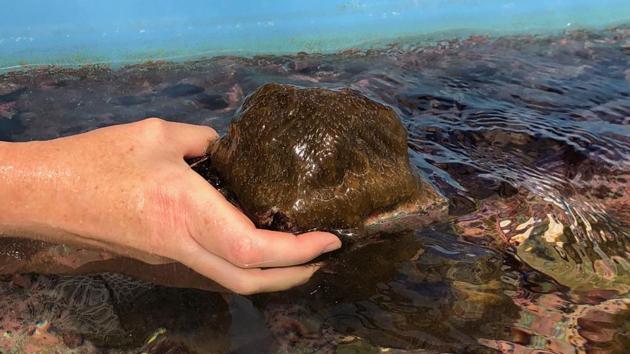
The Florida Aquarium and the Horniman Museum began working together in 2015 on induced reproduction techniques. Reproduction was achieved by mimicking the conditions of the corals’ natural environment, including sunrises, sunsets, moon phases, water temperature and quality. (Gianrigo Marletta / AFP)
7/7
 View Photos in a new improved layout
Updated on Aug 28, 2019 10:33 AM


