
 E-Paper



Photos: In Oman’s Dhofar desert, European team simulates Mars on Earth
The Dhofar desert in southern Oman, resembles Mars so much that more than 200 scientists from 25 nations have chosen it as their location for the next four weeks, to field-test technology for a manned mission to Mars.
Updated on: Feb 9, 2018 11:15 AM IST


Share via


Copy link

1/10
 View Photos in a new improved layout
Updated on Feb 9, 2018 11:15 AM
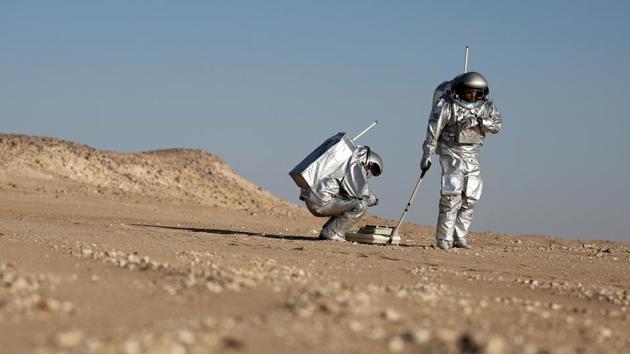
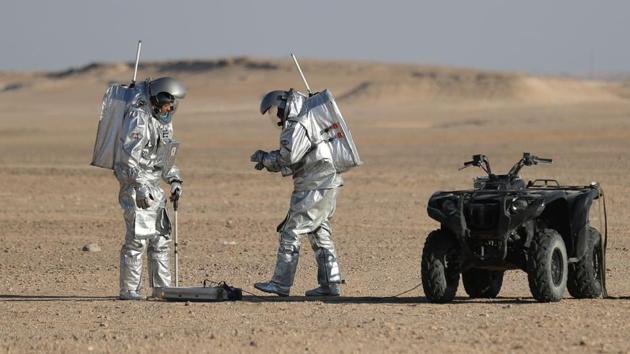
Two scientists in spacesuits, stark white against the auburn dunes, test a geo-radar built to map Mars by dragging a flat box across the rocky sand. But this isn’t the red planet — it’s the Arabian Peninsula. The desolate Dhofar desert in southern Oman resembles Mars so much that more than 200 scientists from 25 nations chose it as their location for the next four weeks, to field-test technology for a manned mission to Mars. (Karim Sahib / AFP)
2/10
 View Photos in a new improved layout
Updated on Feb 9, 2018 11:15 AM
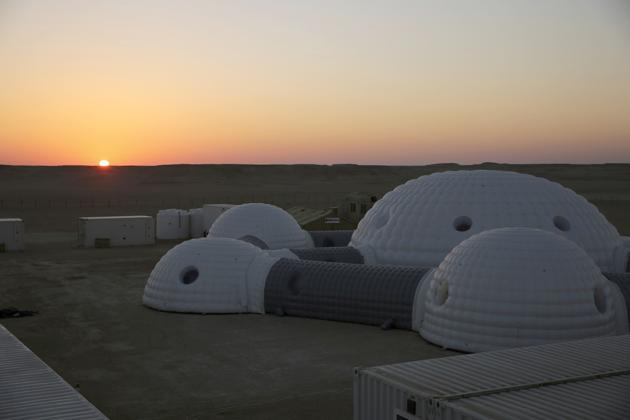
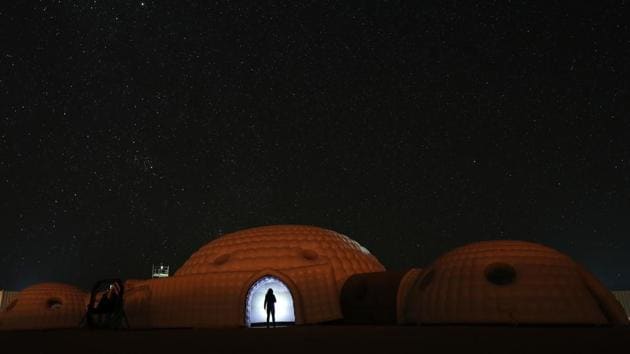
Seen from space, the Dhofar Desert is a flat, brown expanse. Few animals or plants survive here and temperatures can top 51 degrees Celsius. On the eastern edge of a seemingly endless dune is the Oman Mars Base: a giant 2.4-ton inflated habitat surrounded by shipping containers turned into labs and crew quarters. (Sam McNeil / AP)
3/10
 View Photos in a new improved layout
Updated on Feb 9, 2018 11:15 AM
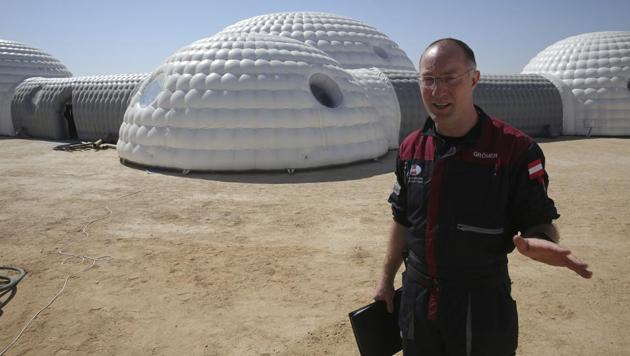
The Omani government offered to host the Austrian Space Forum’s next Mars simulation during a meeting of the UN Committee on the Peaceful Uses of Outer Space. Gernot Groemer, commander of the Oman Mars simulation, said the forum quickly accepted. The mission, named AMADEE-18, grew to 16 scientific experiments, such as testing a “tumbleweed” whip-fast robot rover and a new spacesuit called Aouda. (Sam McNeil / AP)
4/10
 View Photos in a new improved layout
Updated on Feb 9, 2018 11:15 AM
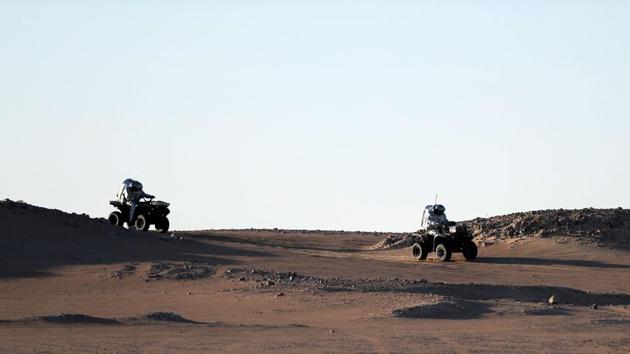
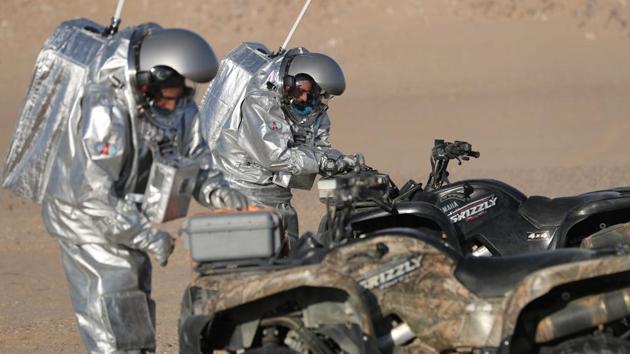
AMADEE-18 Mars simulation mission members ride all-terrain vehicles in the Dhofar desert in southern Oman. While public and private ventures are racing towards Mars and astronauts are learning valuable spacefaring skills on the International Space Station — and the U.S. is using virtual reality to train scientists — the majority of work for interplanetary expeditions is still being done on some of Earth’s most forbidding spots. (Karim Sahib / AFP)
5/10
 View Photos in a new improved layout
Updated on Feb 9, 2018 11:15 AM
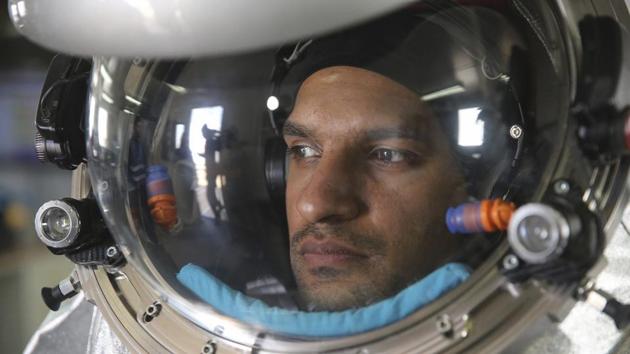
The successful launch of SpaceX Falcon Heavy rocket this week “puts us in a completely different realm of what we can put into deep space, what we can send to Mars,” said analog astronaut Kartik Kumar. The next step to Mars, he says, is to tackle non-engineering problems like medical emergency responses and isolation. (Sam McNeil / AP)
6/10
 View Photos in a new improved layout
Updated on Feb 9, 2018 11:15 AM
“No matter who is going to this grandest voyage of our society yet to come, I think a few things we learn here will be actually implemented in those missions,” Groemer said. Hostile environments from Arizona to Siberia are used to fine-tune capsules, landers, rovers and suits — simulating otherworldly dangers to be found beyond Earth. Space agencies call them “analogues” because they resemble extraterrestrial extremes of cold and remoteness. (Karim Sahib / AFP)
7/10
 View Photos in a new improved layout
Updated on Feb 9, 2018 11:15 AM
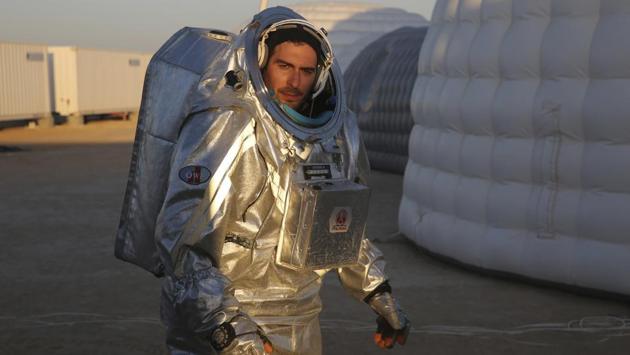
“You can test systems on those (analogue) locations and see where the breaking points are, and you can see where things start to fail and which design option you need to take in order to assure that it does not fail on Mars,” said João Lousada, one of the Oman simulation’s deputy field commanders. (Sam McNeil / AP)
8/10
 View Photos in a new improved layout
Updated on Feb 9, 2018 11:15 AM
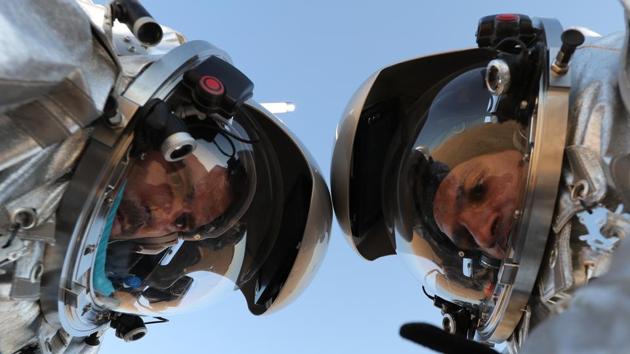
The cutting-edge spacesuit for instance, weighing about 50 kilograms, is a “personal spaceship” because one can breathe, eat and do hard science inside it. The suit’s visor displays maps, communications and sensor data. A blue piece of foam in front of the chin can be used to wipe the nose and mouth. (Karim Sahib / AFP)
9/10
 View Photos in a new improved layout
Updated on Feb 9, 2018 11:15 AM
NASA has used the Mojave Desert to test rovers destined for the red planet but they also discovered much about how humans can adapt. The European Space Agency’s list of “planetary analogues” includes projects spread over all seven continents. (Karim Sahib / AFP)
10/10
 View Photos in a new improved layout
Updated on Feb 9, 2018 11:15 AM


