
 E-Paper



Photos: Japan lifts emergency with an eye towards economic revival
Japanese Prime Minister Shinzo Abe lifted the state of nationwide emergency from Tokyo and four remaining prefectures on May 25, highlighting that the country now looked forward to reviving an economy that has been hit by a recession brought about by the coronavirus pandemic. The streets of Tokyo --the city hardest hit by the virus in the country –sprung back to life returned to work, or stepped out to meet friends in a world with re-written rules.
Updated on: May 26, 2020 4:53 PM IST


Share via


Copy link

1/8
 View Photos in a new improved layout
Updated on May 26, 2020 4:53 PM
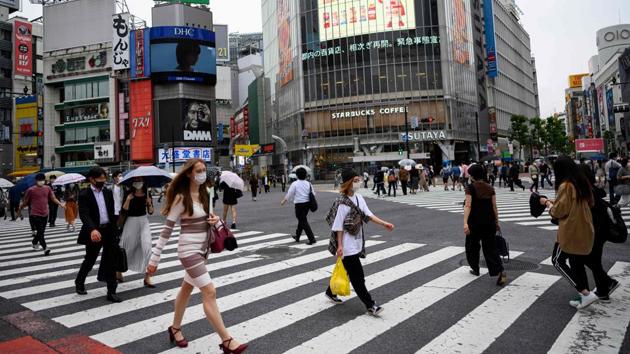
Pedestrian traffic returns to Tokyo’s famous Shibuya Scramble Crossing on May 26, a day after Japan lifted a nationwide state of emergency due to the threat of the coronavirus. Japan stepped out of emergency with Prime Minister Shinzo Abe announcing its lifting over the capital Tokyo and four remaining prefectures last evening. (Behrouz Mehri / AFP)
2/8
 View Photos in a new improved layout
Updated on May 26, 2020 4:53 PM
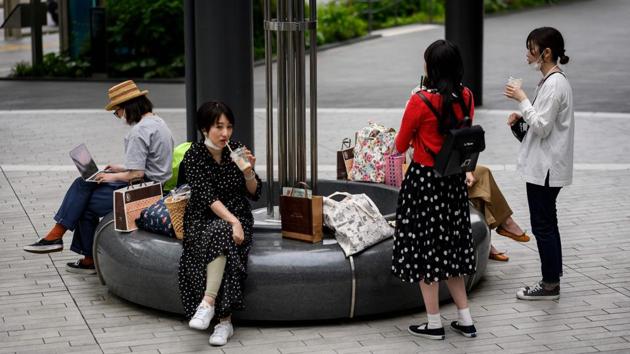
People gathered outside Futako-Tamagawa train station in Tokyo on May 26. Tokyo residents took to the streets with a mixture of relief and trepidation as they prepared for a new normal of living with the novel coronavirus. (Behrouz Mehri / AFP)
3/8
 View Photos in a new improved layout
Updated on May 26, 2020 4:53 PM
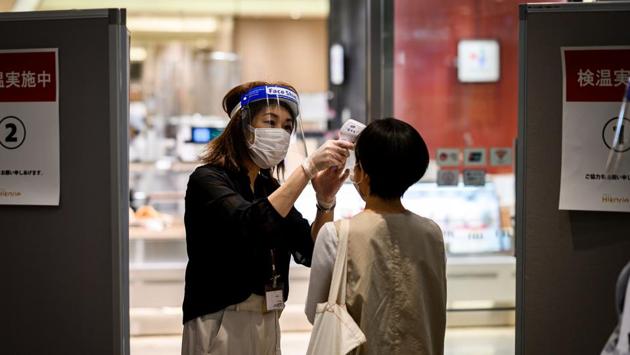
An employee wearing a mask and face shield conducts a temperature check on a customer at the entrance of the Shibuya Hikarie building in Tokyo on May 26. Unlike strict lockdowns in other countries, Japan did not force businesses to close. (Behrouz Mehri / AFP)
4/8
 View Photos in a new improved layout
Updated on May 26, 2020 4:53 PM
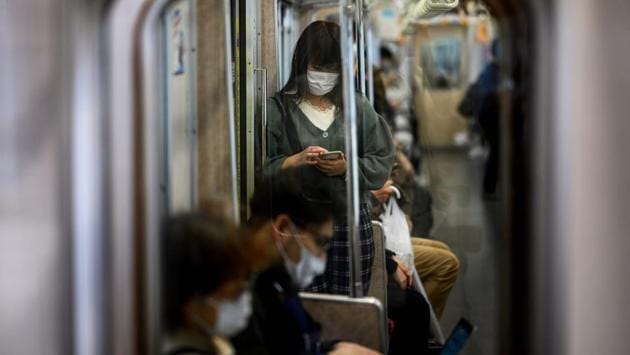
Morning commutes resumed in Tokyo, albeit with face masks and social distancing. Several companies told news agency Reuters they would let large portions of their staff continue working from home, while railway operator Odakyu Electric Railway has said it will release usage data to help passengers avoid crowded trains. (Behrouz Mehri / AFP)
5/8
 View Photos in a new improved layout
Updated on May 26, 2020 4:53 PM
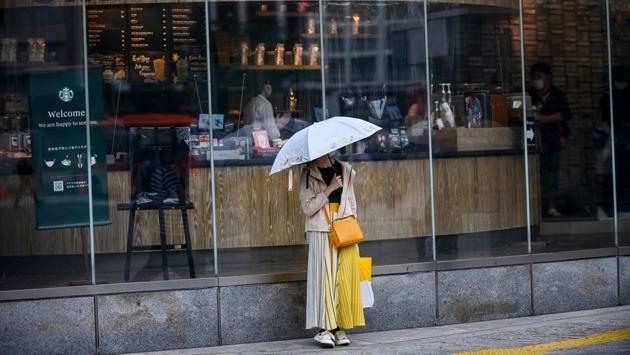
A woman wearing a facemask stands outside an opened Starbucks cafe in the Shibuya district of Tokyo on May 26. Prime Minister Abe had declared an emergency in the capital and some other areas from April 7, later expanding it nationwide. From mid-May he began lifting it in places where the rate of new infections subsided. (Behrouz Mehri / AFP)
6/8
 View Photos in a new improved layout
Updated on May 26, 2020 4:53 PM
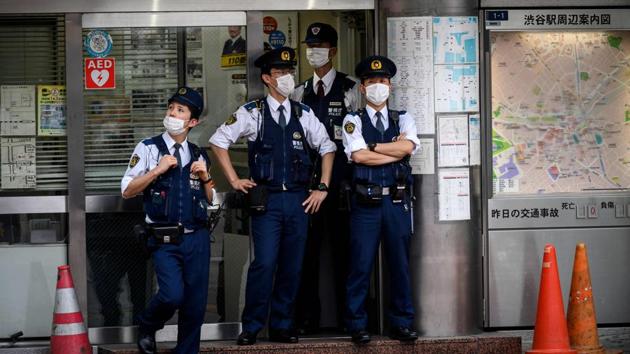
Japanese police officers wearing face masks stand in front of a police station in the Shibuya district of Tokyo on May 26. The Tokyo region -- the worst-hit by the virus -- was the largest site of infection. Tokyo Governor Yuriko Koike has warned against complacency and said everyone had to get used to a “new normal”, Reuters reported. (Behrouz Mehri / AFP)
7/8
 View Photos in a new improved layout
Updated on May 26, 2020 4:53 PM
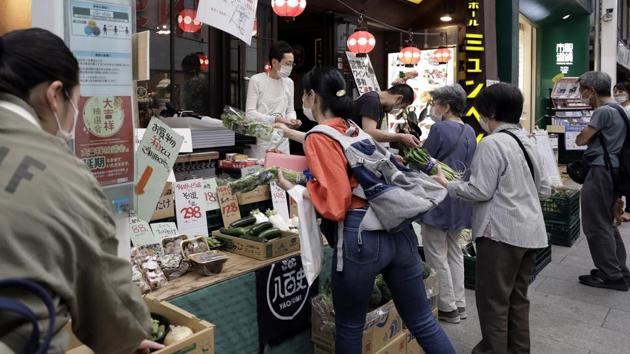
Customers wearing protective masks shop for vegetables at a stall in front of a restaurant in the Kichijoji area of Tokyo on May 26. The state of emergency had enabled local governments to instruct businesses to close or operate for shortened hours, and to ask residents to stay at home. Most fell in line with instructions. (Kiyoshi Ota / Bloomberg)
8/8
 View Photos in a new improved layout
Updated on May 26, 2020 4:53 PM


