
 E-Paper



Photos: Vietnam’s shrimp farmers trade rice for riches
Mekong, the rice bowl of Vietnam has seen a surge in farmers switching from rice to the exponentially more lucrative shrimp. The government on the other hand is attempting to balance food security with the lure of massive export revenues.
Updated on: Aug 11, 2017 4:51 PM IST

Share via


Copy link

1/8
 View Photos in a new improved layout
Updated on Aug 11, 2017 4:51 PM
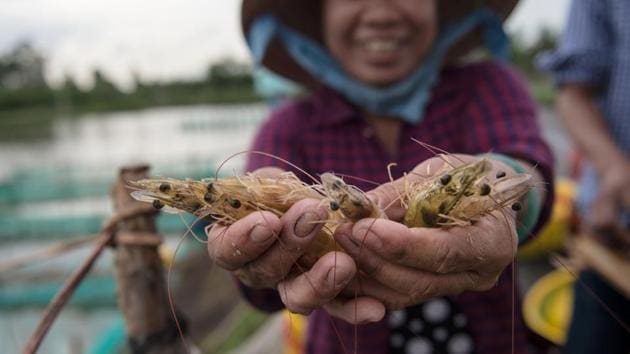
The Mekong Delta, long renowned as the ‘rice bowl of Vietnam’, has been steadily giving way to fields of paddy, increasingly turning home to a multi-billion-dollar shrimp industry. With profits from rice cultivation paling in comparison to shrimp, burgeoning numbers of farmers are building fortunes from these small crustaceans. (Roberto Schmidt / AFP)
2/8
 View Photos in a new improved layout
Updated on Aug 11, 2017 4:51 PM
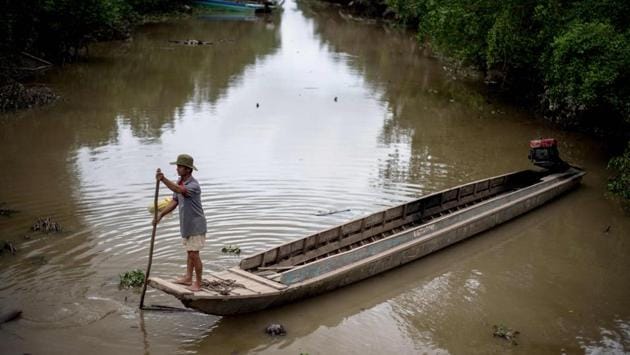
The shrimp bonanza began in the 1990s with rising sea-levels drawing saltwater into the Mekong Delta. Savvy locals were swift to spot that changing conditions were ripe for shrimp farming, sowing the seeds of the industry. Growth has surged in parallel with demand from the US and EU. (Roberto Schmidt / AFP)
3/8
 View Photos in a new improved layout
Updated on Aug 11, 2017 4:51 PM
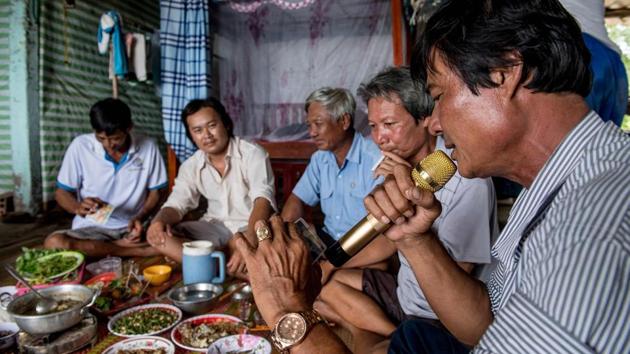
Tang Van Cuol (R) sings into a microphone interpreting a karaoke tune from his mobile phone during a celebratory meal with other shrimp farmers. Wealth from shrimp farming has transformed Cuol’s part of Soc Trang province, with motorcycles replacing bicycles, on paved roads dotted with multi-storey concrete homes - sights unimaginable a generation prior. (Roberto Schmidt / AFP)
4/8
 View Photos in a new improved layout
Updated on Aug 11, 2017 4:51 PM
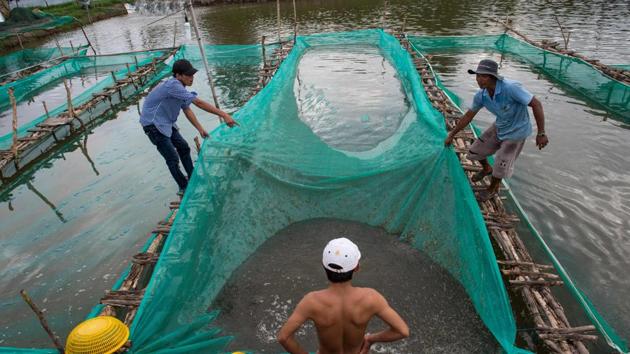
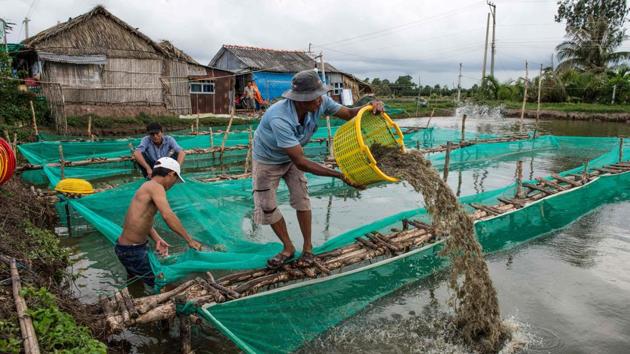
Shrimp farmers work their nets to harvest shrimp which will be processed at a plant in the My Xuyen district in southern Vietnam before further export. Environmentalists have flagged concern that intensive shrimp farming may be short-lived. A wider crisis looms in the obliteration of mangrove forests to make way for farms, exposing land to lashings from storms and further rises in sea-level. (Roberto Schmidt / AFP)
5/8
 View Photos in a new improved layout
Updated on Aug 11, 2017 4:51 PM
The financial rewards however are too great to ignore for farmers like Tang Van Tuoi, who saw his father and grandfather struggle as rice farmers. When saltwater crept into his paddy fields he saw an opportunity and turned to shrimp. In a good year he can rake in upwards of $40,000 where a rice farmer still makes an average of $100 monthly. Flush with cash, he has built three homes for his family. ‘We have money, we have enough of everything,’ said the father of six, speaking to AFP. (AFP)
6/8
 View Photos in a new improved layout
Updated on Aug 11, 2017 4:51 PM
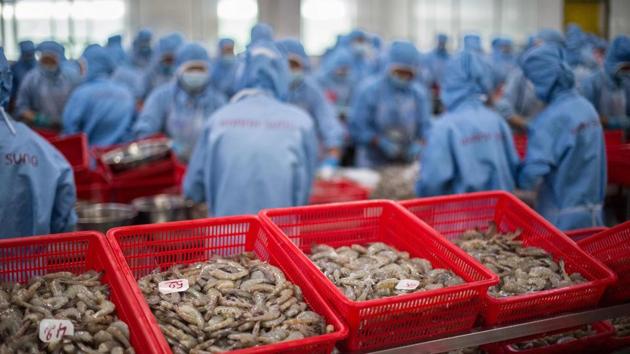
As the centrally planned communist nation embraces market reforms, the lure of exporting high-earning shrimp has become hard to ignore. This year, Prime Minister Nguyễn Xuân Phúc called for shrimp exports to touch $10 billion by 2025, an ambitious jump from $3 billion the industry generated last year. In contrast, export earnings from rice been on a steady decline since 2011, raking in $2.2 billion last year. (Roberto Schmidt / AFP)
7/8
 View Photos in a new improved layout
Updated on Aug 11, 2017 4:51 PM
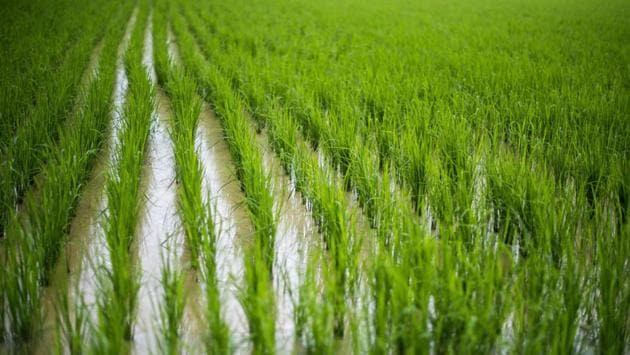
Attuned to the risks in the longer run, the government has resisted opening the entire Mekong region to shrimps even as seawater continues to seep further inland. Authorities have instead ploughed millions of dollars into sealing off freshwater zones needed to grow rice throughout the delta. The result is mix of policies that both encourage quick cash from shrimp while preserving the rice growing regions. (Roberto Schmidt / AFP)
8/8
 View Photos in a new improved layout
Updated on Aug 11, 2017 4:51 PM


