
 E-Paper



Photos: Vintage Vespa fans in Pakistan cling to their rides
Piaggio's Vespa scooter was the ultimate status symbol for Pakistani bike aficionados in the 1960s and 70s, when bicycles outstripped motorbikes on the roads and only a handful of people could afford to import luxury items from Europe. As cheap Chinese-made motorbikes flood roads today, fans of the vintage Italian two-wheeler are scrambling to find spare parts and preserve models that hark back to a quieter, bygone era.
Updated on: Mar 31, 2018 12:00 PM IST

Share via


Copy link

1/9

 View Photos in a new improved layout
Updated on Mar 31, 2018 12:00 PM
Amin, who paints repaired Vespa scooter parts, reads a newspaper outside his workshop in Karachi, Pakistan. As cheap Chinese-made motorbikes flood Pakistan’s roads, fans of vintage Vespa scooters are scrambling to find spare parts and preserve models that hark back to a bygone era. (Akhtar Soomro / REUTERS)
2/9
 View Photos in a new improved layout
Updated on Mar 31, 2018 12:00 PM
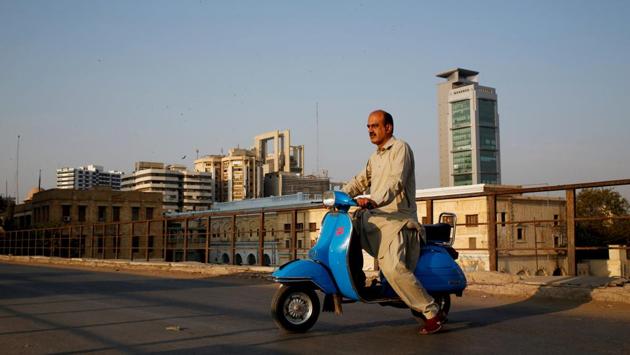
Journalist Arif Balouch, 48, poses with his heirloom 1980 model Vespa scooter that his father also rode, in Karachi. Balouch calls it the BMW of scooters. Piaggio’s Italian two-wheeler was the ultimate status symbol for bike aficionados in the 1960s and 70s, when bicycles outstripped motorbikes on the roads and only a handful could afford to import luxury items from Europe. (Akhtar Soomro / REUTERS)
3/9
 View Photos in a new improved layout
Updated on Mar 31, 2018 12:00 PM
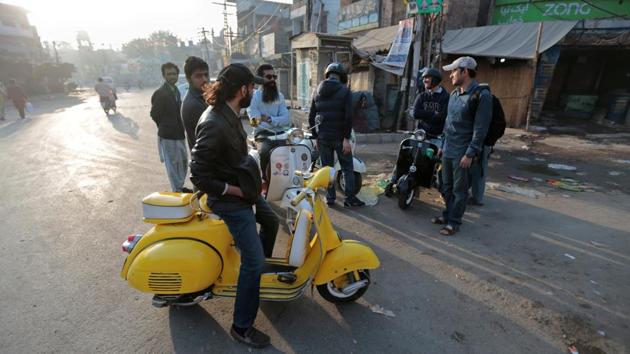
Over the past two decades, motorbike ownership rates have skyrocketed in Pakistan, but for the likes of Zubair Ahmad Nagra, who runs the Vespa club in Lahore, new and more fuel-efficient bikes hold little allure. He drives a Vespa, Italian for “wasp”, imported into Pakistan by his father in 1974. “It was the first motorized vehicle owned by my father,” Nagra said. “I’ve been fond of it ever since.” (Caren Firouz / REUTERS)
4/9
 View Photos in a new improved layout
Updated on Mar 31, 2018 12:00 PM
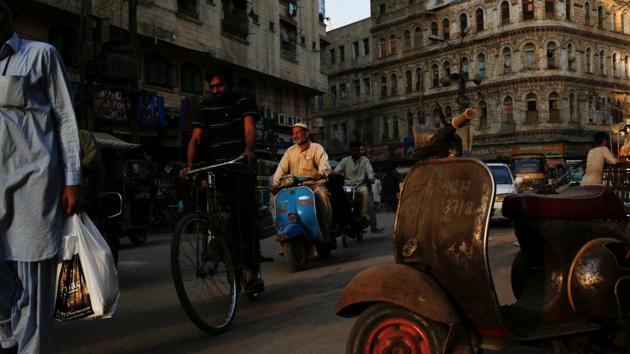
A man rides a Vespa scooter on a busy street, in a low-income neighbourhood in Karachi. Many long-term owners find that possessing a Vespa in Pakistan is a labour of love, with original spare parts scant and only a handful of mechanics skilled enough to restore the originals. (Akhtar Soomro / REUTERS)
5/9
 View Photos in a new improved layout
Updated on Mar 31, 2018 12:00 PM
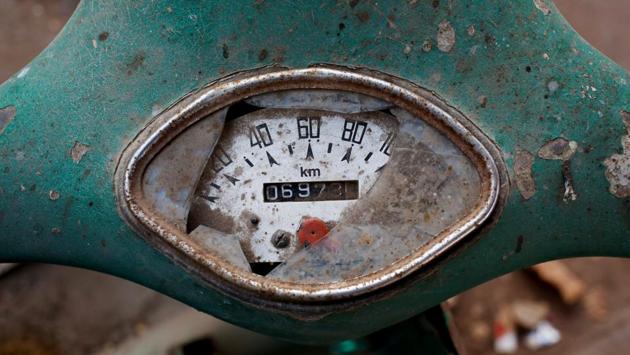
A broken speedometer is seen on an abandoned Vespa scooter, in a Karachi street corner. In Lahore, close to the Indian border, Vespa owners often have to settle for Indian-made parts or ask for mechanics to fashion new pieces of bodywork from scratch. (Akhtar Soomro / REUTERS)
6/9
 View Photos in a new improved layout
Updated on Mar 31, 2018 12:00 PM
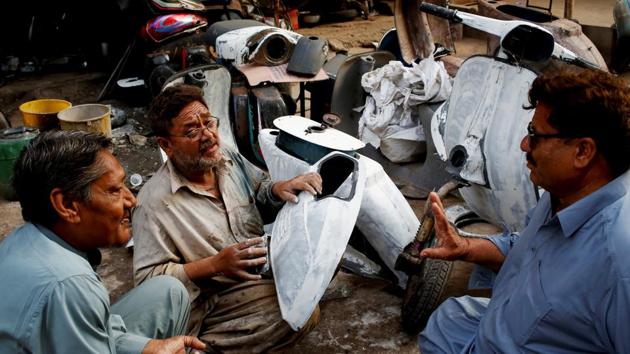
Akram (C) applies coating on scooter parts, as he chats with Vespa owners Farrukh Shahbaz (L) and Matiur Rehman outside his workshop. Shahbaz, who, 14 years ago, inherited his father’s blue 1961 Vespa, has had to have the scooter repaired thrice, but he cherishes the memory and love his father had for the machine. “My father told me it came packed in a wooden box,” Shahbaz said. (Akhtar Soomro / REUTERS)
7/9
 View Photos in a new improved layout
Updated on Mar 31, 2018 12:00 PM
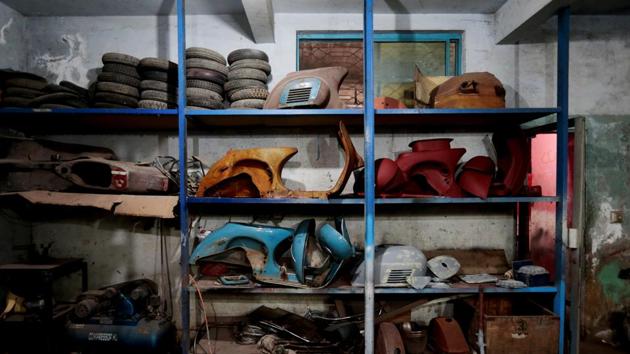
Disassembled Vespa scooters rest on shelves in different states of restoration, at a restoration and repair workshop in Islamabad. In the leafy capital, once the summer heat wanes, apart from ardent fans driven by nostalgia, a handful of Western diplomats can also be seen buzzing around on their pastel-coloured Vespas. (Caren Firouz / REUTERS)
8/9
 View Photos in a new improved layout
Updated on Mar 31, 2018 12:00 PM
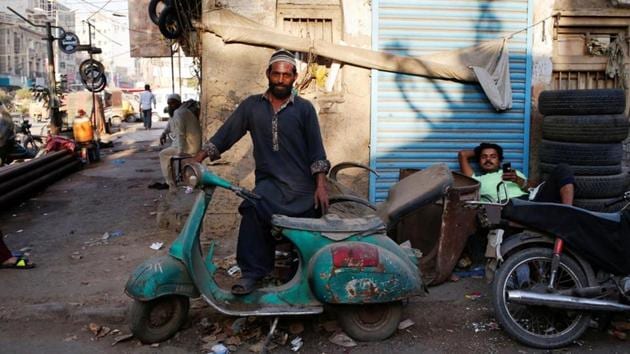
Shahzad stands with his abandoned Vespa scooter in Karachi. Few expect the tide to turn, with cheap motorbike ownership transforming the lives of many poor and lower working class people in the urbanising nation of 208 million people. (Akhtar Soomro / REUTERS)
9/9
 View Photos in a new improved layout
Updated on Mar 31, 2018 12:00 PM


