
 E-Paper



Photos: Warriors hunt cash not lions in Kenya’s Maasai Olympics
Kenya’s famed Maasai warriors are no longer pursuing lions, as dictated by tradition, to show off their hunting prowess and bravery. Attuned to the impact of traditional celebrations on conservation efforts, a new crop of warriors has chosen the medium of sports instead to best competition and build repute. In return, they’re feted with cash prizes in events like javelin throwing and races at the Maasai Olympics.
Updated on: Dec 20, 2018 10:52 AM IST

Share via


Copy link

1/10
 View Photos in a new improved layout
Updated on Dec 20, 2018 10:52 AM
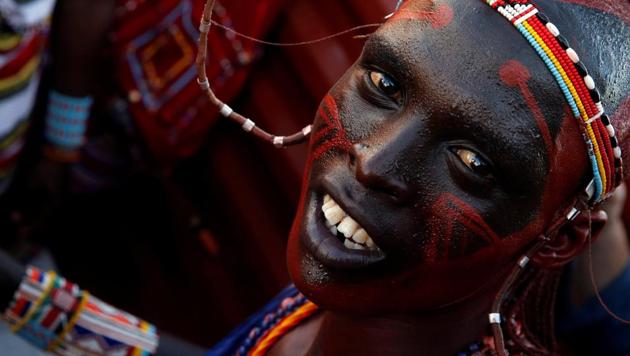
A Maasai Moran athlete from Mbirikani Manyatta rides in a truck as they arrive for the 2018 Maasai Olympics at the Sidai Oleng Wildlife Sanctuary, Kenya. Young Kenyan warriors are no longer pursuing lions to show off their hunting prowess and bravery, they are competing for cash prizes in sports events at the Maasai Olympics instead. (Thomas Mukoya / REUTERS)
2/10
 View Photos in a new improved layout
Updated on Dec 20, 2018 10:52 AM
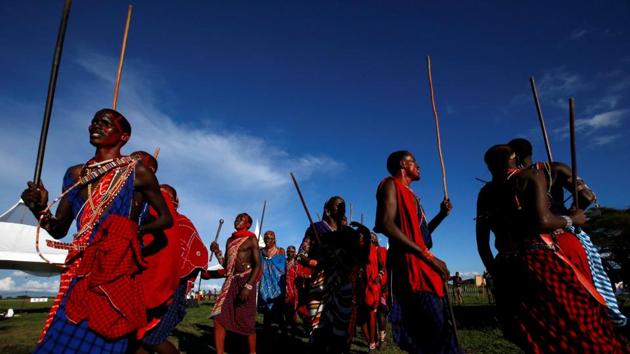
Government-run Kenya Wildlife Services says there are about 2,000 lions in the East African country, and the biggest threat to them and other carnivores is conflict with humans. (Thomas Mukoya / REUTERS)
3/10
 View Photos in a new improved layout
Updated on Dec 20, 2018 10:52 AM
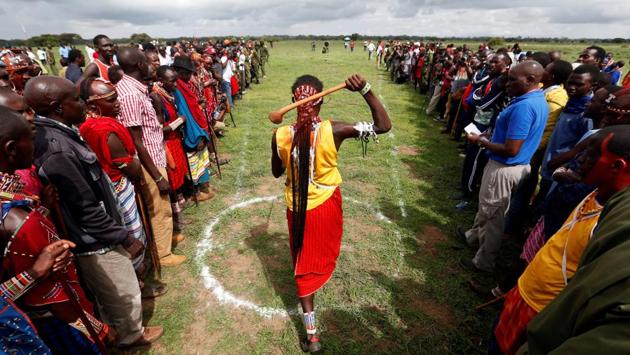
A Maasai moran throws a traditional club, known as rungu. “We have changed the outdated lion hunting culture, as there was a time before the Maasai Olympics when we were killing animals, but now we are protecting them as we coexist in harmony,” 22-year-old Moran Joseph Tipape Lekatoo said. (Thomas Mukoya / REUTERS)
4/10
 View Photos in a new improved layout
Updated on Dec 20, 2018 10:52 AM
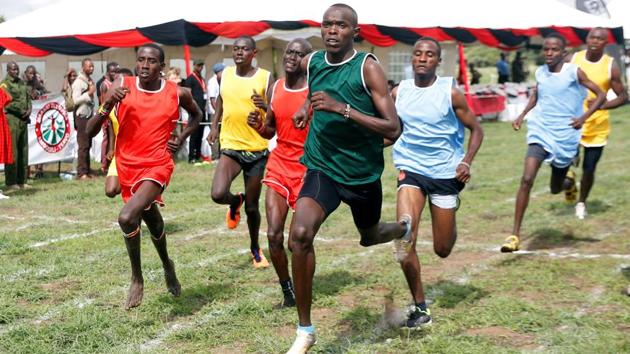
Maasai Morans compete during the 5000m race. Lekatoo was competing for his Mbirikani Manyatta group in the fourth edition of the Maasai Olympics, where youthful morans, or warriors, from four Manyattas (settlements) -- Rombo, Mbirikani, Kuku and Elselengei -- gathered to compete. (Thomas Mukoya / REUTERS)
5/10
 View Photos in a new improved layout
Updated on Dec 20, 2018 10:52 AM
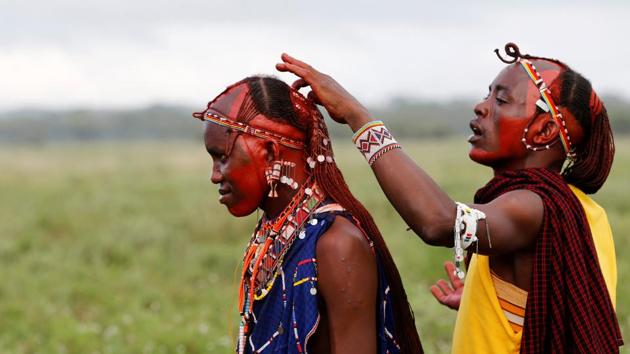
A Maasai Moran athlete has his hair smeared with red ochre paint, a mixture of butterfat and red pigment that has been ground from earth containing a high iron ore content, during preparations for the 2018 Maasai Olympics. (Thomas Mukoya)
6/10
 View Photos in a new improved layout
Updated on Dec 20, 2018 10:52 AM
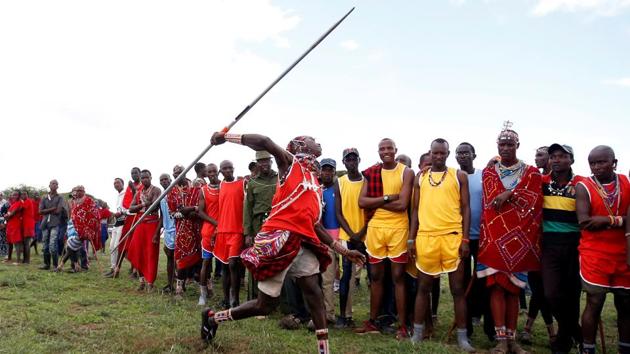
A Maasai Moran from Mbirikani Manyatta, throws a javelin as he competes in the Olympics. The Maasai Olympics were held at the Sidai Oleng Wildlife Sanctuary at the base of Mt. Kilimanjaro, near Kenya’s border with Tanzania. (Thomas Mukoya / REUTERS)
7/10
 View Photos in a new improved layout
Updated on Dec 20, 2018 10:52 AM
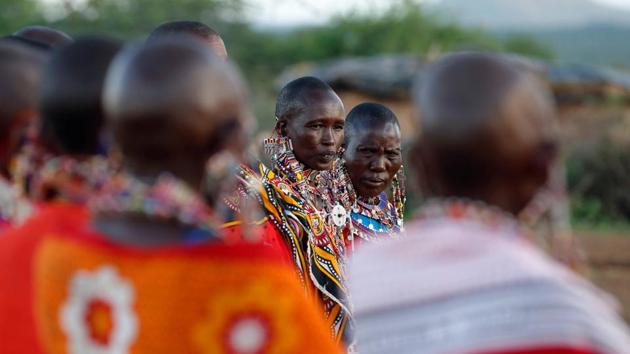
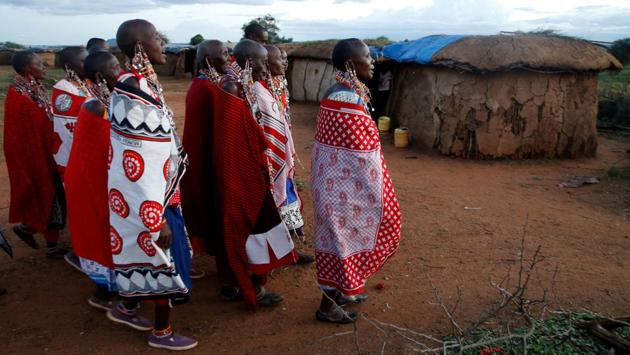
Maasai women pose for a photograph at Mbirikani Manyatta at the base of Mt. Kilimanjaro. “If you compare me to the past warriors, they used to go and kill lions and that does not help you in anyway,” said Moses Ntimama, another warrior and participant. (Thomas Mukoya / REUTERS)
8/10
 View Photos in a new improved layout
Updated on Dec 20, 2018 10:52 AM
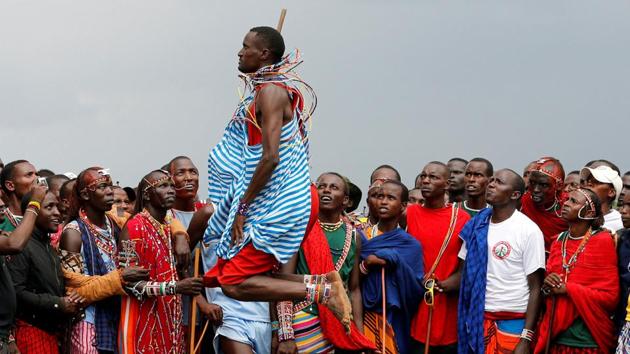
Tipape Lekatoo, a Maasai Moran from Mbirikani Manyatta, competes in a traditional high-jump event. “Instead of killing a lion we compete among ourselves ... the money you receive you take it home to meet your needs,” Ntimama told Reuters. (Thomas Mukoya)
9/10
 View Photos in a new improved layout
Updated on Dec 20, 2018 10:52 AM
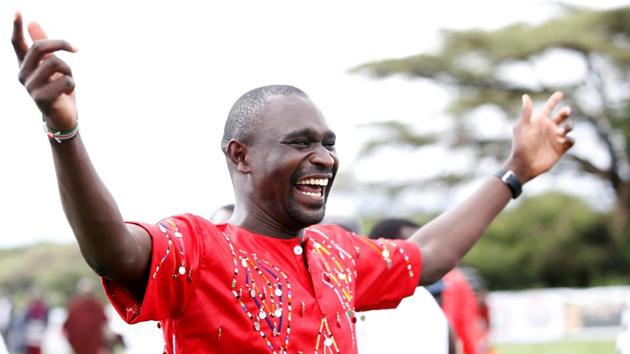
For Kenyan middle distance runner David Rudisha, who holds the world record for 800 metres, the Maasai Olympics are helping to ensure lions remain part of the country’s future. (Thomas Mukoya / REUTERS)
10/10
 View Photos in a new improved layout
Updated on Dec 20, 2018 10:52 AM


