
 E-Paper



Photos: Women undertakers step in for New York’s Covid-19 victims
On the front lines of the coronavirus pandemic, nurses and doctors are caring for the living. But there is another front line of those who care for the dead. They fear of contracting the virus too and some of them have sent their children to live with relatives. And because American cities like New York were never designed to dispose of so many dead, the call of duty for those like the women undertakers at International Funeral and Cremation Services in Harlem will last much longer.
Updated on: Apr 25, 2020 4:52 PM IST


Share via


Copy link

1/11
 View Photos in a new improved layout
Updated on Apr 25, 2020 4:52 PM
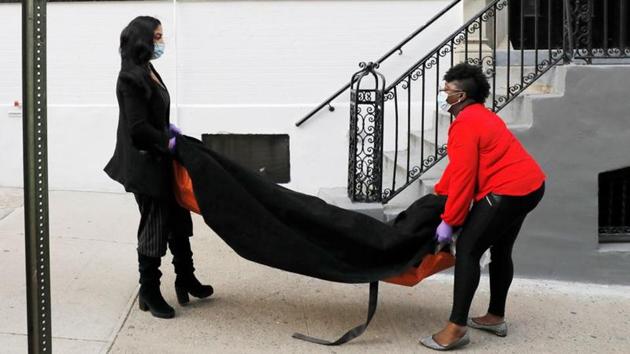
Alisha Narvaez, the manager and Nicole Warring, a Resident Funeral Director carry a deceased person into the basement area, where bodies are stored and prepared for funeral services, during the coronavirus (COVID-19) outbreak, in Manhattan, New York City. (Andrew Kelly / REUTERS)
2/11
 View Photos in a new improved layout
Updated on Apr 25, 2020 4:52 PM
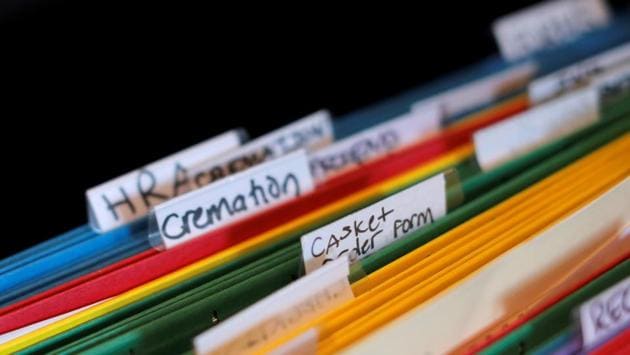
Documents stored inside a filing cabinet at International Funeral and Cremation Services-- a funeral home in Harlem, New York City. There are 48 bodies in the basement of the funeral home -- forty in cardboard boxes, ready for cremation. The other eight are in the refrigerator, to be embalmed and buried. (Andrew Kelly / REUTERS)
3/11
 View Photos in a new improved layout
Updated on Apr 25, 2020 4:52 PM
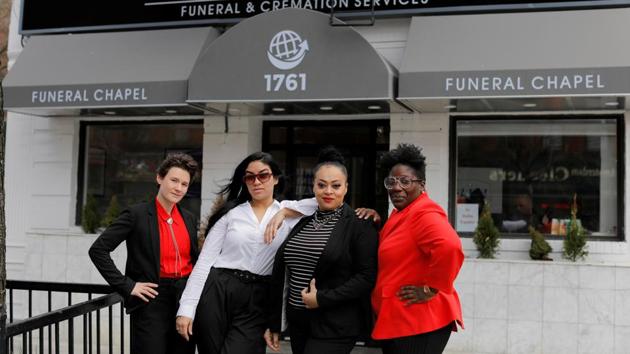
(Left to right): Lily Sage Weinrieb, Alisha Narvaez, Jenny Adames and Nicole Warring, outside their office, in Manhattan. As health officials began burying COVID-19 victims in a mass grave on Hart Island during New York’s worst week of death, the four women undertakers started turning bodies away. The way they see it, a person should get what they want in death, even if that was never possible in life. (Andrew Kelly / REUTERS)
4/11
 View Photos in a new improved layout
Updated on Apr 25, 2020 4:52 PM
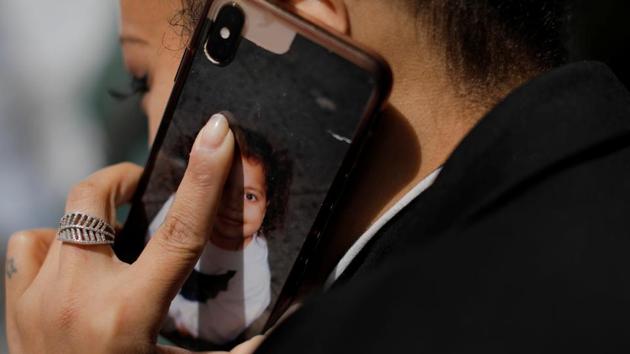
Jenny Adames speaks on her phone that features an image of her daughter who is currently in quarantine at her grandmother’s house. She recently caught herself snapping at her in a text exchange. “Today kind of broke my heart.” “She needs her mom. She doesn’t need Jenny the funeral director,” Adames told Reuters. (Andrew Kelly / REUTERS)
5/11
 View Photos in a new improved layout
Updated on Apr 25, 2020 4:52 PM
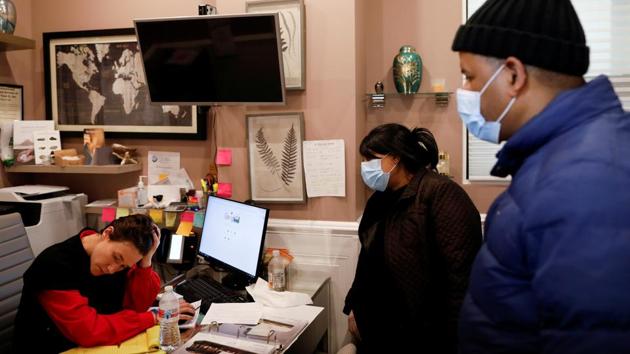
Lily Sage Weinrieb speaks with people trying to help their friend find an available space to conduct a funeral service for a deceased family member, during the outbreak. The death toll in the United States is now the highest in the world. A third of US deaths have been in New York City. (Andrew Kelly / REUTERS)
6/11
 View Photos in a new improved layout
Updated on Apr 25, 2020 4:52 PM
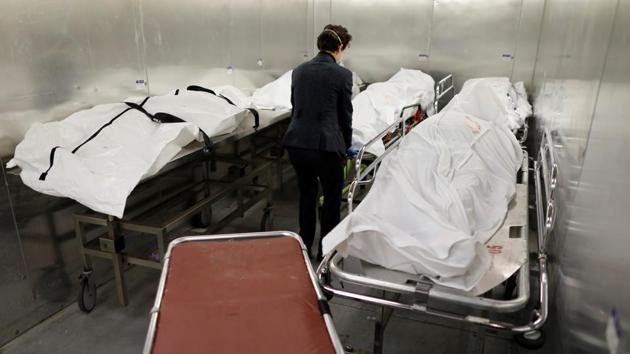
Weinrieb retrieves a deceased person from a morgue in a hospital, while working on a night-shift. New York, the most populous city in the US, has just four crematories. Hospitals, which used to store bodies for 14 days now sometimes will only keep them for six. (Andrew Kelly / REUTERS)
7/11
 View Photos in a new improved layout
Updated on Apr 25, 2020 4:52 PM
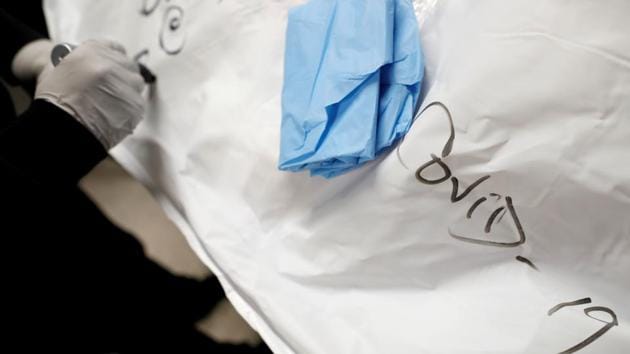
The body bag of a COVID-19 victim, is labelled in the prep room of International Funeral and Cremation Services. “You see tons of body bags and tons of people and they’re labelled COVID-19, COVID-19, COVID-19. It’s like a horror show,” Nicole Warring told Reuters. (Andrew Kelly / REUTERS)
8/11
 View Photos in a new improved layout
Updated on Apr 25, 2020 4:52 PM
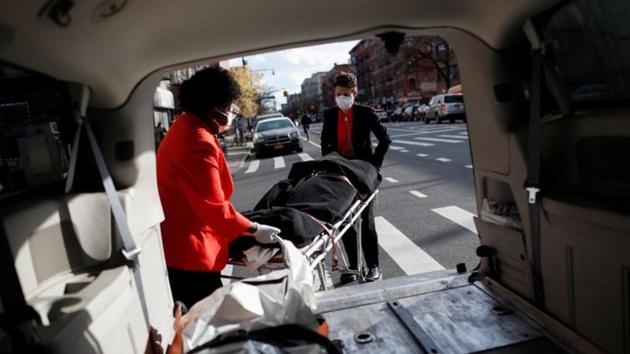
Nicole Warring (front) and Lily Sage Weinrieb remove a deceased person from a funeral service vehicle, in Manhattan. The refrigerated trailers outside of the hospitals don’t have enough shelving and bodies are sometimes stacked on top of each other and on the floor. Some trailers don’t even have lights. (Andrew Kelly / REUTERS)
9/11
 View Photos in a new improved layout
Updated on Apr 25, 2020 4:52 PM
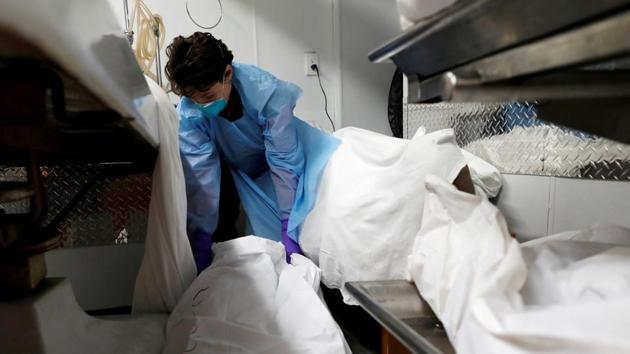
Weinrieb positions a deceased person in the basement prep area, where bodies are stored and prepared for funeral services, during the outbreak. Most COVID-19 victims die alone, and when they die, their families are told to quarantine. The women try to find ways for them to say goodbye. (Andrew Kelly / REUTERS)
10/11
 View Photos in a new improved layout
Updated on Apr 25, 2020 4:52 PM
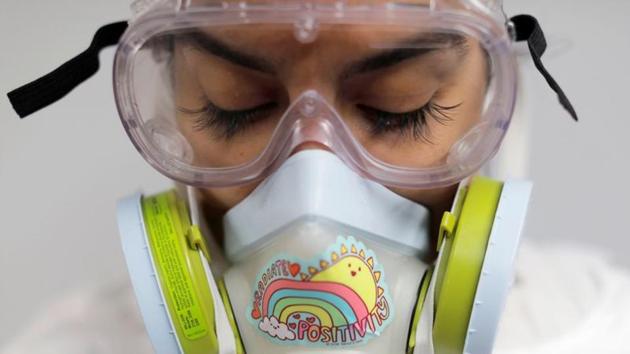
Alisha Narvaez, the manager at International Funeral and Cremation Services seen in her personal protective equipment, before embalming a deceased person, in Manhattan. (Andrew Kelly / REUTERS)
11/11
 View Photos in a new improved layout
Updated on Apr 25, 2020 4:52 PM


