
 E-Paper



Alumni Connect: Opportunities for young entrants to make a mark
A person with several international accolades and national responsibilities like being the official cyber crime expert for the Indian police, assistant to the Indian Army in Maharashtra region and advisory in cyber forensics, Reddy speaks to Ananya Barua about his journey into cyber security and the opportunities it holds for the future.


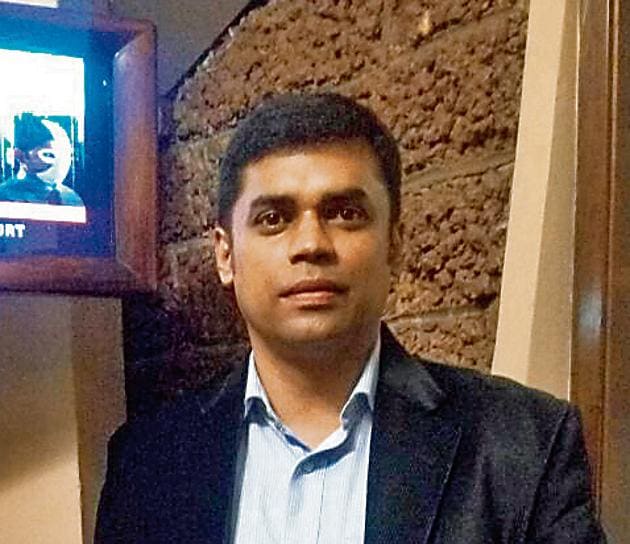
A cyber security specialist with more than 12 years of experience, Niranjan Reddy is the founding member of the National Information Security Summit (NISS). A person with several international accolades and national responsibilities like being the official cyber crime expert for the Indian police, assistant to the Indian Army in Maharashtra region and advisory in cyber forensics, Reddy speaks to Ananya Barua about his journey into cyber security and the opportunities it holds for the future.
What is your educational background? Were you ever considered a bright student?
I graduated from Maharashtra Education Society's (MES) Abasaheb Garware College, Pune, with a BSc electronics degree in 1996. As a student I was more interested in understanding the concepts and internalising them rather than mugging them up. So, academically, I was more of an average student.
What happened after graduation?
After my graduation, I found it difficult to find a job. So I was left with an option to either do a Masters in science, or pursue an advanced course in another domain. Software engineering, as an industry, was booming at the time. So, I joined Aptech’s advanced diploma in software engineering (ADSE). I then realised that being a programmer was not my cup of tea. When my career started going downhill, I discovered my interest in computer hardware and networking. I did a six-month specialisation on the subject. After completing my Microsoft certified systems engineer (MCSE) course, I started working part-time as a lab assistant in Aptech and was simultaneously taking MCSE classes for corporations. My first full-time job opportunity came after a person in one of those classes offered me a job in his company as a systems administrator. After working for a few years, I decided that I wanted to expand my horizons and moved to Japan.
How did your Japan experience shape your career?
Japan exposed me to the information technology (IT) security sector. This became my passion and I was certified as an ethical hacker by the EC-Council,United States of America. In the next few years I worked with several companies, but I always wanted to start my own.
When the time was right, I began my proprietorship information security training and consultancy firm. Although, it took a while to get going and break even, the firm began to take root eventually. Today, I have major law enforcement agencies, the Indian Army and large corporations in India and abroad as my clients.
Why did you decide to specialise in cyber security?
My stint in Japan was an eye-opener. Cyber security was unheard of India at that point of time. I had a feeling that this would be a booming sector considering its importance and everyday application.
There is a huge shortage of cyber security professionals and this is a booming sector where young professionals can look to make a mark.
What are your future plans?
I am currently authoring a few books on cyber security to help spread awareness about the subject and help mentor young minds in the field. I also intend to spread cyber security awareness through joint initiatives with organisations at schools, colleges and corporations. I also wish to provide assistance to people who have been victims of cyber crimes. I will also assist small and medium-sized enterprises (SMEs) to keep their databases secure and help them prevent cyber attacks.


