
 E-Paper



India needs to look at managing cities and natural resources efficiently: Junaid Ahmad
Junaid Ahmad, countrydirector, World Bank, says South Asian countries including India have the worst managed cities in the world because there is no answer of who is managing cities

 Prefer HTon Google


India needs to focus on creating institutions of service delivery, increase participation of women in labour workforce and ensure efficient management of natural resources and cities to avail opportunities of global integration and growth, said Junaid Ahmad, country director- India, World Bank.
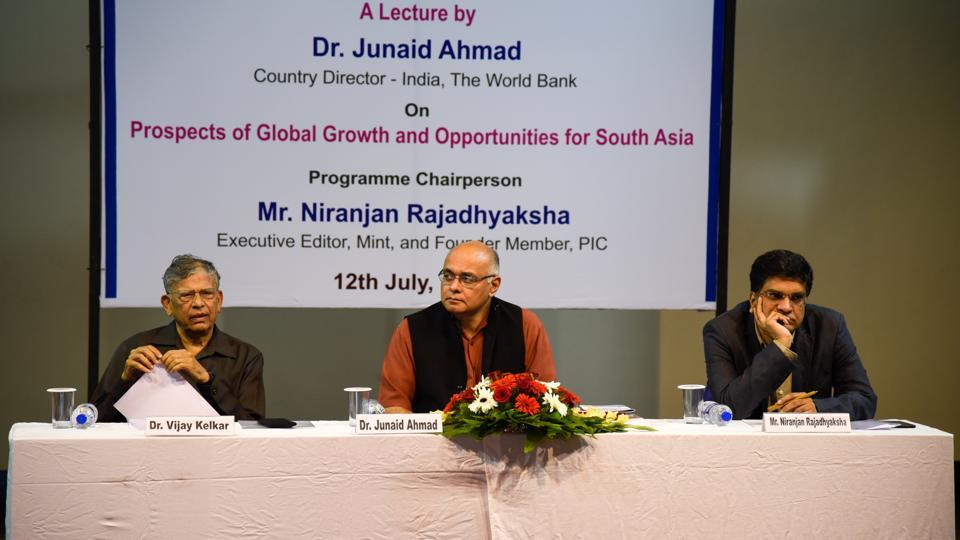
Junaid Ahmad was in the city on Thursday to be part of a lecture organised by the Pune International Centre (PIC) at the Gokhale Institute of Politics and Economics. Also present on the occasion were Vijay Kelkar, eminent economist and Niranjan Rajadhyaksha, executive editor, Mint and founder member, PIC.
During the programme, Junaid Ahmad spoke on the topic Prospects of Global Growth And Opportunities For South Asia.
Sharing his views, Ahmad said that for understanding global prospects and challenges of South Asian countries including India, it is important that we look inwards as growth in these countries is driven internally. “What India presently needs is creating public corporatised institutions of service delivery, which are bankable and can unleash growth. India needs to look at creating government corporatised entities which can create markets,” said Ahmad.
Speaking about the economic growth in India, Ahmad said, “In the past 50 years, India has seen a steady, stable and diversified growth which is a combination of investment, consumption and export. The seven per cent growth rate is quite powerful. Growth can be ensured if India captures its efficiencies internally. For ensuring growth, the focus must be more internal than external.”
Ahmad stated that the challenges faced by the South Asia region are mainly higher interest rates, oil prices and higher tariffs.
Ahmad said that there are a few things India needs to look at to ensure economic growth. “The optimal size of firms in India needs to grow. Firms in India enter small and remain small. If trade diversion is to happen, India needs to look at how firms can grow,” he added. Ahmad also stressed that the spectrum of challenges for countries in South Asia and India are huge.
“It can be seen that the participation of women in the labour workforce is very low which is a major concern for a country like India. The reasons can be nature of the job, lack of childcare facilities, safety issues, among others,” said Ahmad.
He added that management of natural resources especially water is also very poor in India which must be addressed. Ahmad pointed out that South Asian countries including India have the worst managed cities in the world because there is no answer of who is managing cities. “Management and governance of cities are centralised to economic growth. Fragmentation of governance does not allow to manage cities as a whole as can be seen in India. If cities are not managed well, then they won’t be able to sustain growth,” said Ahmad.


