
 E-Paper



Indian Super League will soon see an Indian as head coach, says Wadoo
FCPC u-18 coach Mehrajuddin Wadoo says Indian coaches are good in their skills


Pune: After 32 international caps and over 50 ISL appearances, former FC Pune City (FCPC) defender Mehrajuddin Wadoo has reunited with the club by joining the Stallions as the head coach of the under-18 team. After enjoying a fine stint with the Maharashtra outfit in the debut season of the ISL, the 34-year-old will be hoping to develop rising superstars from the famed FC Pune City academy.
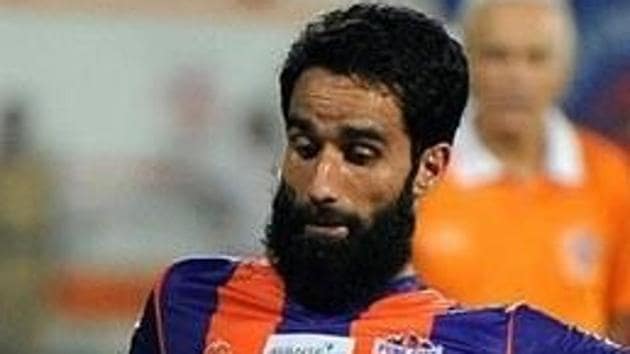
The former Indian international took out time from his busy schedule to speak to Hindustan Times to explain his plans on reuniting with the club. After expressing his delight to re-sign with Pune City, Wadoo said, “While the ISL season is going on, my team will be playing in the under-18 I-league and the super division of the Mumbai League. We’re also looking to enter more tournaments because as long as you don’t take part in more competitions and only train then they won’t grow very fast. So, ideally I’m looking for them to play 60 matches in a season.”
Once a professional hangs up their boots in the sport of football, there are many opportunities to continue to be a part of the sport. Often players in Europe turn to punditry to offer their expert opinions in front of camera, while some of them work as club ambassadors. Another venture a majority of former pros take up is that of coaching and giving back to the sport that has rewarded them heavily during their career.
Giving an explanation on why he turned to coaching, Wadoo said, “Even when I was playing, I always knew that I wanted to get into coaching. I used to go to Kashmir and train the boys, and it was something I enjoyed doing. Since 2014, I’ve been studying for my coaching licences as it was always my idea to get into coaching after my playing career. I’ve always wanted to share my football knowledge with others and wanted to help players with potential to grow, so it was perfect for me to take up coaching.”
Since his debut game in the ISL, the league has grown leaps and bounds and the quality of football has also improved tremendously. Gone are the days when fans used to visit stadiums only to look at the marquee names at every club, but they’re now cheering in numbers for players that have elevated their status by playing in the ISL.
According to Wadoo, it’s almost like a different league that he’s witnessing and is extremely delighted with the steps taken by the tournament in the right direction to make the ISL a sporting bonanza for six months of the year.
Giving an insight as to what’s changed in the tournament, he said, “When I first played in the ISL, I saw that there was a lack of confidence, in me as well as most of the Indian players because it was the first time they were playing with the star players. For example, if someone found themselves in a goal-scoring position, they were not confident enough to take a shot, but instead chose to look for a pass. But right now it has all changed and the Indian players now have the confidence they need to succeed.”
In the league’s five-year history, there is still to be an Indian to take over the reins as the head coach of any particular club. Hierarchies from all the ten clubs have opted to go for foreign coaches as they believe they will bring a different philosophy and coaching style to the table and will also do a better job at commanding respect from the dressing room.
Asked on what it will take to see an Indian manage an ISL club, Wadoo said, “I think there are a lot of talented Indian coaches doing very well for themselves. If you look at the under-16 national team coach Bibiano Fernandes, he’s doing good. Now the coaches that are coming in and passing their licences are actually very talented and have tremendous knowledge about football. So it’s time we start believing in them. The day is not far when we see an Indian take over an ISL club and if trusted, I don’t think they will let anyone down.”
Criteria to become a head coach in ISL
1. Unless a head coach is being retained from the previous version of the league, the appointment requires the approval of ISL. Even if the coach has worked in seasons prior to the last season, he will still need the league’s approval in writing.
2. The head coaches must hold an/ be in the process of obtaining an AFC pro licence or an equivalent coaching licence.
3. The profile of the ISL coach must be one of the three:
a) A high-profile coach with significant experience and record
b) A high-profile international footballer with the required coaching licence looking to kick-start a coaching career
c) A non-high profile coach with significant experience and a proven track record.
4. For an assistant coach to be promoted to the role of head coach, the requirements are:
a) The coach should have been at the ISL club for at least one full season.
b) The coach should boast a strong CV from his tenure as an assistant.
c) The coach should have achieved success as an assistant coach and worked under a successful head coach.
d) The coach should have worked as an assistant coach at Indian and non-Indian clubs.
e) The coach should be an AFC pro licence holder (or its equivalent qualification) or be in the process acquiring the same.


