
 E-Paper



Pune reacts to Union budget: Effective budget in the long run, say industry experts
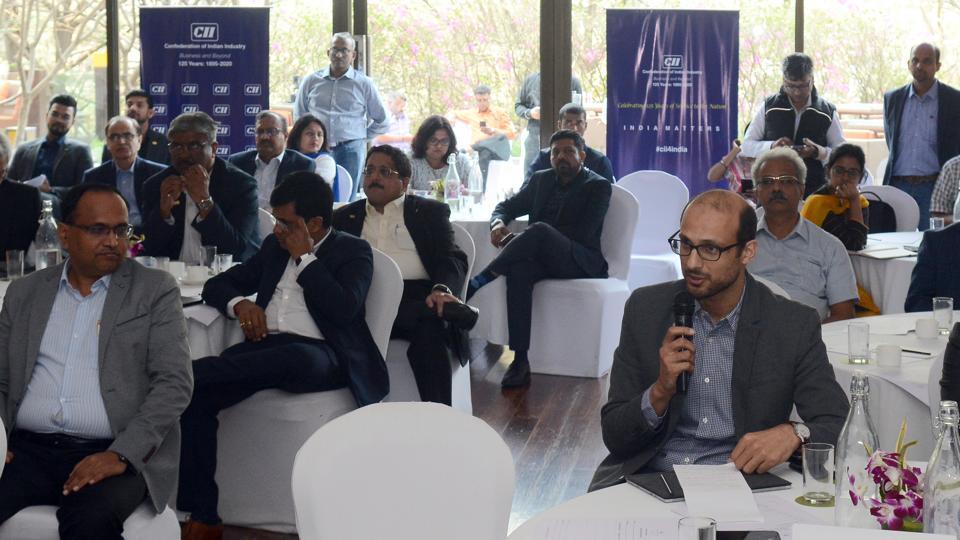
A live budget viewing session was organised by the Confederation of Indian Industry (CII), Pune, at Hyatt, Kalyaninagar from 11 am. Eminent members from the industry react to the budget.


Finance minister Nirmala Sitharaman on Saturday announced the budget for 2020 – 21. A live budget viewing session was organised by the Confederation of Indian Industry (CII), Pune, at Hyatt, Kalyaninagar from 11 am. Eminent members from the industry react to the budget.
1) Experts are of the view that the budget will be positive in the long run and the fundamental corrections brought in will bring down the fiscal deficit and help the economy.
2) An increase in the duties on all the products of micro, small and medium enterprises (MSME) will help the industry and dividend distribution tax (DDT) will attract foreign investments.
3) Also, one of the major decision of divesting stake in LIC will help the government earn more revenues.
Emoji: Happy
The overall budget looks good and in the long run will be effective. We will have to wait and watch how it pans out considering the infrastructure development growth. Any infrastructure development will help the industry and agriculture sector.
-Shrikant Bapat, CII Pune chairman and managing director of Johnson Controls (India) Private limited
The budget focuses on fundamental corrections which will bring down the fiscal deficit. The government spending has increased and so fundamentals in trade have started to look up. The duties on all the products of micro, small and medium enterprises (MSME) should help economic hubs to stay connected. Dividend distribution tax (DDT) is a big boost for foreign investors because they will not have to not pay tax on takeaways.
-Alakesh Roy, vice-chairman, CII Pune and managing director, Zamil Steel
The budget touched upon different areas right from horticulture to quantum technology. It talked about newer concepts like citizens charter and charter for the tax department which would be implemented in the taxation law. Earlier, a citizens’ charter was there in the 90s, but it was never in the taxation law, so it is a major shift in the budget. Newer avenue for the non-tax revenue, for example, getting revenues from toll by monetising the 6,000 km highways will boost government revenues. Divesting stake in LIC will help the government earn more revenues.
-Waman Parkhi, partner (indirect tax) KPMG
Abolishing the dividend distribution tax is a positive move, as this will make India an attractive investment destination for global players. Changes in personal income tax will be beneficial overall and hopefully improve consumption. For a country like India, which is a power deficit, this budget with a special impetus on power generation ensures to bring out a positive growth in the sector. Also, the government’s grant of 100 per cent exemptions for sovereign wealth funds in the infrastructure space and other notified priority sector will improve the overall debt market. Micro, small and medium enterprises (MSME) sector will benefit from the threshold changes. Overall not a big bang budget, but will surely give a positive stimulus to the economy. I am keen to know, as to how the government will utilise the budget expenditure allocated towards infrastructure which will be one of the major drivers to recharge the economy.
-Sachit Nayak, convener of CII, Pune, finance and taxation panel, country controller and finance director of Eaton, India
Pune reacts to Union budget: FM aptly addresses governance issues faced by Indian banking sector
Emoji: Neutral
1) Extension of debt restructuring facility given to MSMEs for another year
2) Nominal growth of 10 per cent projected for next year
3) 25 per cent growth in agriculture credit
4) It is expected that the new Nirvik scheme which is going to replace MEIS (Merchandise Exports from India Scheme) will be exporter friendly and will be able to compensate for the current scheme
I would like to commend the finance minister for giving more importance to ease of living. This budget gives a nudge towards good governance which is also important for the country to move ahead. Though the FM mentioned the disinvestment of LIC in passing, there are other government assets which could have been considered for disinvestments.
Pradeep Bhargava, president, MCCIA (Mahratta Chamber of Commerce Industries and Agriculture)
The budget was neutral, it neither took a step backwards, nor did it have any big bang reforms. The corporate tax reductions were already done before this budget, and indirect tax reductions need to be taken up in the GST council. However, we expected more concrete steps towards non-tax revenue through privatisation. The nominal growth of 10 per cent projected for next year is better than that of the current financial year, so it shows some growth, but that growth is substantially lesser than what’s required to achieve the aspiration of $5 trillion GDP by 2025. The 25 per cent growth in agriculture credit is also a good move. We welcome extension of debt restructuring facility given to MSMEs for another year. Various initiatives on credit facilitation are welcome. Increasing threshold to Rs 5 crore for audit requirements for MSMEs will promote ease of doing business.
Prashant Girbane, director general, MCCIA
Overall, it is a balanced budget. Two of the major expectations that is reduction in personal income tax rate and abolition of Dividend Distribution Tax have been met by the FM. However, the rider regarding non-availability of any exemptions for those opting for the new income tax rate is leaving hardly any savings in the hands of those in 30% tax bracket. The announcement regarding making each district as an export hub should hopefully result in improving infrastructure. Similarly, it is expected that the new Nirvik scheme which is going to replace MEIS (Merchandise Exports from India Scheme) will be exporter friendly and will be able to compensate for the current scheme.
HP Srivastava, vice-chairman, Deccan Chamber of Commerce Industries and Agriculture
This budget is neither for common man nor for the industry. Surprisingly, the government seems to move from social agenda to far right, but under the cover of overall good of common man. Basic tax exemption has increased on one hand, but on the other hand exemptions were withdrawn. There are no updates or furthering of previous 2019 social initiatives and even a mention of unemployment status.
Ruta Chitale, chairperson, Institute of Chartered Accountants of India (ICAI) Pune branch
Finance minister has aptly addressed the governance issues faced by the Indian banking sector. Kudos for enhancing the bank deposit insurance limit from Rs 1 lakh to Rs 5 lakh which was a long awaited measure to protect depositors’ interest. The proposed provision will enhance the certainty of merger of Rupee Bank as there will be substantial increase in contribution u/s 16 (2) of DICGC Act to the Acquiring Bank. Ultimately it will benefit the depositors of Rupee Bank.
CA Sudhir Pandit, chairman, admin board, Rupee Bank


