
 E-Paper



Marathi art form Sangeet Natak and its current standing in Pune
Sangeet Natak was started by Vishnudas Bhave, who composed passages of series of recitative stories on Sita Swayamvar in 1843

 Prefer HTon Google


While the World Theatre Day will be celebrated on March 27, theatre critics are viewing the houseful board outside Yashwantrao Chavan Natyagruha at Kothrud as a positive sign in terms of revival of Sangeet Natak in the city.
Sangeet Natak marked the birth of a new theatre practice in Marathi. Over the years it has been finding few takers with the boom of contemporary drama. Sangeet Natak was started by Vishnudas Bhave, who composed passages of series of recitative stories on Sita Swayamvar in 1843.
Satish Alekar, playwright and author, says, “Marathi theatre is yet to come at par with theatre across the world. Despite having a rich and cultural background when it comes to drama for the past 175 years, we are yet to break barriers when it comes to Marathi theatre today. There are simply no discussions and not many new plays coming out, although there are efforts taken by some to hold workshops and identify new talent for new plays. There are efforts by young directors and writers to reintroduce Sangeet Natak. Plays like Sangeet Devbabhabali and Sangeet Chandrapriya are interesting and piquing the curiosity of regular theatre-going audience to at least watch them once. They are also challenging the audience to accept change from being simply nostalgic about the old well-known Sangeet Natak. They will still be staged, but will be remembered for their nostalgia and songs and not for visual representation.”
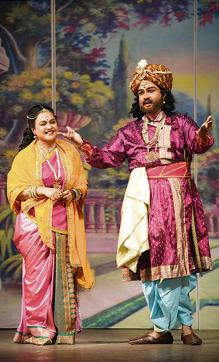
Chinmay Moghe, 18, a student in SP College and the writer, director and producer of Sangeet Natak’s Sangeet Chandrapriya, feels that despite the world celebrating theatre day, Marathi theatre lacks strong financial backing and producers looking at innovative and interesting plays.
“I had to become the producer for my play. It ran to six shows and has been appreciated by all, but we still need more audience who is ready to accept the change and look at different plays other than light-hearted comedies that have ruled the stage for many years,” he says.
His play Sangeet Chandrapriya is a love story set in the golden age of Gupta empire of its ruler Chandragupta III and his love and marriage to a widow. The play gives a message of respecting women which is relevant even in today’s age.
“One should look at theatre as a medium with a message that reaches out to people and help people connect,” said Moghe, adding, “with the use of this medium, we can show new experiments and think out of the box.”
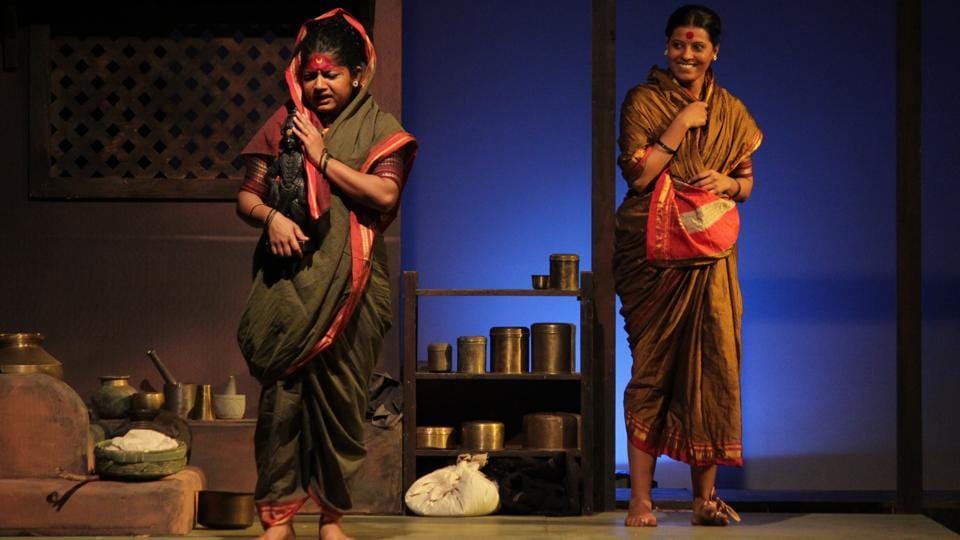
Another play, Sangeet Devbabhali, has recorded 225 performances and won 39 awards, thus creating a ripple in the Marathi theatre. Prajakt Deshmukh, 34, wrote it for Sangeet Natak as part of Theatre Akademy Sangeet One Act play and later thought of taking the play as a professional act.
“The story of a wife of god and a wife of a follower brought in an interesting look into the lives of gods and goddesses. The idea of bringing to life a period drama that blends legend, fiction and real life story of sant poet Tukaram and his wife Awali and that of her meeting with Rukhmini, Vithal’s wife, was effect of visiting Pandharpur and finding separate temples for both. The idea to make it a Sangeet Natak was so that I could do justice to Tukaram’s abhangas and to make them contemporary to the life we lead now,” said Deshmukh.
There is a future for such plays which weave two thoughts together and there are plenty of youngsters who are trying their hand at experimentation, but lack spaces within the city as compared to Mumbai.
“Marathi theatre is going barely well. Commercially we are doing good, but need more of new different stories which playwrights and directors like Suraj Parasnis are adding to, but it needs to be done at a faster pace and needs more theatres for such performances,” said Kiran Yadnopavit, director and writer.


