
 E-Paper



‘Second wave not severe in Pune as first wave developed antibodies among many people’
Sero survey, both in Pune and in PCMC, showed more than half the population in congested areas were already hit and there was high prevalence of antibodies, said Dr Subhash Salunkhe, who chairs the Maharashtra Communicable Diseases Prevention and Control Technical Committee


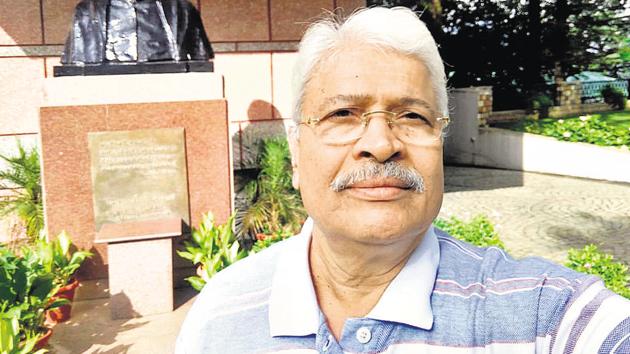
Dr Subhash Salunkhe, who chairs the Maharashtra Communicable Diseases Prevention and Control Technical Committee, spoke to Hindustan Times on the city’s response to the Covid-19 pandemic. Salunkhe, who was the former director general of health services, Maharashtra and WHO chief of Indonesia, added during interview that Pune was not hit hard by the second wave of the pandemic, as the first wave had already affected a lot of the population of the city as revealed in the sero surveys.
Q: The first case of Covid-19 in Pune was reported on March 9. What is your observation of how Pune handled the pandemic?
A: It is true that no one anticipated that the situation would get so bad. However, I do believe that in February when we had the state committee meeting on communicable diseases, which I had chaired in the presence of secretary health, Maharashtra, I had predicted that we will have serious problems and we should be prepared. No one anticipated even in the US or India that we would be hit so hard by the pandemic. Compared to March 2020, a lot of water has flown under the bridge. Pune could have saved lives and reduced the number of positive cases too. The picture today is a combination of the natural factors and the intervention carried out by the administration.
Q: Pune fortunately has not been hit hard by the second wave as much as Delhi or even Mumbai post Diwali season. What could be the reason for the same?
A: The credit cannot be attributed to the interventions by the administration alone or the citizens responsible behaviour, as we did see large crowds rushing towards the market during the festive season. The truth is that the Sero survey, both in Pune and in PCMC, showed more than half the population in congested areas were already hit and there was high prevalence of antibodies, however, small the scale of the study was. In simple words, we can say that the first wave of the virus already did the damage that it could, which is the main reason why the second wave did not hit us so hard. Now, we need to maintain this plateau and without much fluctuation in the numbers, if we can maintain this till December end, then by June we will be in a much better situation, unless there is some change in the virus strain. Also the district administration did consider our interventions, Pune was the first in the state to form the technical task force. Also, a task force by the divisional commissioner involved communities and so Pune did undertake such measures to curb the virus spread.
Q: What does Pune’s health infrastructure need right now?
A: I have been in touch with the PMC commissioner and am now working on a universal public health plan when we found that we have three or four sectors which need to be addressed like water supply management, waste management, pollution and other departments. These need to be attached to health planning. If we can provide better water to citizens, we can avoid many diseases like jaundice. Secondly, we need to strengthen the primary health centres which will play a major role in avoiding epidemics and pandemics. We do not necessarily need a 500-bed tertiary care to meet our health requirements, but a vast network of PMC clinics with manpower and infrastructure. We also need private hospitals, but we need a law in place to ensure that they do not exploit the poor or the middle class.
Q: Do you think that we will be in a better position if a new virus would hit us again next time?
A: If we do not learn from the mistakes that we made during this pandemic, then we will be equally hit by the next disease. The government of India will now have to totally restructure the health infrastructure of the country. Every district level hospital must be manned to have specialists and ensure that every required human resource is trained for public health and curative functioning even at block level and villages level.


