
 E-Paper



Six asylum seeking Punjab youths released from Oregon federal prison, freed on immigration bonds
Were detained on the Mexico border


Six undocumented Sikh youths from Punjab, after having a harrowing experience being detained in a federal detention centre (FDC) in Oregon since June for entering the United States from the Mexico border, walked free on August 20 and 21. All of them were seeking asylum in the United States citing political persecution and were detained at the federal detention facility in Sheridan.
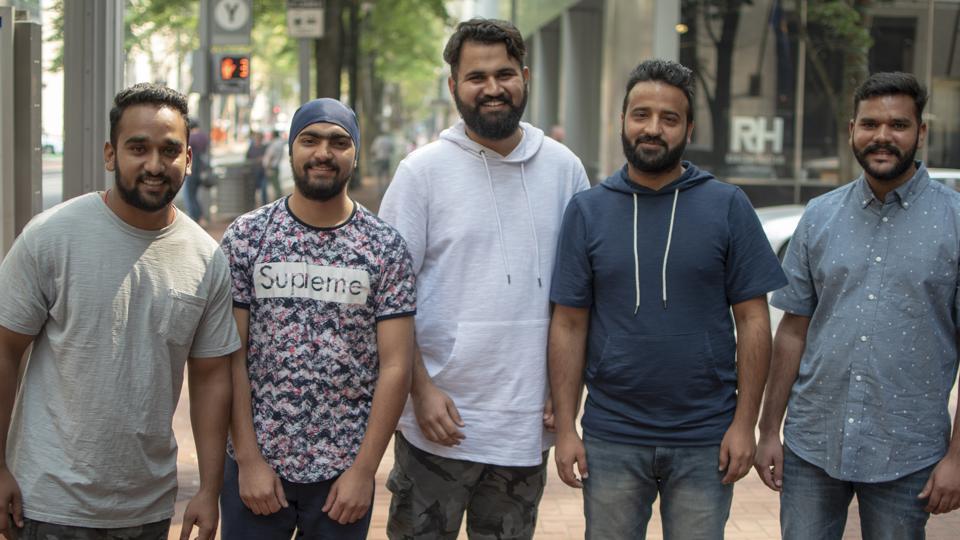
Five of them — Karandeep Singh, Lovepreet Singh, Harjinder Singh, Kanwarjeet Singh and Lovepreet Singh (the second one) — were released on August 21 evening, having cleared their credible fear interview. They were freed on immigration bonds.
The Sikh detainees were interviewed by an asylum officer to ascertain whether they suffered persecution or fear that they will suffer persecution due to their race, religion, nationality, affiliation to a particular social group and political opinion.
Development director at Innovation Law Lab Victoria Bejarano Muirhead said that typically an immigration bond costs US $1,500 or more. Many of the bonds issued by Portland immigration court have been in the range of US $1,500-5,000, she said. Muirhead said family members and friends of many of the detainees didn’t have enough money to post a bond. “The Immigration and Customs Enforcement (ICE) has the authority to release them based on personal recognisance. In that case, the detainee is not required to pay for the bond. Unfortunately, the ICE has not yet responded to such requests for release of detainees,” she said.
The five Indian Sikhs are now headed to different destinations in the United States to get united with their extended families and friends. Some of them are going to Maryland, Georgia, New York and California. They can pursue their asylum case in an immigration court in the United States.
Lawyers representing them said that all of them were detained at US Mexico border and there was no question of them being separated from their families as they were travelling alone when detained.
The five made a public appearance at a press conference organised by the American Civil Liberties Union (ACLU), Oregon and Innovation Law Lab in Portland, who provided pro bono legal support to the detainees.
Programme manager at Innovation Law Lab, Katy Mitchell, said at the press conference televised live that the first Indian asylum seeker who walked out on August 20 evening from the FDC got on his knees, kissed the ground and asked: “Is this real?”
One of the Sikh asylum seekers, Karandeep Singh, described his release from the detention as some dream. Karandeep alleged that he was targeted by the dominant political party in India because of his activism. “The reason I came to the US was that I feared for my life in India. I was attacked several times. My parents too didn’t want me to stay there,” Karandeep claimed.
He, however, did not blame the prison officials for the difficult times in detention. “They didn’t know about our culture and our religious values. They did not know how Sikhs would pray. After the federal public defender intervened, the prison authorities allowed us to wear headgear and pray in an appropriate manner,” Karandeep said.
Speaking about his prison experience, Lovepreet Singh said time in the prison taught them discipline. “Walking out of it still does not seem real,” he said.
Lovepreet Singh said the pro bono lawyers from the Innovation Law Lab and the office of the Oregon Federal Public Defender were the reason why they could be out of the prison. Harjinder Singh said he was so overwhelmed with emotions that he cannot express himself.
Muirhead said that the first Indian released on Monday was immediately united with his family in the United States. She, however, did not reveal his identity as the asylum seeker has not given his consent.
Attorneys representing the Indian detainees had said that many Indians interviewed by the San Francisco asylum office had told the asylum officials that “they were being persecuted because of their political opinion and affiliations”.
Lawyers representing the Indian detainees had said a common theme that emerged from the credible fear interview was “political persecution” which also has a religious component.


