
 E-Paper



Watching Lahoriye in times of hatred: Two Punjabs and an India-Pak romance
The movie reveals how some nuance-killing, uniform traits of the market-driven new world can help us create a saleable, romantic idea of the old world. Sounds harsh?

 Prefer HTon Google


How are you supposed to feel when a hall full of people applauds every dialogue about how the two Punjabs — one in India, the other across a barbed wire, in Pakistan — are essentially the same? Are you supposed to whistle too? It’s not such an existential question unless you consider that we live in an age of love measured by hatred. How about we look at things from this perspective: You are watching the movie in Chandigarh, which won’t have existed had there been no partition and had Lahore not been sent off to the other side.
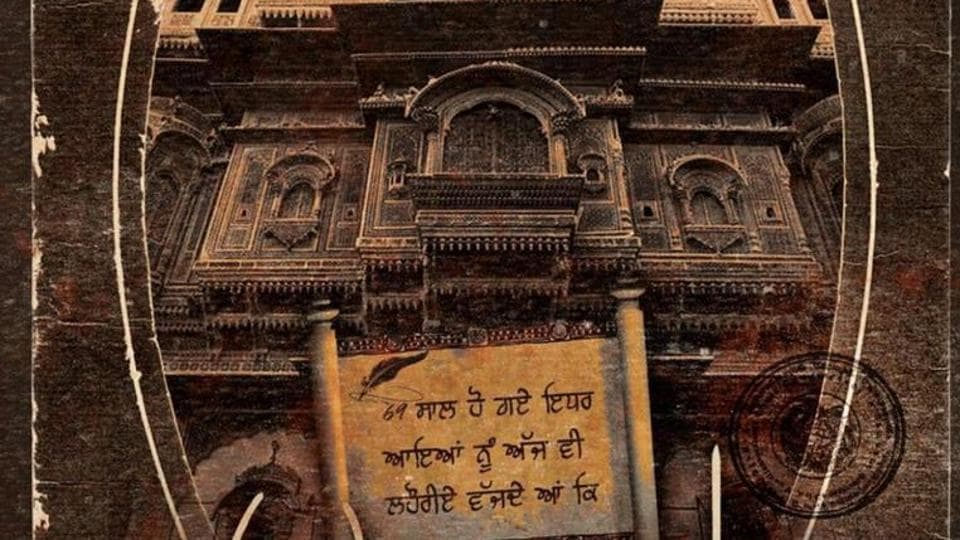
This Punjabi movie that carries these anti-national dialogues is Lahoriye, referring to the people of Lahore. It’s romantic to a fault, and makes everything look so easy and breezy. I watched it because I wanted to indulge in some sentimental crying in times of sinister laughter that wants us to laugh along.
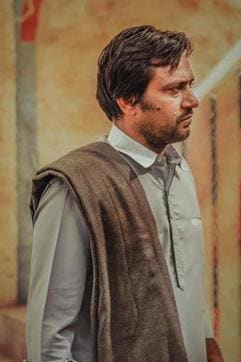
Before you go away thinking it’s all about how I felt, let me discuss a bit of the story for your benefit. A guy on this side cultivates land right on the border, and so does his eventual love interest, on the other side. The eventuality does not take long as the romance, like I said, is easy and breezy. Their eyes meet, and that’s quite enough. Love blossoms with a letter thrown across the dreaded line, and an easy-visa visit for the hero to her village. It’s all white so far, very little black. But then, true to his style, writer-director Amberdeep Singh brings in a charming shade of grey.
The heroine’s cousin is a burly guy, almost stereotypical, who surprises you with how cool he is about the whole thing. He helps the hero get a rendezvous with the heroine, and love gets reciprocated. It won’t be a spoiler if I tell you that they eventually get married. It has got all the ingredients the melodrama, the pretty boy-girl, some fantastic songs.
But it also ends up underlining many other things that perhaps only a Punjabi will claim to know.
It tells you how the third generation after 1947 understands, even feels, a strange attachment with the mitti, the soil, of our other side. It plays on the language, and shows how a difference of the Punjabi script — Gurmukhi here, Shahmukhi there — is perhaps the easiest to defeat among all our differences. And the Roman script of English now unites us, though it was brought to us by those who divided us. The movie simply tells you how the uniformity of the new world is helping bring back the old world.
Or, let me reframe that last sentence. The movie reveals how some nuance-killing, uniform traits of a market-driven new world can help us create a saleable, romantic idea of the old world. Sounds harsh?
Well, let me be honest. Sometimes, it seems delusional to believe that Pak Punjab must also be feeling the same affection towards us. I’ve been reminded repeatedly by fellow Indians that West Punjab has bloodthirsty fanatics running amok, and that the dove-like demeanour of many others is merely a facade. Those from other states within India even write that sentimentality towards Pak leaves the Indian Punjabi weak.
I’ve not turned cynical for nothing suddenly. I still don’t have the answer to my moot question: How am I supposed to feel about the movie? Let me try and answer that for myself: It’s the same feeling that I felt when I went to Lahore in 2013. It felt odd. So much so that the heart wants to err on the side of delusion. After all, a delusion that nurtures love is better than a reality that treats hatred for the other as a mark of love for the own. Define ‘own’.
Find the writer on Twitter @aarishc or email at aarish.chhabra@hindustantimes.com


